In the realm of modern electronics, the seamless interaction between humans and devices is often facilitated by a suite of sophisticated, yet invisible, components. Among these, the proximity light sensor stands as a critical enabler of intuitive functionality. This technology, fundamentally, is a type of sensor designed to detect the presence or absence of nearby objects without any physical contact. It achieves this primarily by emitting an electromagnetic field or a beam of electromagnetic radiation, often infrared light, and then looking for changes in the field or return signal. The core concept hinges on the principle of measuring the reflection of emitted light to determine distance or presence.
The operational mechanism of a typical proximity sensor is elegantly straightforward. It consists of an infrared Light-Emitting Diode (IR LED) and an infrared light detector, such as a photodiode. The IR LED emits a beam of invisible infrared light. When an object comes close to the sensor, this light beam reflects off the object and is captured by the photodiode. The sensor's internal circuitry then analyzes the intensity of the reflected light. A stronger reflected signal indicates a closer object. By setting a specific threshold value, the sensor can effectively determine whether an object is "near" or "far," triggering a predefined action.
This simple "near/far" detection is the cornerstone of numerous everyday applications. The most ubiquitous example is found in smartphones and tablets. When a user holds the phone to their ear during a call, the proximity sensor detects the closeness of the face and automatically turns off the touchscreen display. This serves a dual purpose: it prevents accidental touch inputs from the cheek or ear, and it conserves battery power by disabling the backlight. Similarly, many laptops use proximity sensors to detect when a user is present, waking the device from sleep mode, thereby enhancing both convenience and security.
Beyond personal devices, the concept finds extensive use in industrial automation and automotive systems. On factory assembly lines, proximity sensors can count objects, detect the position of machinery parts, or act as safety guards to prevent machinery from operating when a worker's hand is too close. In automobiles, they are integral to parking assistance systems, alerting drivers to obstacles in close proximity to the vehicle's bumpers. Some advanced systems even use arrays of these sensors to enable gesture control for infotainment systems, allowing drivers to change music or answer calls with a wave of the hand.
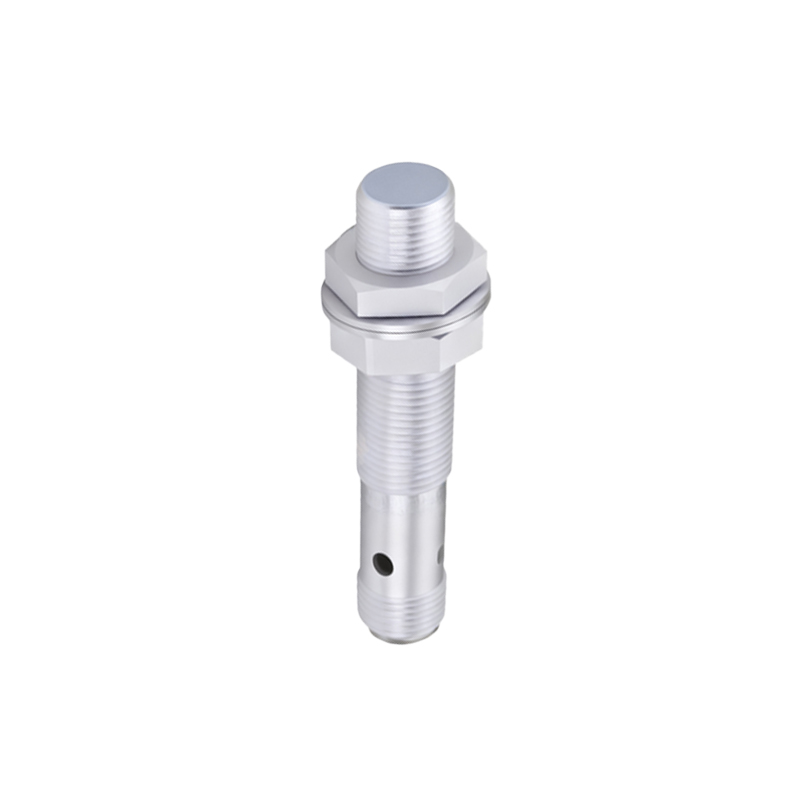
The advantages of proximity light sensors are manifold. Their non-contact nature means there is no mechanical wear and tear, leading to high reliability and a long operational lifespan. They can detect a wide variety of materials, including metals, plastics, and liquids, and are generally unaffected by surface color, although highly reflective or absorbent surfaces can pose challenges. Furthermore, their response time is extremely fast, making them suitable for high-speed applications. Compared to mechanical switches, they offer a cleaner, more modern, and often more durable solution for detection tasks.
However, the technology is not without its limitations and considerations. Environmental factors like ambient light, especially direct sunlight containing infrared components, can interfere with the sensor's readings, potentially causing false triggers. Dust, dirt, or condensation on the sensor's lens can also attenuate or scatter the emitted and reflected light, degrading performance. Therefore, proper housing, filtering, and software calibration are essential for robust operation in real-world conditions. Engineers must carefully design the sensor's placement and implement algorithms to distinguish between genuine proximity events and environmental noise.
Looking forward, the evolution of the proximity light sensor concept is intertwined with advancements in miniaturization, power efficiency, and integration. We are seeing the emergence of sensors that combine proximity detection with ambient light sensing (ALS) in a single package, allowing devices to adjust screen brightness based on both the user's proximity and the surrounding light levels. Furthermore, the development of time-of-flight (ToF) sensors, a more advanced variant, allows for precise distance measurement rather than simple near/far detection, opening doors for more nuanced applications in 3D imaging, augmented reality, and advanced human-machine interfaces.
In essence, the proximity light sensor is a quintessential example of how a simple physical principle—the reflection of light—can be harnessed to create intelligent, responsive interactions. Its pervasive integration into devices we use daily is a testament to its utility and reliability. As technology marches forward, this fundamental concept will continue to be refined and integrated into new forms, further blurring the line between the physical and digital worlds, and making our interactions with technology more natural and effortless.