Cylindrical proximity sensors are ubiquitous in industrial automation, offering non-contact detection of metallic objects with high reliability. This article provides a detailed teardown and technical analysis of a typical inductive cylindrical proximity sensor, model PS-18M30, commonly used in manufacturing and robotics applications. The goal is to explore its internal construction, operational principles, and key components that contribute to its performance and durability.
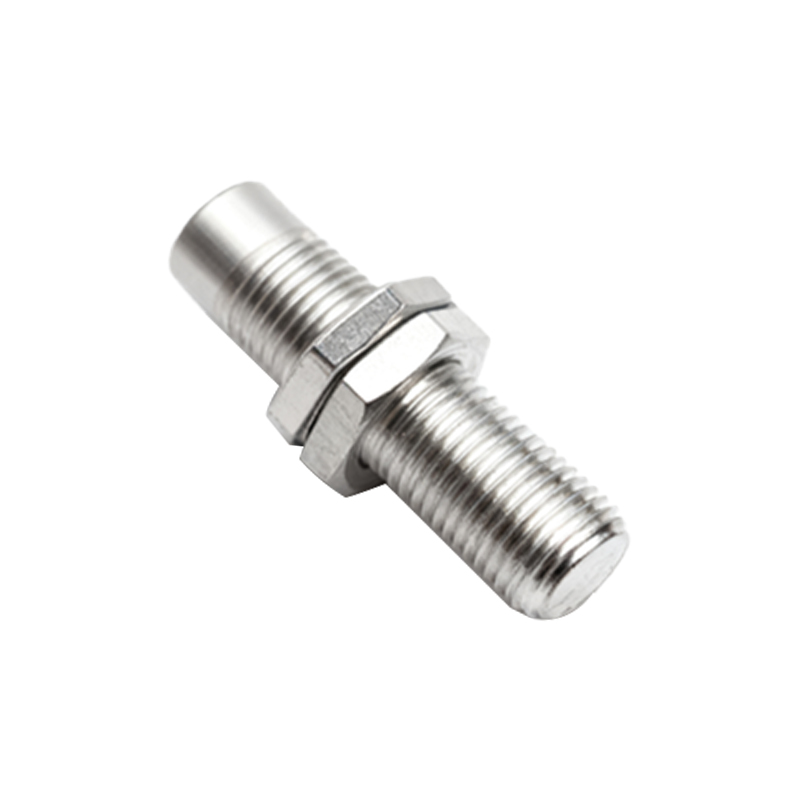
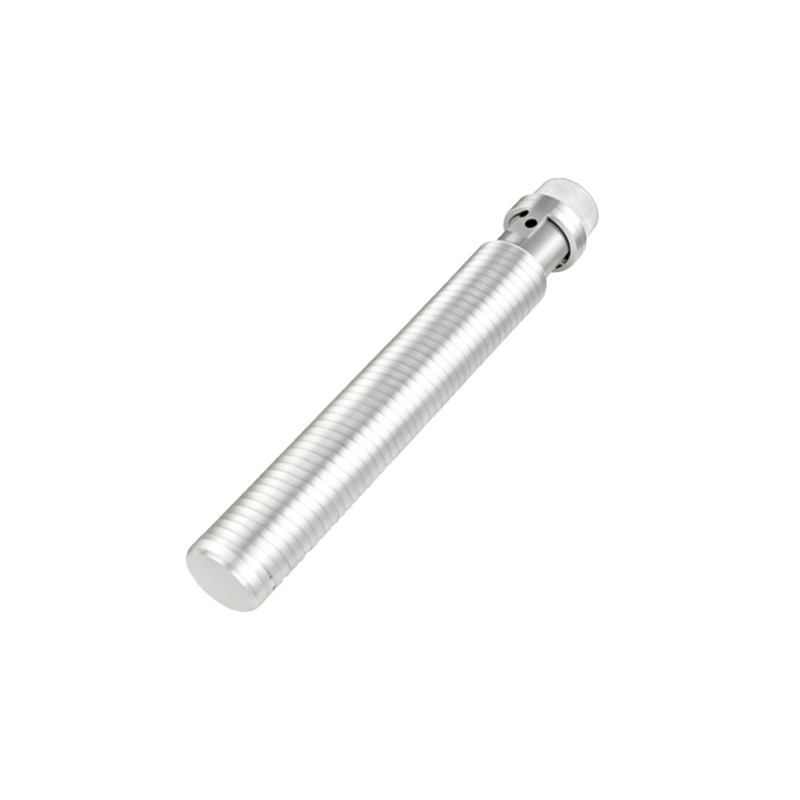
The sensor body is constructed from nickel-plated brass, providing robust mechanical strength and corrosion resistance. The front sensing face is made of a specialized polymer composite that allows electromagnetic fields to pass through while protecting the internal coil from physical damage and environmental contaminants. Disassembly begins by removing the epoxy-sealed rear section, which houses the cable entry and strain relief. Careful prying reveals a threaded metal ring that secures the internal assembly within the cylindrical housing.
Inside, the core component is a ferrite-core coil wound with high-purity copper wire. This coil forms part of an LC oscillator circuit that generates a high-frequency electromagnetic field at the sensing face. When a metallic target enters this field, eddy currents are induced in the target, causing a change in the oscillator's amplitude. This change is detected by a subsequent amplification and triggering circuit. The coil is potted in a thermally conductive silicone compound to dissipate heat and prevent movement due to vibration, ensuring long-term stability.
The printed circuit board (PCB) is a single-sided design with a glass-epoxy substrate. Key integrated circuits include a custom ASIC for signal processing and a power regulation IC. The ASIC handles oscillator control, signal demodulation, and output switching. The output stage features a solid-state MOSFET switch capable of handling up to 300mA continuous current, suitable for driving relays, PLC inputs, or small solenoids directly. Protection components such as a transient voltage suppression diode and a reverse-polarity diode are clearly visible, safeguarding the sensor from voltage spikes and incorrect wiring.
Notably, the sensor incorporates temperature compensation circuitry. A negative temperature coefficient thermistor is placed near the coil to monitor ambient temperature. The ASIC uses this data to adjust the sensing threshold, minimizing drift caused by temperature fluctuations in industrial environments. This design detail is critical for maintaining consistent sensing distances, typically rated at 18mm for this model, across an operating temperature range of -25°C to 70°C.
The housing also contains an LED indicator and its current-limiting resistor. The LED provides visual status feedback, illuminating when the sensor is powered and when a target is detected. All internal connections are made via soldered joints, with additional adhesive applied to critical points to resist vibration-induced fatigue. The cable is terminated with a molded connector, and the entire internal cavity is filled with a polyurethane potting compound after assembly. This potting provides excellent moisture resistance (meeting IP67 standards) and enhances mechanical integrity.
In conclusion, the teardown reveals that the reliability of cylindrical proximity sensors stems from thoughtful integration of electromagnetic design, robust materials, and protective electronics. The use of potting compounds, temperature compensation, and solid-state switching contributes to their long service life in demanding conditions. Understanding these internal features aids engineers in proper selection, installation, and troubleshooting, ensuring optimal performance in automation systems. Future trends may include miniaturization, integrated IO-Link communication, and enhanced sensing materials for non-ferrous metals.