In the realm of industrial automation and control, capacitive proximity sensors stand as versatile and reliable components for non-contact object detection. Unlike their inductive counterparts that detect only metals, capacitive sensors can detect a vast array of materials—metals, plastics, wood, glass, liquids, and granular substances—by sensing changes in capacitance. This capability makes them indispensable in diverse applications, from packaging and food processing to woodworking and liquid level control.
The fundamental operating principle hinges on the concept of capacitance. A capacitive sensor essentially forms one plate of a capacitor, with the target object acting as the other plate, and the intervening space as the dielectric. The sensor's internal oscillator generates an electrostatic field. When a target enters this detection field, it alters the dielectric constant, leading to a change in the circuit's capacitance. This change is measured, amplified, and processed by the sensor's circuitry, ultimately triggering a solid-state output switch (typically PNP or NPN). Modern sensors often feature adjustable sensitivity, allowing engineers to fine-tune the sensing distance and ignore background materials like container walls, a critical feature for level detection.
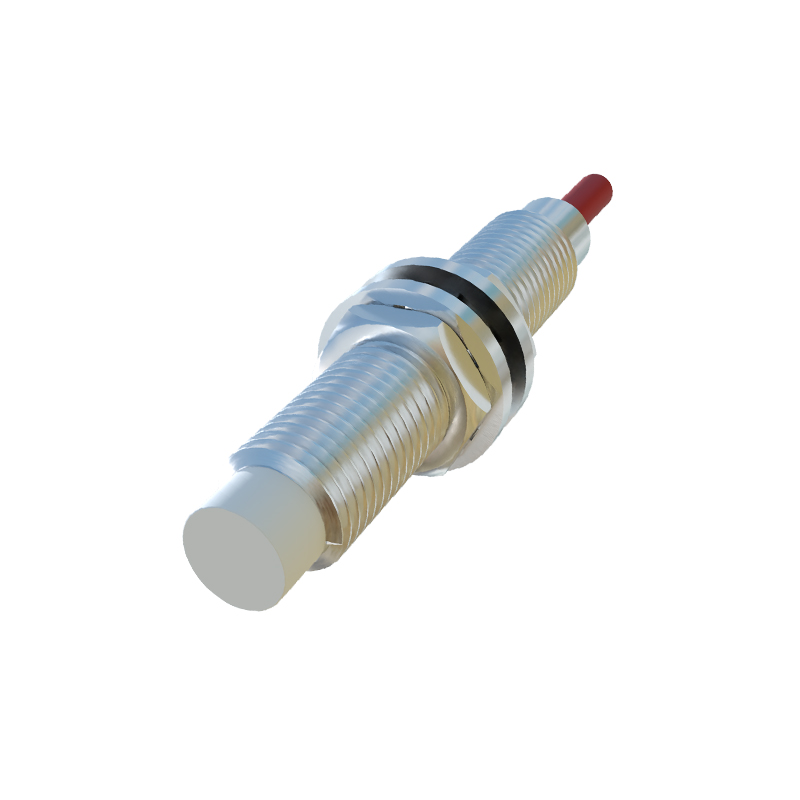
Key performance characteristics define their utility. The nominal sensing distance (Sn), specified for a standard target, is a primary selection criterion. It's crucial to note that the effective sensing distance can vary with the target material's dielectric constant; materials with higher constants (like water) are detected at greater distances than those with lower constants (like plastics). Repeatability, response frequency, and temperature stability are other vital parameters. Housing materials, such as PTFE-coated versions, are available for aggressive environments or sticky product applications. Furthermore, cylindrical (threaded barrel) and rectangular form factors cater to different mounting needs.
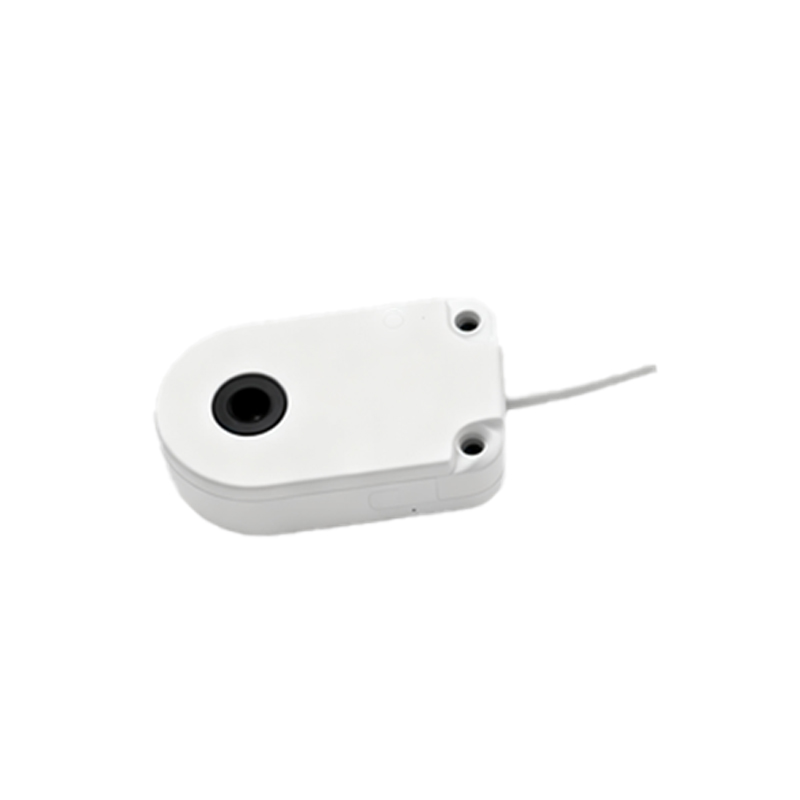
The application spectrum for capacitive sensors is remarkably broad. A classic use is liquid level detection in non-metallic tanks, where they reliably sense the presence or absence of fluids without physical contact. In packaging lines, they verify the presence of products (e.g., bottles, cartons) regardless of material. They are employed in woodworking machinery to monitor board thickness or presence. Another significant application is detecting filled levels of powders or granules in hoppers and silos. Their ability to see through thin non-metallic walls enables hygienic, sealed designs for the food and pharmaceutical industries.
Selecting the right capacitive sensor requires a systematic approach. First, identify the target material and its dielectric properties. Second, determine the required sensing distance, applying a safety factor (often 0.8) to the nominal Sn to account for real-world conditions like temperature shifts and voltage tolerances. Third, consider the environmental conditions: temperature extremes, potential for condensation, exposure to chemicals, or washdown requirements (IP67/IP69K ratings). Fourth, define the electrical requirements: operating voltage (commonly 10-30V DC or 20-250V AC), output type (NO/NC, PNP/NPN), and connection method (pre-wired cable or quick-disconnect). Finally, the mechanical constraints—mounting space, flush or non-flush mounting capability, and housing material—must be evaluated.
Installation and commissioning are straightforward but demand attention to detail. Ensure the sensor is mounted securely, avoiding excessive vibration. For flush-mounted sensors, maintain the recommended clearance from surrounding metal to prevent false triggering. The adjustable sensitivity potentiometer is a powerful tool; start with a low setting and gradually increase it until the target is detected reliably, ensuring the sensor does not activate due to the background or container wall. Always refer to the manufacturer's datasheet for specific wiring, mounting, and tuning instructions.
In comparison to other technologies, capacitive sensors fill a unique niche. Where inductive sensors are limited to metals and photoelectric sensors require a clear line of sight and can be fooled by color or transparency, capacitive sensors excel at detecting non-metallics through barriers. However, they can be influenced by environmental factors like humidity or conductive dust, which may necessitate careful shielding and sensitivity adjustment.
Looking ahead, advancements in capacitive sensing technology continue. Integrated microprocessors enable smarter sensors with advanced diagnostics, IO-Link communication for parameterization and data exchange, and enhanced noise immunity. Miniaturization is also progressing, allowing for installation in increasingly tight spaces. For engineers and system integrators, mastering the principles and practicalities of capacitive proximity sensors is key to designing robust, efficient, and flexible automation systems capable of handling the material diversity of modern industry.