In modern industrial automation, precise distance measurement is a critical factor for ensuring operational accuracy, safety, and efficiency. Laser distance sensors have emerged as a premier solution, offering high precision, rapid response, and robust performance in challenging environments. Unlike traditional contact-based measurement tools or ultrasonic sensors, laser sensors utilize coherent light beams to calculate distance based on the time-of-flight (ToF) principle or phase-shift analysis, achieving sub-millimeter accuracy even over long ranges.
The core working principle involves emitting a laser pulse toward a target object. The sensor then detects the reflected light and calculates the distance by measuring the time delay between emission and reception. Advanced models employ continuous-wave modulation to enhance resolution and minimize errors caused by ambient light or surface characteristics. This non-contact method eliminates mechanical wear, reduces maintenance needs, and allows measurements on fragile, hot, or moving objects without interference.
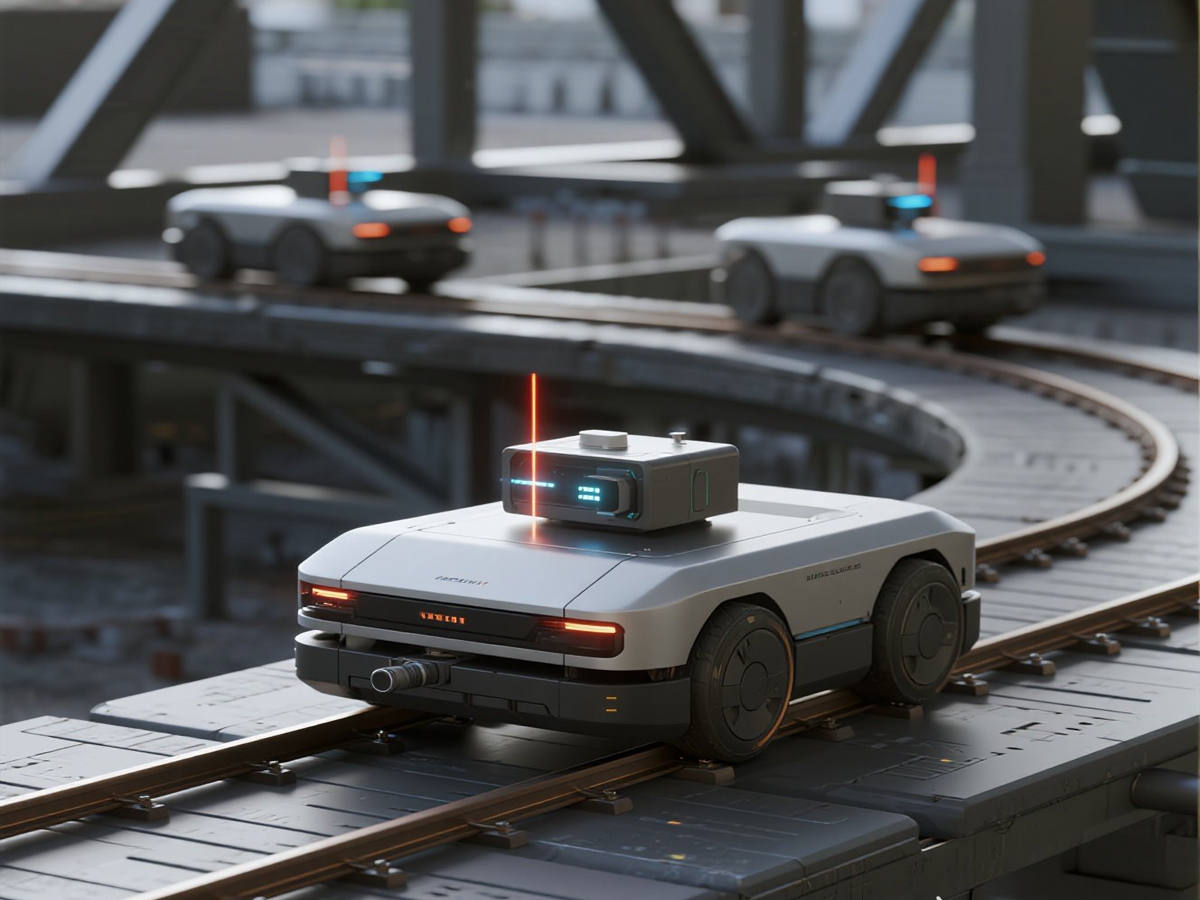
Key industrial applications span across various sectors. In manufacturing and assembly lines, laser sensors are integral for positioning robotic arms, verifying component dimensions, and monitoring fill levels in containers. For instance, in automotive production, they ensure precise alignment of body panels and inspect weld seam consistency. Logistics and warehousing benefit from their use in palletizing, inventory management, and automated guided vehicle (AGV) navigation, where real-time distance data prevents collisions and optimizes storage space. Additionally, in the construction and heavy machinery industries, these sensors assist in grade control, obstacle detection, and crane positioning, significantly improving site safety and operational throughput.
Selecting the appropriate laser distance sensor requires careful consideration of several technical parameters. Measurement range is primary; sensors are available from short-range (a few centimeters) to long-range (exceeding 200 meters), each suited for specific tasks. Accuracy and resolution determine the sensor's capability to detect minute distance changes—critical for quality control processes. Environmental factors such as dust, moisture, and temperature fluctuations necessitate enclosures with high Ingress Protection (IP) ratings, like IP67 or IP69K, for durability. The target surface properties also matter: dark, reflective, or transparent materials may affect signal return, prompting the need for sensors with adjustable sensitivity or background suppression features.
Integration into industrial control systems is streamlined through various output interfaces, including analog (4-20 mA, 0-10 V), digital (RS-232, RS-485), and industrial Ethernet protocols (EtherCAT, PROFINET). This compatibility allows seamless data transmission to PLCs (Programmable Logic Controllers) or SCADA (Supervisory Control and Data Acquisition) systems, enabling automated decision-making and process adjustments. Furthermore, modern sensors often incorporate intelligent functions like multi-point measurement, data logging, and software-configurable settings, reducing setup time and enhancing adaptability.

Despite their advantages, challenges persist. Intense ambient light, particularly from other lasers or sunlight, can interfere with measurements, necessitating optical filters or specialized coatings. Vibrations in machinery may introduce slight inaccuracies, mitigated by robust mounting and signal averaging algorithms. Cost remains a consideration, though the long-term benefits of reduced downtime and improved product quality often justify the investment.
Future trends indicate a move toward miniaturization, increased integration with IoT (Internet of Things) platforms, and enhanced AI-driven diagnostics. Smart sensors capable of self-calibration and predictive maintenance will further revolutionize industrial automation, making processes more resilient and data-centric.
In conclusion, laser distance sensors are indispensable tools in industrial control, offering unparalleled precision and reliability. By understanding their principles, applications, and selection criteria, engineers can optimize automation systems, drive productivity, and maintain competitive advantage in an increasingly demanding market.