In the rapidly evolving landscape of industrial automation, robotics, and smart systems, proximity sensing technology plays a pivotal role in enabling precise, non-contact detection. Among the various sensing modalities, millimeter wave (mmWave) proximity sensors have emerged as a sophisticated and highly capable solution. This article delves into the fundamental principles, key advantages, diverse applications, and critical selection factors for these advanced sensors.
At its core, a millimeter wave proximity sensor operates by emitting electromagnetic waves in the frequency range of 30 GHz to 300 GHz, corresponding to wavelengths between 1 mm and 10 mm. Unlike optical sensors that rely on light, mmWave sensors utilize radio frequency (RF) waves. The primary working principle involves transmitting a continuous wave or a frequency-modulated continuous wave (FMCW) signal towards a target. The sensor then captures the reflected signal. By analyzing the characteristics of this reflected wave—specifically its phase shift, time delay, and frequency modulation—the sensor can accurately calculate the distance to the target, its relative velocity, and even its angle of arrival. This process, known as radar sensing, allows for detection regardless of environmental factors like dust, smoke, fog, or varying light conditions, which often plague optical and ultrasonic sensors.
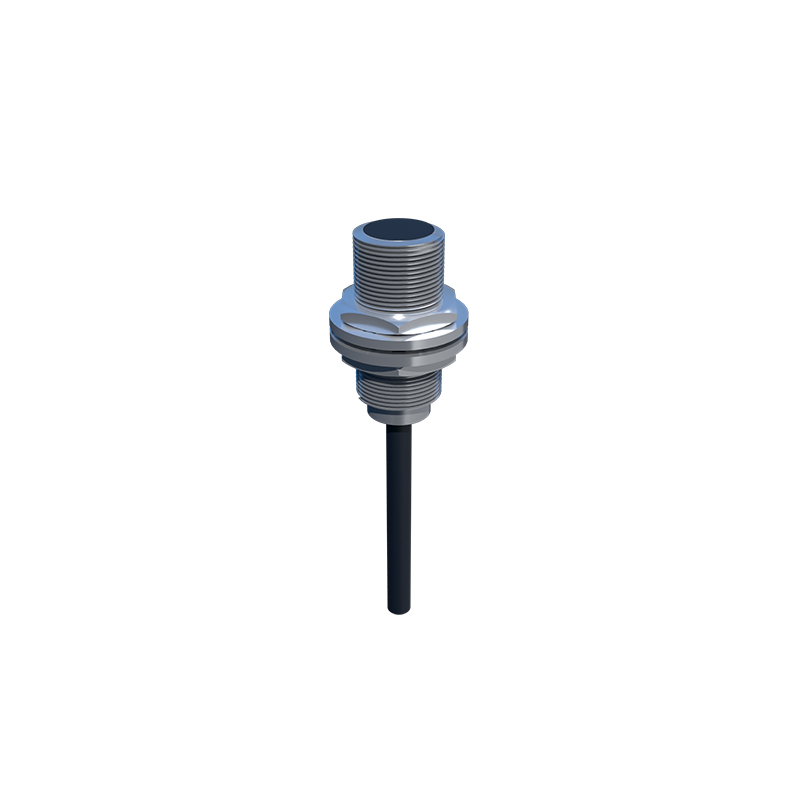
The advantages of millimeter wave technology for proximity sensing are substantial. First and foremost is its exceptional material penetration capability. mmWave signals can detect objects through certain non-metallic materials such as plastic, glass, and thin walls, enabling unique applications where the sensor can be concealed. Secondly, these sensors provide high accuracy and resolution in measuring distance and speed, even for very small movements. They are inherently robust against environmental interference, maintaining reliable performance in challenging industrial settings. Furthermore, modern mmWave sensors integrate radar front-ends, processors, and antennas into compact, single-chip solutions, making them suitable for space-constrained applications. Their ability to simultaneously detect multiple targets and distinguish between stationary and moving objects adds another layer of functionality.
The application spectrum for millimeter wave proximity sensors is broad and expanding. In industrial automation, they are deployed for precise positioning of robotic arms, monitoring material levels in silos through container walls, and ensuring safety in collaborative robot workspaces by detecting human presence. The automotive industry leverages them for blind-spot detection, gesture recognition for infotainment systems, and occupancy sensing within vehicles. In building automation, mmWave sensors enable touchless light switches, smart occupancy monitoring for HVAC control, and people counting. Consumer electronics also benefit, with applications in smartphones and laptops for proximity-aware features and gesture control. Their reliability in adverse conditions makes them ideal for outdoor security systems and traffic monitoring.
Selecting the appropriate millimeter wave proximity sensor requires careful consideration of several technical parameters. The operating frequency band (e.g., 60 GHz, 77 GHz) influences the resolution, penetration, and antenna size. Detection range and field of view (FoV) must align with the specific application's spatial requirements. Output data interfaces, such as I2C, SPI, UART, or analog voltage, determine how easily the sensor integrates into a larger system. Power consumption is a critical factor for battery-operated devices. Additionally, the sensor's algorithm capabilities—like built-in motion detection, presence sensing, or point-cloud generation—can significantly reduce development complexity. Engineers must also consider environmental ratings (IP grade, operating temperature range) and regulatory compliance (FCC, CE, etc.) for their target market.
In conclusion, millimeter wave proximity sensors represent a powerful fusion of RF technology and intelligent sensing. Their unique ability to provide accurate, reliable, and material-penetrating detection positions them as a key enabler for next-generation automated and intelligent systems across industries. As integration levels increase and costs decrease, their adoption is poised to grow, driving innovation in how machines perceive and interact with their surroundings. Understanding their principles and selection criteria is essential for engineers aiming to implement robust and future-proof sensing solutions.