In the realm of industrial automation, laser edge detection sensors, often referred to as laser web guide sensors or laser edge position sensors, play a pivotal role in ensuring material alignment and process stability. These non-contact sensors utilize a focused laser beam to detect the precise position of a material's edge, providing critical feedback for control systems. Understanding their key parameters is essential for optimal selection and application.
The core operating principle involves projecting a laser line onto the target material. The sensor's receiver, typically a high-resolution CMOS or CCD array, captures the reflected light. The transition from the material's surface to the background (or vice versa) creates a sharp contrast in the received signal. Advanced onboard algorithms analyze this signal to calculate the exact edge position with micron-level accuracy.
Critical performance parameters define a sensor's capability:
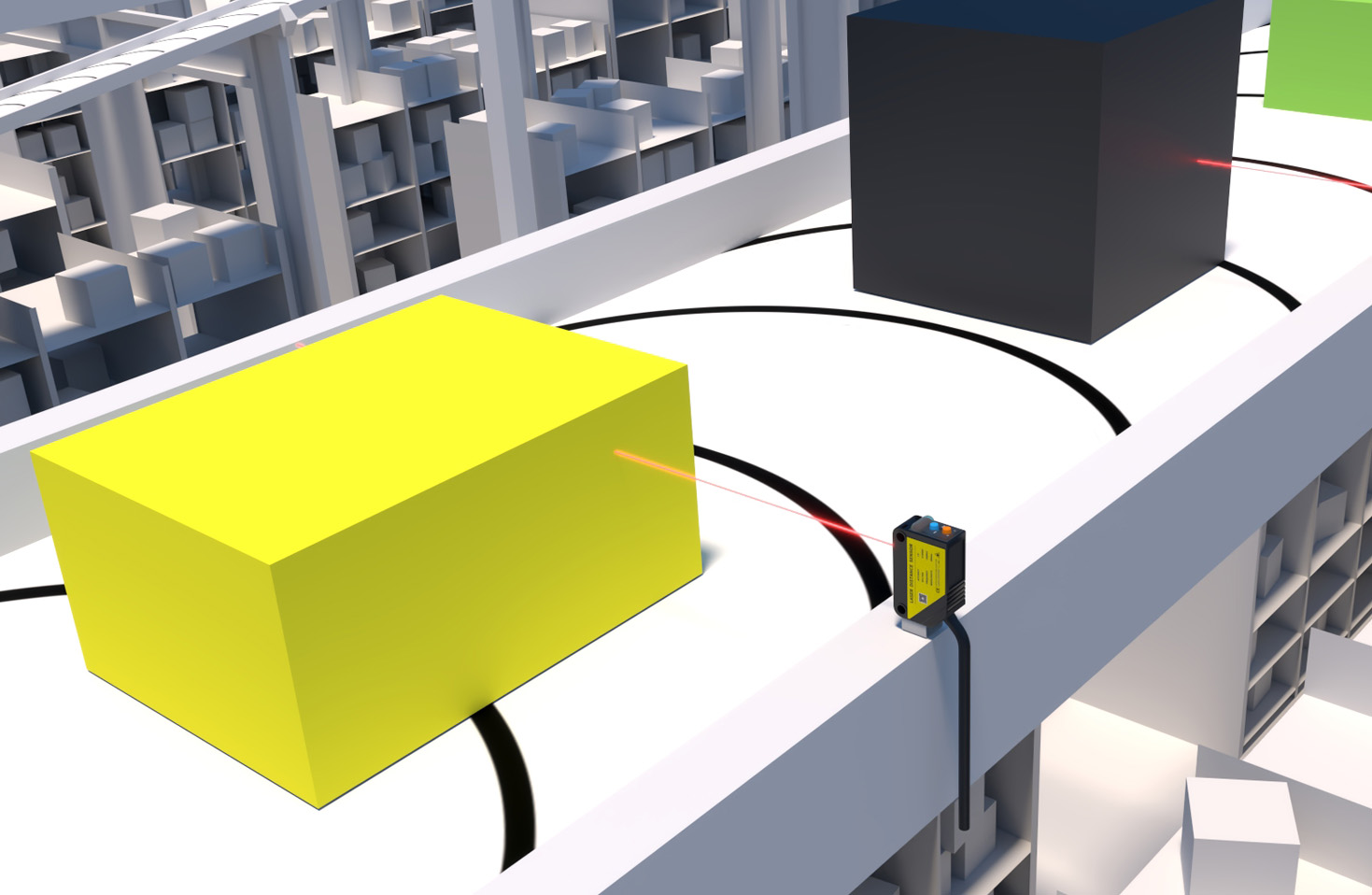
1. Measurement Range: This specifies the maximum width of material or the lateral distance over which the sensor can reliably detect an edge. It is crucial to select a sensor with a range that accommodates potential material wander and system tolerances.
2. Resolution: Often expressed in micrometers, resolution is the smallest change in edge position the sensor can detect. High-resolution sensors are mandatory for applications involving thin films, foils, or high-precision slitting.
3. Repeatability: Perhaps more important than absolute accuracy in many guide applications, repeatability indicates the sensor's consistency in returning the same measurement for a stationary edge under unchanged conditions. Excellent repeatability ensures stable, jitter-free control.
4. Response Time / Update Rate: Measured in milliseconds or as a frequency (Hz), this parameter defines how quickly the sensor can process a measurement and output a new value. High-speed processes, such as in printing or converting machinery, demand sensors with very fast update rates to maintain tight control loops.
5. Laser Type and Wavelength: Common wavelengths include red (e.g., 650nm) and blue-violet (e.g., 405nm). The choice affects performance on different materials. Blue lasers often provide better contrast on transparent or glossy materials and are less susceptible to ambient red light interference.
6. Spot Size / Laser Line Width: A smaller, well-defined laser line allows for sharper edge definition, especially on curved or uneven surfaces, improving measurement precision.
7. Environmental Specifications: This includes operating temperature range, ingress protection (IP) rating for dust and moisture resistance, and resistance to vibrations. Industrial environments can be harsh, and sensor durability is non-negotiable.
8. Outputs and Interfaces: Standard analog outputs (4-20 mA, ±10V) are common for direct controller input. Digital interfaces like RS-485, Ethernet/IP, or PROFINET enable advanced networking, parameter setting, and diagnostics.
9. Material Compatibility: Sensor performance can vary based on material color, transparency, surface texture (glossy vs. matte), and opacity. Some sensors offer adjustable laser power or receiver gain to adapt to different surfaces.
Application considerations are paramount. For instance, in paper converting, sensors must handle varying paper grades and potential dust. In plastic film production, transparency and thickness are key factors. Metal processing often involves hot, reflective surfaces requiring robust sensors with specific filtering.
Proper installation is critical for performance. Factors such as mounting distance, angle relative to the material, avoidance of mechanical stress, and minimization of ambient light interference (e.g., from other lasers or high-intensity lamps) must be meticulously planned. Regular maintenance, primarily lens cleaning, ensures long-term reliability.
In summary, selecting a laser edge detection sensor is a systematic process of matching its technical parameters—measurement range, resolution, repeatability, speed, and environmental specs—to the specific demands of the application. A deep understanding of these parameters empowers engineers to build more reliable, efficient, and precise automated guidance systems, directly contributing to reduced waste, improved product quality, and higher overall equipment effectiveness (OEE).