In the realm of industrial automation, the performance of a proximity sensor is critically defined by its response speed. This parameter, often measured in milliseconds (ms) or microseconds (µs), dictates the sensor's ability to detect an object and transmit a corresponding signal to the control system without delay. A sensor's response time is not merely a technical specification; it is a fundamental determinant of system throughput, precision, and reliability in high-speed applications such as packaging, assembly, robotics, and CNC machining.
The response speed of a proximity sensor is typically broken down into two key components: the approach response time and the release response time. The approach time is the duration from when a target enters the sensor's effective sensing range to when the output signal switches state. Conversely, the release time is the period from when the target leaves the sensing zone to when the output signal returns to its normal state. For many high-performance inductive and capacitive sensors, these values can be as low as 10-50 µs, ensuring minimal lag in detection.
Several intrinsic and extrinsic factors directly influence this critical speed. Internally, the sensor's operating principle is paramount. Inductive sensors, detecting metallic objects, and capacitive sensors, detecting both metallic and non-metallic materials, rely on oscillator circuits whose frequency and stability impact response. Modern designs utilize advanced ASICs (Application-Specific Integrated Circuits) to process signals faster and more efficiently than older discrete component designs. The sensor's output configuration also plays a role; a solid-state NPN or PNP output generally switches faster than a mechanical relay output.
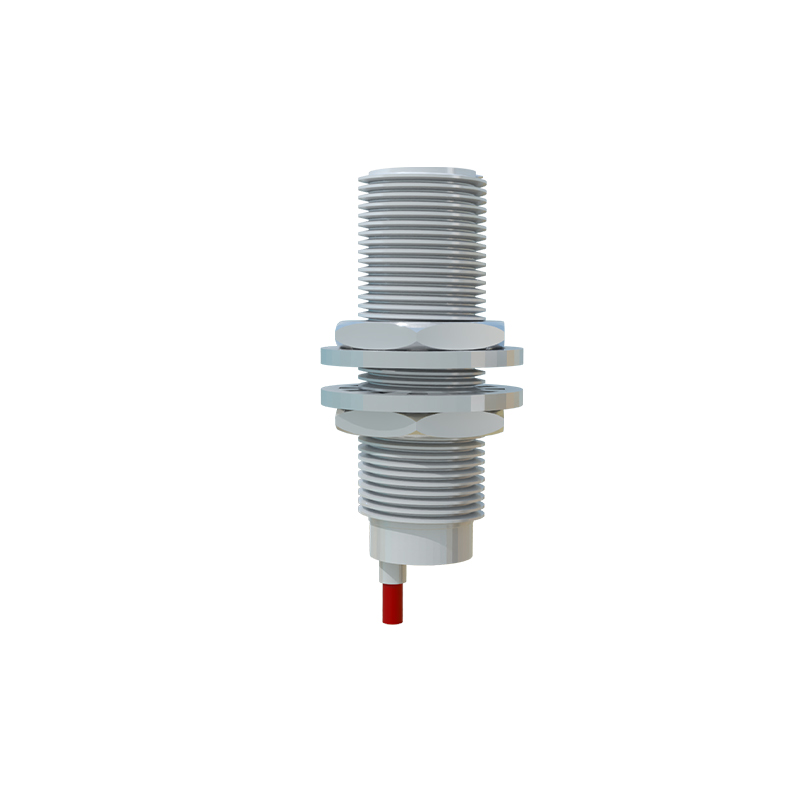
Externally, the characteristics of the target object are equally crucial. For inductive sensors, the target material (steel, aluminum, copper), size, and shape affect the eddy current generation and thus the detection speed. A larger, ferrous steel target will typically be detected faster and from a greater distance than a small, non-ferrous aluminum target. The speed of the target itself is a direct variable; a sensor must have a response time fast enough to reliably detect an object moving at a given velocity. Furthermore, environmental conditions like temperature extremes or electrical noise can potentially degrade signal integrity and slow down effective response if not properly shielded against.
Selecting a sensor with an appropriate response speed requires careful calculation. Engineers must consider the maximum required sensing frequency. For instance, in an application detecting parts on a conveyor moving at 5 meters per second, with parts spaced 10mm apart, the required sensing frequency is extremely high. The sensor's total response time (approach plus release) must be less than the time the target is within the sensing field. Failure to meet this requirement results in missed detections, leading to production errors or machine faults. Therefore, consulting the sensor's datasheet for the specified response time under standardized conditions (usually for a standard target) is a non-negotiable step in the design process.
Beyond the basic specification, high-speed sensing often necessitates features like teach-in functionality for easy adjustment of sensitivity, and short-circuit protection that does not impede switching speed. IO-Link enabled smart sensors offer an advantage by providing diagnostic data, including response time monitoring, allowing for predictive maintenance before performance degrades.
In conclusion, the response speed of a proximity sensor is a linchpin of modern industrial efficiency. It transcends a simple number on a datasheet, representing a complex interplay of electronic design, physical principles, and application demands. A thorough understanding of the factors affecting response time—from the sensor's internal circuitry to the target's material and velocity—enables engineers to specify and deploy sensors that maximize system performance, ensure precision, and uphold the relentless pace of automated production. Ignoring this parameter can lead to bottlenecks and inaccuracies, while optimizing it unlocks higher levels of productivity and control.
SEO Keywords:proximity sensor response time, high-speed sensing, industrial automation sensors, sensor selection factors, inductive capacitive sensor
SEO Description:Explore the critical role of response speed in proximity sensors for industrial automation. This article details the factors affecting detection time, including sensor technology, target characteristics, and application calculations, to guide optimal sensor selection for high-performance systems.