In the vast landscape of industrial automation and control systems, sensors act as the critical sensory organs, providing essential data for machinery and processes. Among the diverse sensor families, proximity switches hold a pivotal position for detecting the presence or absence of objects without physical contact. However, a specific and highly reliable category exists within this domain: the contact-type proximity switch sensor. This article delves into the operational principles, key characteristics, common applications, and crucial selection criteria for these robust devices.
Fundamentally, a contact-type proximity switch is a position-sensing device. Unlike standard non-contact inductive or capacitive proximity sensors, the term "contact-type" can be slightly misleading. It does not imply that the sensor's sensing face must physically touch the target. Instead, it typically refers to the switching mechanism inside the sensor or its output configuration. More commonly in industry parlance, it describes a mechanical limit switch with a robust, actuated lever or plunger. When the target object makes physical contact with this actuator, it triggers an internal snap-action switch, changing the electrical state of its output contacts. This mechanical actuation is the defining "contact" characteristic, offering distinct advantages in certain environments.
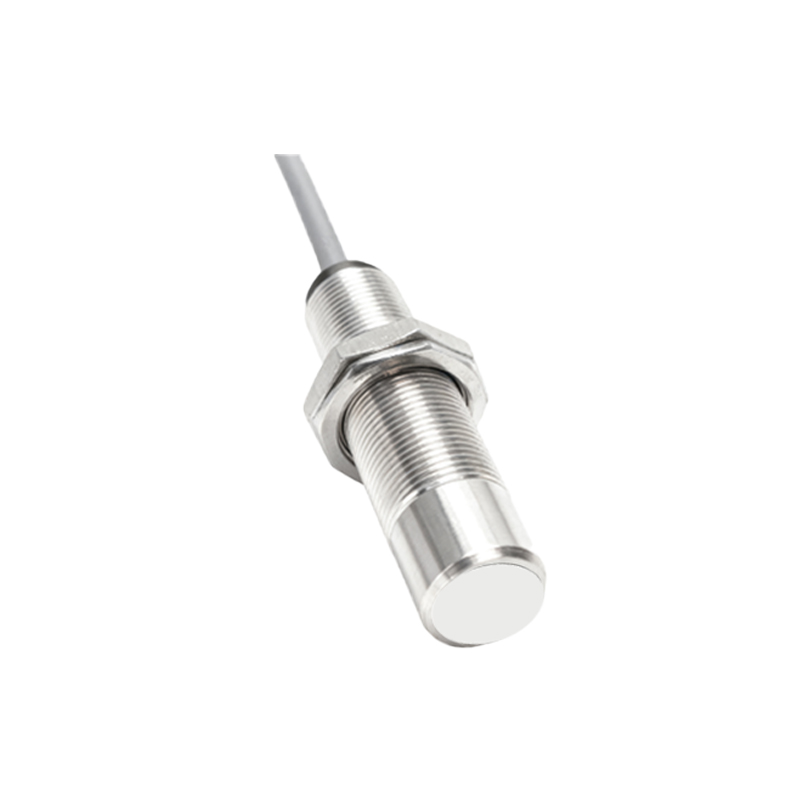
The core working principle revolves around this mechanical movement. The actuator (roller lever, plunger, whisker, or rod) is displaced by the target object. This displacement is transferred to a precision, spring-loaded mechanism that rapidly "snaps" a set of electrical contacts from one state (e.g., Normally Open - NO) to another (e.g., Normally Closed - NC). This action provides a clear, unambiguous signal. The output is typically a dry contact from a micro-switch, which can switch AC or DC loads of various voltages and currents, offering great flexibility in interfacing with Programmable Logic Controllers (PLCs), relays, or motor starters.
The advantages of contact-type proximity switches are significant, especially where non-contact sensors might falter. First and foremost is exceptional reliability and noise immunity. Being electromechanical, they are largely unaffected by electromagnetic interference (EMI), welding sparks, or conductive dust that can plague inductive sensors. Their output is a hard electrical contact, not a semiconductor-based electronic signal, making it extremely stable. Second is high switching capacity. They can often directly control sizable loads (e.g., 10-15A at 250VAC), eliminating the need for an intermediate relay in many applications. Third is physical feedback. Operators and maintenance technicians can often feel or hear the definitive "click" of actuation, providing immediate physical confirmation of operation. Finally, they are generally tolerant of harsh environments—resistant to oils, coolants, and physical impacts that could damage the delicate sensing face of an electronic proximity sensor.
Typical applications are found across heavy industry and scenarios demanding ruggedness. They are extensively used as limit switches on machine tools, conveyors, and automated guided vehicles (AGVs) to define the end-of-travel positions for moving parts. In material handling, they detect the presence of packages or pallets. They serve as door interlock switches on safety guards and enclosures, ensuring machinery cannot operate when access doors are open. In outdoor or dirty environments like construction equipment, agricultural machinery, and mining operations, their robustness is invaluable for position sensing of booms, buckets, or conveyors.
Selecting the right contact-type proximity switch requires careful consideration of several parameters. Actuator Type is primary: choose from roller levers for cam tracking, spring-loaded plungers for direct linear actuation, or flexible whiskers for detection in multiple directions. Electrical Ratings are critical: ensure the switch's voltage (AC or DC), current rating, and contact configuration (NO, NC, or changeover) match the control circuit's requirements. Housing Material and Protection Rating (IP or NEMA code) must suit the environment—stainless steel for corrosive washdown areas (IP67/IP69K) or robust thermoplastic for general industrial use. Mechanical Life (often in millions of cycles) indicates durability under frequent operation. Operating Force and Pretravel define the sensitivity and movement required to trigger the switch. Finally, consider Mounting style—standardized forms like ISO 14119-compliant designs facilitate easy replacement and integration.
In conclusion, while modern non-contact sensors continue to advance, the contact-type proximity switch remains an indispensable workhorse in industrial automation. Its simplicity, ruggedness, high load capacity, and immunity to electrical noise ensure its continued relevance, particularly in demanding and safety-critical applications. Understanding its principles and selection criteria allows engineers and technicians to deploy this reliable sensor effectively, ensuring precise position detection and robust system control in the most challenging operational environments.