In the demanding world of material handling and heavy lifting, crane operations stand as a critical pillar of industrial productivity. Ensuring the safety, precision, and efficiency of these massive machines is paramount, and a key technological component in achieving this is the proximity sensor. Often overlooked, these devices are the silent guardians of modern crane systems, playing an indispensable role in preventing accidents, optimizing workflows, and protecting valuable assets.
At its core, a proximity sensor on a crane is a non-contact electronic device designed to detect the presence or absence of an object within a specific range. Unlike mechanical limit switches that require physical contact, proximity sensors operate using electromagnetic fields, ultrasonic waves, or optical principles. This non-contact nature is crucial in the harsh, vibration-prone environments where cranes operate, as it eliminates mechanical wear and tear, leading to higher reliability and reduced maintenance.
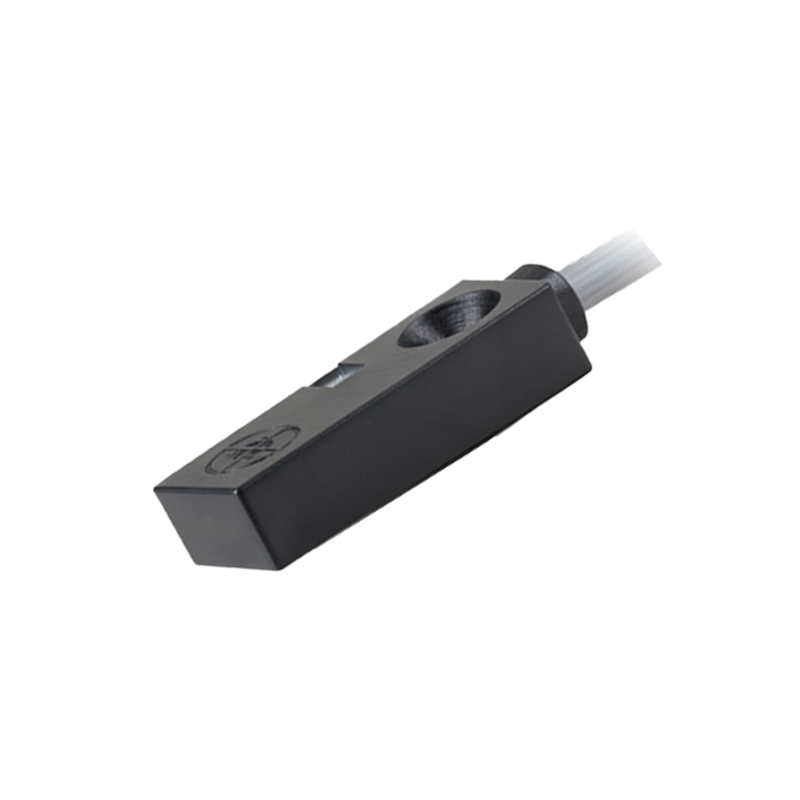
The primary function of these sensors is collision avoidance. Cranes, especially those operating in confined spaces like warehouses, shipping ports, or construction sites with multiple overlapping work zones, are at constant risk of impacting structures, other cranes, or personnel. Inductive proximity sensors are commonly used to detect metallic structures. For instance, sensors mounted on the crane's bridge or trolley can be set to detect the approaching runway end stops or another crane on the same rail. When an object enters the sensor's preset detection field, it sends an immediate signal to the crane's programmable logic controller (PLC). The PLC can then initiate a controlled slowdown or a complete stop, preventing a catastrophic collision. This is not merely about equipment damage; it is a fundamental safety system that protects human lives.
Beyond gross collision avoidance, proximity sensors enable precise positioning. Modern automated cranes, such as those in automated storage and retrieval systems (AS/RS), rely heavily on an array of sensors for pinpoint accuracy. Sensors detect reference points or flags along the crane's path, allowing the control system to know the exact location of the hook, spreader, or trolley. This eliminates guesswork and manual alignment, enabling fully automated loading and unloading cycles with millimeter-level precision. This application drastically increases throughput and reduces product damage caused by misalignment or impact during handling.
Another critical application is in load monitoring and anti-sway systems. Sensors can be integrated to monitor the position of the hoist rope or the load itself. By detecting slight deviations or swing motions, the sensor data feeds into an active control system that can automatically compensate for sway, ensuring stable and safe load movement, particularly in outdoor applications susceptible to wind. Furthermore, sensors are used to confirm that lifting attachments, like spreader locks on container cranes, are fully engaged or disengaged before initiating a lift or release cycle. This prevents the disastrous scenario of a container being dropped.
The choice of sensor technology is tailored to the specific challenge. Inductive sensors are ideal for detecting ferrous metals. Capacitive sensors can detect materials like wood, plastic, or liquids, useful in certain specialized applications. Ultrasonic sensors are excellent for longer-range detection and can work with a variety of materials, often used for overhead clearance monitoring. Each type brings specific advantages in terms of sensing range, environmental resistance (to dust, moisture, or temperature extremes), and response speed.
The integration of these sensors into the crane's control architecture is what unlocks their full potential. They form the essential sensory layer of the Internet of Things (IoT) in smart crane systems. Data from networks of proximity sensors can be aggregated and analyzed to predict maintenance needs, optimize travel paths, and provide operators with real-time situational awareness through dashboards and alerts.
In conclusion, proximity sensors are far from mere accessories; they are fundamental enablers of safe, efficient, and intelligent crane operation. They transform a powerful mechanical machine into a responsive, automated system capable of complex tasks in dynamic environments. From preventing multi-million dollar collisions to ensuring the gentle handling of sensitive cargo, the role of the proximity sensor is integral. As crane technology advances towards greater autonomy and connectivity, the sophistication and importance of these sensing systems will only continue to grow, solidifying their status as the indispensable eyes of the crane.