Laser area sensors represent a significant advancement in industrial sensing technology, offering high-precision, non-contact measurement for a wide range of automation applications. Unlike traditional single-point laser sensors, these devices project a laser line or pattern onto a target surface, enabling the simultaneous measurement of an entire area or profile. This capability is crucial for tasks such as dimensional inspection, presence detection, gap and flush measurement, and surface profiling in manufacturing environments.
The core operating principle involves triangulation. The sensor's laser diode projects a visible or invisible laser line. A high-resolution CMOS or CCD camera within the sensor captures the deformation or position of this line on the target object. Sophisticated onboard processors then analyze the captured image data in real-time. By calculating the displacement of each point along the laser line, the sensor generates a detailed 2D or 3D profile of the target area. This profile data can be used to derive critical measurements like height, width, volume, or to detect defects such as dents, warping, or incorrect assembly.
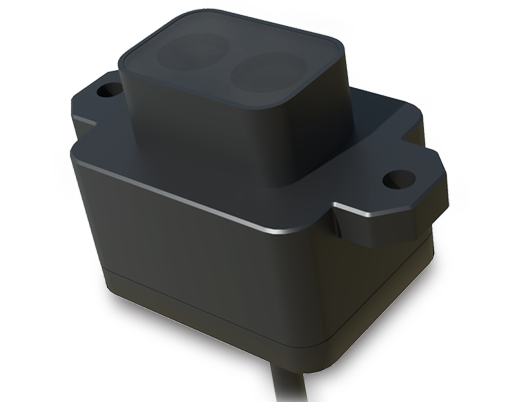
Key advantages of laser area sensors over other technologies are numerous. Their non-contact nature eliminates mechanical wear and prevents damage to delicate surfaces. They provide exceptionally fast measurement speeds, often in the millisecond range, making them ideal for high-speed production lines. The high resolution and accuracy, often down to the micron level, ensure reliable quality control. Furthermore, they are largely immune to ambient light interference and target surface color variations, especially when using red or blue laser models optimized for different materials. Modern sensors come with intuitive software for easy setup, allowing engineers to define measurement zones, set tolerances, and configure output signals without extensive programming.

In practical applications, laser area sensors are indispensable. In automotive assembly, they verify the precise gap and flush between body panels like doors and fenders. In electronics manufacturing, they inspect the coplanarity of BGA (Ball Grid Array) solder balls or measure component height. In logistics, they measure package dimensions for volume-based shipping calculations. In metal fabrication, they perform weld seam inspection and profile monitoring. Their robustness, typically featuring IP67 ratings, allows deployment in harsh industrial environments with dust, moisture, and vibration.

When integrating a laser area sensor, several factors must be considered. The measurement range, which defines the working distance and the width of the laser line, must suit the application. The required resolution and repeatability are paramount for precision tasks. The sensor's response time and data output interface (e.g., Ethernet/IP, PROFINET, EtherCAT, or analog/digital I/O) must align with the control system's capabilities. Environmental factors like extreme temperatures or heavy particulate matter may necessitate specialized housing or cooling. Proper mounting, alignment, and calibration are critical for optimal performance. Regular maintenance, primarily keeping the lens clean, ensures long-term reliability and data integrity.
The future of laser area sensing is geared towards smarter, more integrated systems. Trends include the integration of AI and machine learning algorithms directly into the sensor for advanced defect classification and predictive analytics. Enhanced communication protocols will facilitate seamless integration into Industry 4.0 and IIoT (Industrial Internet of Things) frameworks, enabling centralized data monitoring and analysis. Furthermore, miniaturization and cost reduction will open new applications in smaller-scale manufacturing and robotics.
In conclusion, laser area sensors are powerful, versatile tools that enhance automation, improve product quality, and increase production efficiency. By providing detailed, real-time area-based measurement data, they empower engineers to implement robust, reliable inspection and control systems across diverse industrial sectors. Their continued evolution promises even greater capabilities for the smart factories of tomorrow.