In the intricate world of industrial automation, where precision and reliability are paramount, proximity switch sensors stand as fundamental yet often overlooked components. These devices, operating without physical contact, are the silent sentinels that detect the presence or absence of objects, enabling countless critical control functions. Their principle of operation is elegantly simple: they generate an electromagnetic field or a beam of radiation, and the presence of a target object within this field causes a change in the signal, which is then converted into an electrical output. This non-contact nature is their greatest strength, eliminating mechanical wear and tear and allowing for high-speed, repetitive operations that would quickly degrade a mechanical limit switch.
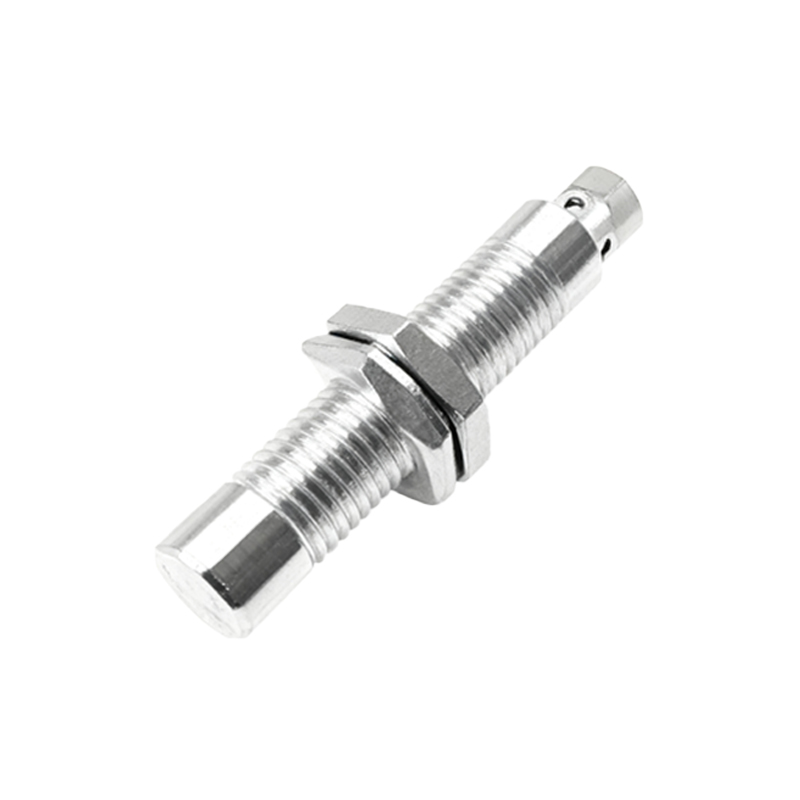
The landscape of proximity sensors is diverse, primarily categorized by their sensing technology. Inductive proximity sensors are the workhorses for detecting metallic objects. They generate an oscillating electromagnetic field from a coil. When a ferrous or non-ferrous metal enters this field, it induces eddy currents, causing a change in oscillation amplitude that triggers the switch. These sensors are exceptionally robust, resistant to environmental contaminants like oil, dust, and coolant, making them ideal for harsh manufacturing environments such as CNC machine tools, robotic arms, and conveyor systems. Their sensing range, however, is limited and varies with the type of metal.
For applications involving non-metallic materials—plastic, wood, glass, or liquids—capacitive proximity sensors are the solution. They function by generating an electrostatic field. Any object with a dielectric constant different from air (which is virtually all materials) will alter the capacitance of the circuit when it approaches, triggering detection. This makes them versatile for level detection in tanks, material handling of packaging, and even detecting filled vs. empty bottles on a production line. Sensitivity adjustments are often available to fine-tune the sensor for specific materials and to ignore background interference.
A third major category is the photoelectric sensor, which uses a light beam—typically infrared, visible red, or laser. The presence of an object is detected by either the interruption of the beam (through-beam), the reflection of the beam off the object (retro-reflective), or the diffusion of the beam (diffuse reflective). Photoelectric sensors offer the longest sensing ranges and can detect objects of almost any material, color, or finish. They are indispensable in packaging, material handling, and assembly line counting. However, they can be susceptible to ambient light interference and require a relatively clean optical environment.
Selecting the right Muje (or any high-quality brand) proximity sensor requires a meticulous analysis of the application. Key parameters include the sensing distance (rated and effective), the target material and size, the required output type (NPN/PNP, NO/NC), the operating voltage, and the environmental conditions (IP rating for ingress protection, temperature range, resistance to chemicals or welding spatter). For instance, a welding cell demands a sensor with a high degree of immunity to electromagnetic interference and physical protection from spatter, often housed in a rugged, threaded metal barrel.
The output configuration is another critical decision point. The two-wire AC/DC sensor is simple to wire but may have a residual leakage current. The more common three-wire DC sensor comes in two transistor types: NPN (sinking) and PNP (sourcing). The choice between NPN and PNP is fundamentally about the circuit design and the PLC input module's compatibility; it dictates whether the sensor switches the ground or the positive voltage line. Understanding this is crucial for seamless integration into a control system.
Installation and commissioning are not mere afterthoughts. Proper mounting, ensuring the correct orientation and maintaining the specified lateral and axial distances from the target and other metal surfaces, is essential for reliable operation. Factors like flush-mounting versus non-flush mounting for inductive sensors significantly affect the sensing range. Regular maintenance, though minimal, involves checking for physical damage, buildup of contaminants on the sensing face (especially for photoelectric and capacitive types), and verifying the electrical connections.
Looking ahead, the evolution of proximity sensors is aligned with Industry 4.0 trends. Modern sensors are becoming smarter, incorporating IO-Link communication. This digital interface allows for remote parameter setting, real-time diagnostic data (like operating temperature, signal strength, and switch cycle counts), and predictive maintenance alerts, transforming a simple switch into an intelligent node on the industrial network. This data transparency is key to optimizing processes and minimizing unplanned downtime.
In conclusion, proximity switch sensors are far from simple on/off devices. They are sophisticated, application-specific components whose correct selection and implementation form the bedrock of efficient, reliable, and safe automated systems. From ensuring a robotic gripper has picked up a part to confirming a safety guard is in place, their role is indispensable. As automation grows more complex, the humble proximity sensor, especially from reliable manufacturers, will continue to be a cornerstone of industrial