In the realm of industrial automation and machine control, the reliable detection of objects, position, and motion is paramount. Two of the most prevalent and versatile technologies employed for this purpose are proximity switches and Hall effect sensors. While both serve the fundamental role of non-contact sensing, their underlying principles, performance characteristics, and ideal applications differ significantly. A clear understanding of these differences is crucial for engineers and system designers to select the optimal sensor for a given task, ensuring robustness, efficiency, and cost-effectiveness.
Fundamental Operating Principles
The core distinction lies in their physical operating mechanisms. A proximity switch, often referred to as a proximity sensor, typically operates on one of three principles: inductive, capacitive, or ultrasonic. The most common type in industrial settings is the inductive proximity sensor. It generates an electromagnetic field from a coil in its sensing face. When a metallic object (the target) enters this field, it induces eddy currents within the target, which in turn cause a change in the oscillation amplitude of the sensor's internal circuit. This change is detected and triggers a solid-state output switch.
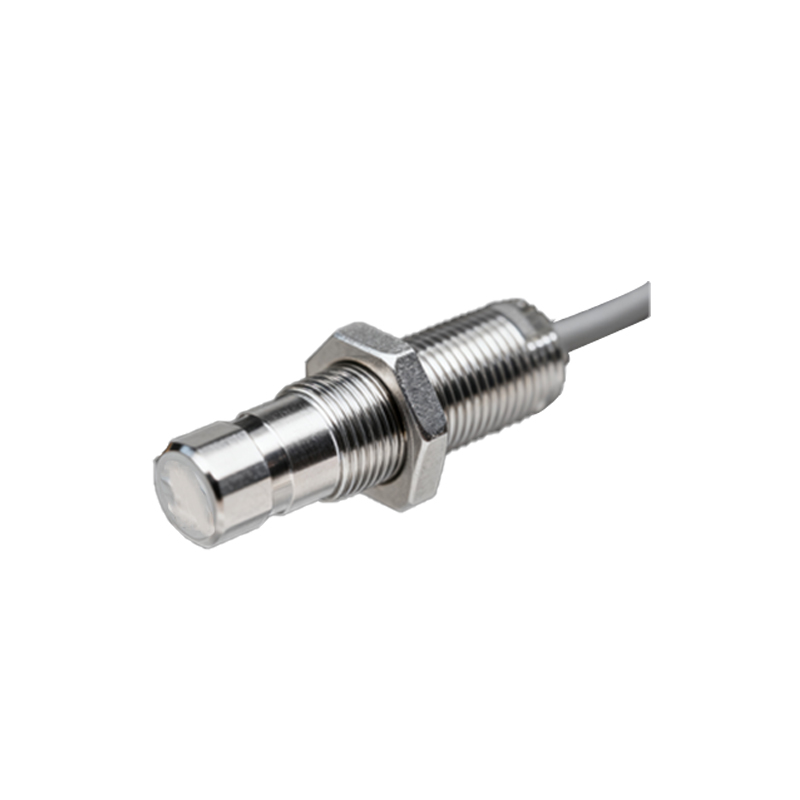
In contrast, a Hall effect sensor operates on a completely different phenomenon discovered by Edwin Hall in 1879. It utilizes a thin semiconductor element (the Hall element). When this element is exposed to a magnetic field and a control current is passed through it, a voltage (the Hall voltage) is generated perpendicular to both the current and the magnetic field lines. This voltage is proportional to the strength of the magnetic field. The sensor's integrated electronics then process this tiny voltage to provide a clean digital or analog output signal. Therefore, a Hall effect sensor does not detect the object itself, but rather the presence and strength of a magnetic field, which is typically provided by a permanent magnet attached to the target.
Key Performance Characteristics and Comparison
Target Material: This is a primary differentiator. Inductive proximity switches are inherently limited to detecting ferrous (iron-based) and non-ferrous metals (like aluminum or copper, albeit with reduced sensing range). They are completely insensitive to non-metallic materials. Capacitive variants can detect non-metals but are sensitive to environmental factors like humidity. Hall effect sensors, requiring a magnetic field source, are material-agnostic for the target itself; the target can be plastic, ceramic, or any material that can hold a magnet.
Sensing Range: Proximity switches generally offer longer standard sensing ranges, from a few millimeters up to several tens of millimeters for larger inductive models. Hall effect sensors typically have shorter effective ranges, often in the sub-millimeter to a few millimeter range for precise position detection, though specialized linear Hall sensors can measure field strength over a wider distance.
Precision and Repeatability: Hall effect sensors excel in applications requiring high precision. They can detect minute changes in magnetic field strength, making them ideal for precise position sensing, speed detection (e.g., counting gear teeth), and linear/angular displacement measurement. The switching point of a standard inductive proximity sensor is less precise and can be influenced by the target's metal composition, size, and shape.
Speed of Response: Both technologies offer very high switching frequencies, suitable for high-speed counting applications. Hall effect sensors often have a slight edge, with some models capable of responding into the hundreds of kilohertz range.
Environmental Robustness: Inductive proximity switches are renowned for their ruggedness. They are typically housed in robust metal or polymer casings, resistant to dust, dirt, oils, and coolants. They have no moving parts and are unaffected by ambient light. Hall effect sensors are also solid-state and robust but can be susceptible to interference from strong external magnetic fields, which must be considered during installation.
Output Signals: Both are available with digital (PNP/NPN) outputs. However, Hall effect sensors are more commonly available with analog outputs (voltage or current proportional to magnetic field strength) and special variants like latch and switch types, offering greater functional flexibility.
Typical Application Scenarios
Choosing between the two often comes down to the application:
Choose an Inductive Proximity Switch when: Detecting the presence/absence of metal parts on a conveyor, monitoring the end position of a metal cylinder in a pneumatic actuator, or providing limit switching on machine tools. Their robustness and longer range in metallic environments are key advantages.
Choose a Hall Effect Sensor when: Measuring the rotational speed of a shaft (using a ring magnet), detecting the precise closing position of a door (with a magnet on the door frame), performing current sensing by measuring the field around a conductor, or in brushless DC motors for commutation. Their precision, ability to work with non-metallic targets, and analog capabilities are decisive factors.
In conclusion, neither technology is universally