Infrared (IR) proximity sensors are ubiquitous in modern technology, found in applications ranging from smartphone screen dimming and touchless faucets to industrial automation and robotics. At the heart of their functionality lies a fundamental principle: the emission and detection of specific wavelengths of infrared light. The choice of wavelength is not arbitrary; it is a critical engineering decision that directly impacts sensor performance, reliability, and suitability for a given environment. This article delves into the key infrared wavelengths used in proximity sensing, their characteristics, and the practical considerations for selection.
The infrared spectrum is broadly categorized into segments: Near-Infrared (NIR), Mid-Infrared (MIR), and Far-Infrared (FIR). Proximity sensors primarily operate within the NIR and sometimes the lower end of the MIR range. The most common wavelengths are centered around 850nm and 940nm. These wavelengths are chosen because they align with the peak sensitivity of inexpensive silicon photodiodes and phototransistors, which act as the receivers. Silicon's responsivity—its ability to convert light into electrical current—is naturally high in this NIR region, making for efficient and cost-effective sensor design.
The 850nm wavelength is extremely popular. It offers a strong signal output due to high emitter efficiency and receiver sensitivity. However, it has a significant drawback: it is partially visible as a faint red glow. This can be undesirable in consumer electronics where aesthetic design is paramount. More importantly, 850nm light is more susceptible to interference from ambient light sources like sunlight and incandescent bulbs, which contain substantial IR components at this wavelength. This often necessitates more sophisticated filtering and modulation techniques to distinguish the sensor's signal from background noise.
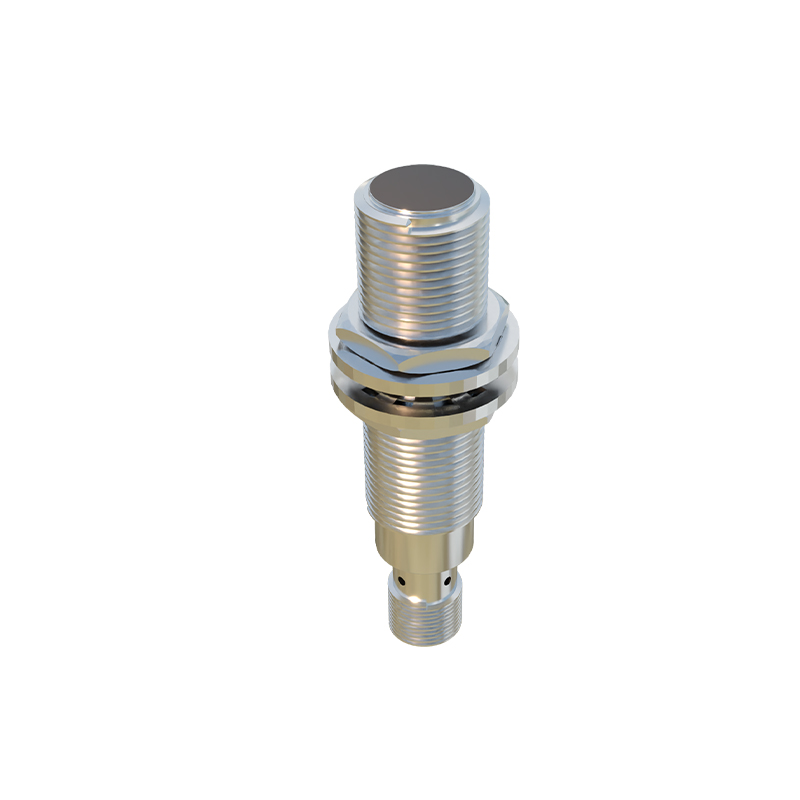
In contrast, the 940nm wavelength is virtually invisible to the human eye. This "black" IR is preferred for applications where the sensor's operation should be discreet. Furthermore, sunlight has a pronounced dip in its spectral irradiance around 940nm (specifically in the atmospheric absorption band), making 940nm sensors generally more robust against solar interference in outdoor or brightly lit indoor settings. The trade-off is that the output power of typical 940nm IR LEDs is slightly lower, and the responsivity of silicon detectors is also reduced compared to 850nm, potentially leading to a marginally shorter maximum detection range for a given emitter power.
Beyond these two staples, other wavelengths come into play for specialized applications. Sensors operating at 880nm or 950nm may be used to avoid specific interference peaks. For sensing certain materials or in harsh environments, longer wavelengths in the MIR range (e.g., 3-5μm or 8-14μm) might be employed. These often require different emitter technologies like laser diodes or thermal sources and specialized detectors like pyroelectric or thermopile sensors. They are less common for simple proximity detection but are crucial in applications like gas sensing, flame detection, or high-temperature object avoidance.
The operating environment is the ultimate dictator of wavelength choice. Engineers must conduct a thorough ambient light analysis. An application for an automotive rain sensor or an outdoor kiosk would heavily favor 940nm to mitigate sun interference. An industrial robot working in a controlled, dimly lit factory might successfully use 850nm for its stronger signal and longer range. The target object's properties also matter. While most non-transparent materials reflect IR well, some plastics and paints can be transparent to specific IR wavelengths, potentially causing false readings or reduced range.
Modern IR proximity sensors rarely rely on raw, continuous IR emission. They almost universally employ modulated pulses of IR light. The receiver is tuned to detect only the specific frequency of this modulation, effectively filtering out constant or slowly changing ambient IR light. This modulation frequency is another key parameter, often chosen to avoid harmonics of common AC lighting frequencies (50/60 Hz and their multiples from fluorescent or LED lights) to prevent electrical noise interference.
In conclusion, the selection of an infrared wavelength for a proximity sensor is a nuanced balance of multiple factors: desired detection range, immunity to ambient light, invisibility requirements, component cost and availability, and target object characteristics. The 850nm and 940nm wavelengths dominate the market due to their compatibility with silicon technology, but the optimal choice is always context-dependent. A deep understanding of these spectral characteristics enables engineers to design more reliable, efficient, and effective sensing solutions across countless industries, ensuring that these unseen beams of light perform their critical roles flawlessly.