Photoelectric sensors, particularly those utilizing laser technology, have become indispensable components in modern industrial automation systems. These devices operate on the principle of converting light signals into electrical signals to detect the presence, absence, or position of objects with high precision. Unlike mechanical limit switches or proximity sensors, photoelectric sensors offer non-contact detection, which minimizes wear and tear and allows for high-speed operation in demanding environments.
The core mechanism involves a light emitter, typically a laser diode or LED, and a receiver. The emitter projects a focused beam of light—often in the visible red or infrared spectrum—toward the receiver. When an object interrupts this beam, the receiver detects the change in light intensity and triggers an output signal. This simple yet effective principle enables three primary sensing modes: through-beam, retro-reflective, and diffuse reflective. Through-beam sensors, with separate emitter and receiver units, provide the longest sensing ranges and highest reliability. Retro-reflective models use a reflector to bounce the beam back to a combined emitter-receiver unit, offering easier alignment. Diffuse reflective sensors detect light reflected directly from the target object, making them ideal for close-range applications where installing a reflector is impractical.
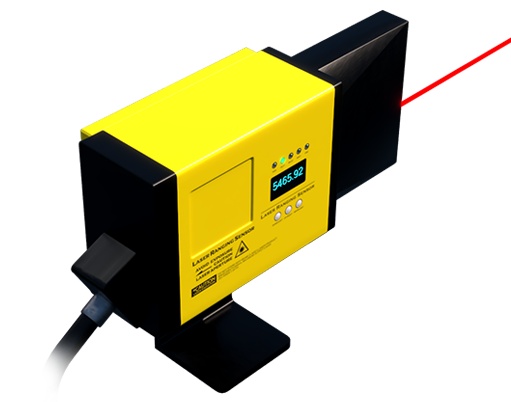
Laser-based photoelectric sensors represent a significant advancement over conventional LED-based models. Lasers produce a highly collimated, narrow beam with minimal divergence, enabling precise detection of small objects or exact positioning over long distances—sometimes exceeding 100 meters. This focused beam reduces interference from ambient light and background objects, enhancing signal stability. In manufacturing, such sensors are crucial for tasks like edge detection on web materials, wafer alignment in semiconductor fabrication, and part counting on high-speed assembly lines. Their accuracy is measured in micrometers, ensuring consistent quality control.
The integration of advanced features has further expanded their utility. Many modern sensors incorporate background suppression technology, which uses triangulation to ignore reflections from distant surfaces, allowing them to detect objects only within a defined range. Others feature adjustable sensing windows or teach-in functions for quick configuration. Connectivity options now include IO-Link, which enables digital parameter setting, remote monitoring, and predictive maintenance by transmitting sensor status data to control systems.
Selecting the appropriate photoelectric sensor requires careful consideration of several factors. The application environment dictates the needed ingress protection (IP) rating; harsh conditions with dust, moisture, or chemical exposure demand robust housings (e.g., IP67 or IP69K). The target object's properties—such as color, material, surface texture, and size—influence the choice of light source and sensing mode. For instance, shiny metallic surfaces may require polarized filters to avoid false triggers from specular reflections. Response time and switching frequency must match the process speed to avoid bottlenecks.
Despite their robustness, challenges persist. Ambient light from factory windows or high-intensity lamps can interfere with infrared sensors, necessitating models with modulated light signals that filter out constant background illumination. In dirty environments, lens contamination can attenuate the light beam, leading to detection failures. Regular maintenance and cleaning schedules are essential. Thermal drift in laser diodes may also affect long-term stability, though temperature-compensated designs mitigate this issue.
Looking ahead, innovations in photoelectric sensing continue to emerge. Miniaturization allows sensors to fit into tighter spaces on collaborative robots and compact machinery. Enhanced algorithms enable smarter sensors capable of distinguishing between object types or detecting translucent materials like glass or plastic films. The convergence with Industry 4.0 trends sees sensors becoming integral nodes in IoT networks, providing real-time data for analytics and optimizing overall equipment effectiveness (OEE).
In summary, photoelectric sensors with laser technology are vital for achieving precision, efficiency, and reliability in automated systems. Their ability to perform non-contact detection across varied conditions supports advancements in smart manufacturing, logistics automation, and quality assurance. Engineers must leverage their understanding of sensor specifications and application demands to implement solutions that enhance operational performance while reducing downtime and maintenance costs.