Proximity sensors are indispensable components in modern industrial automation, robotics, and safety systems. Their ability to detect the presence or absence of an object without physical contact makes them reliable, wear-free, and highly efficient. Selecting the right sensor for an application hinges on a deep understanding of its specifications. This guide delves into the key parameters that define proximity sensor performance and selection.
The fundamental specification is the Sensing Distance (Sn). This nominal value, typically provided for a standard target (often mild steel), indicates the ideal detection range under reference conditions. It is crucial to note that the Effective Operating Distance (Sr) is often less, accounting for manufacturing tolerances and environmental factors like temperature. Engineers must always consider the Assured Operating Distance (Sa), a guaranteed minimum distance under all specified conditions, to ensure fail-safe operation. Never design at the nominal Sn limit.
Sensor Type is the next critical decision. Inductive sensors detect metallic objects, primarily ferrous metals like steel, with reduced range for non-ferrous metals like aluminum or copper. Capacitive sensors can detect nearly any material—metals, plastics, liquids, powders—by sensing changes in dielectric constant. Ultrasonic sensors use sound waves to detect objects and can often measure distance, while photoelectric sensors use light beams. This article focuses on the ubiquitous inductive type.
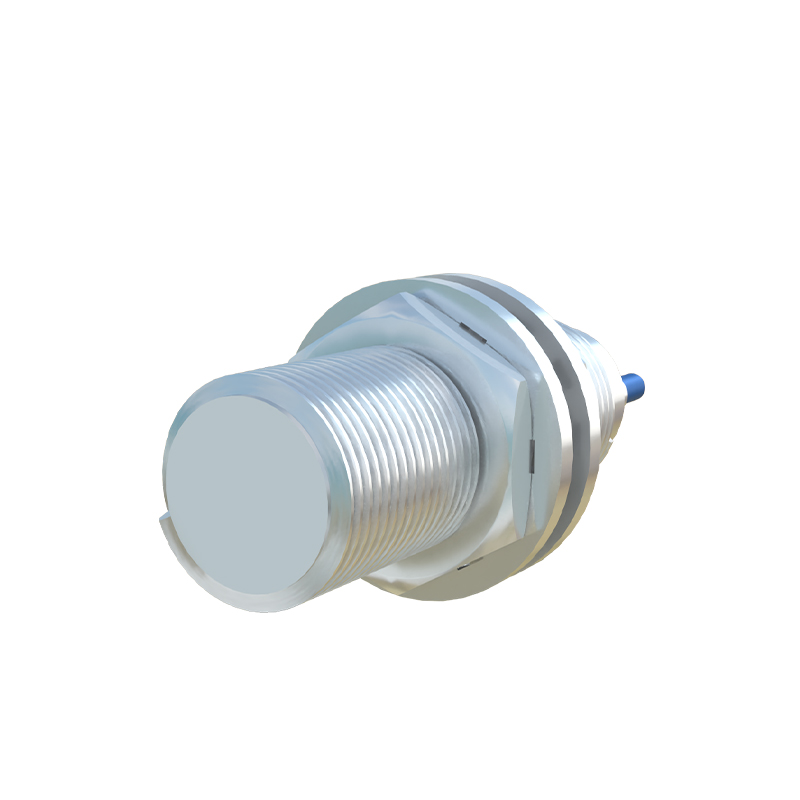
Output Configuration defines the electrical interface. The classic three-wire DC sensor comes in two flavors: PNP (Sourcing) and NPN (Sinking). PNP sensors switch the positive voltage to the load, common in Europe and many PLC inputs. NPN sensors switch the negative or 0V line to the load, historically common in Asia. Two-wire AC/DC sensors simplify wiring but require careful consideration of residual current and voltage drop. Analog outputs (4-20mA, 0-10V) provide continuous distance or signal strength information, while IO-Link digital sensors offer advanced diagnostics, parameterization, and process data exchange.
Switching Frequency specifies how quickly a sensor can respond, measured in Hertz (Hz). A 1 kHz sensor can detect up to 1000 objects per second. High-speed applications, like counting small parts on a fast conveyor or monitoring gear teeth, demand high-frequency sensors (5 kHz or more). For slow-moving assemblies, a standard 100 Hz sensor may suffice.
Hysteresis is the difference between the switch-on point (as the target approaches) and the switch-off point (as it moves away). Expressed as a percentage of the sensing distance, this built-in feature prevents output chatter when a target is at the exact detection threshold due to vibration or minor positioning errors.
Environmental Ratings are non-negotiable for reliability. The Ingress Protection (IP) Rating (e.g., IP67, IP69K) defines protection against dust and liquids. An IP67 sensor can withstand temporary immersion, while IP69K is for high-pressure, high-temperature washdowns. The NEMA rating provides similar guidance in North American markets. Operating Temperature range must accommodate the application's environment, from freezer warehouses to foundry lines.
Construction and Mounting details are practical necessities. Shielded (Flush-mountable) sensors have their sensing field concentrated to the front, allowing installation flush in metal without triggering it. Unshielded (Non-flush) sensors have a longer range but require a non-metallic zone around the sensing face. Housing material (stainless steel, PBT plastic), connector type (M8, M12, cable exit), and form factor (cylindrical, rectangular, ring) must suit the mechanical and chemical environment.
Electrical Characteristics include the operating voltage range (e.g., 10-30 VDC), current consumption, and most importantly, the Load Current rating. Ensure the sensor's solid-state switch or relay can handle the connected load (e.g., a PLC input, relay coil, or indicator lamp). Short-Circuit and Reverse Polarity Protection are highly desirable features that prevent immediate failure during wiring errors.
Target Material and Size significantly affect inductive sensors. The standard Sn is for mild steel. For stainless steel, expect a reduction factor of 0.7-0.9. For aluminum or copper, the factor can be as low as 0.3-0.4. The target must also be large enough to interact with the sensor's magnetic field; a rule of thumb is that the target side should equal the sensor face diameter or the rated sensing distance, whichever is larger.
Finally, consider Special Features: Weld-Field Immunity is critical for sensors near resistance welding equipment, preventing false triggers from strong magnetic fields. Temperature Drift Compensation maintains a stable sensing point