In the rapidly evolving landscape of industrial automation and precision measurement, UART-based laser distance sensors have emerged as a cornerstone technology. These sophisticated devices combine the accuracy of laser triangulation or time-of-flight principles with the simplicity and universality of the Universal Asynchronous Receiver/Transmitter (UART) serial communication protocol. This fusion creates a powerful tool for engineers seeking reliable, high-speed, and easily integrable distance measurement solutions.
At its core, a UART laser distance sensor operates by emitting a focused laser beam towards a target. The sensor then detects the reflected light. Depending on the underlying technology, it calculates the distance either by analyzing the phase shift of a modulated laser signal (phase-shift method) or by measuring the time it takes for a laser pulse to travel to the target and back (time-of-flight). The calculated distance data is then formatted and transmitted via the UART interface. UART communication is favored for its straightforward implementation, requiring only a transmit (TX), receive (RX), and ground connection. This simplicity allows for seamless integration with a vast array of microcontrollers (MCUs), programmable logic controllers (PLCs), and single-board computers like Arduino or Raspberry Pi, without the need for complex communication stacks.
The technical advantages of employing a UART interface are significant. First and foremost is ease of integration. Developers can quickly establish communication by sending simple ASCII or binary commands to query measurements, configure parameters like measurement rate, or set output formats. A typical command frame might be as simple as sending0x01 to trigger a single measurement, with the sensor responding with a fixed-length data packet containing the distance value, often in millimeters. This low-level control is invaluable for custom applications. Secondly, UART offers real-time performance. With baud rates commonly ranging from 9600 to 115200 or higher, these sensors can provide high-frequency measurement updates, which is critical for dynamic applications such as robotic guidance or conveyor belt sorting. Furthermore, the point-to-point communication nature of UART ensures stable data transmission without network congestion issues common in bus systems, though it limits one host to one sensor per serial port unless multiplexers are used.
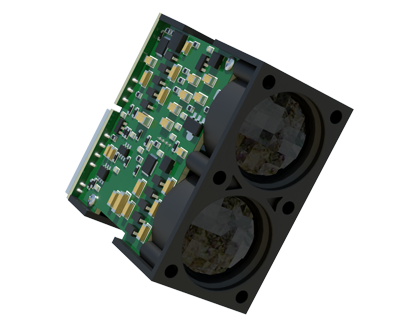
The applications of UART laser sensors span across numerous industries, demonstrating their versatility. In industrial automation, they are pivotal for object detection on assembly lines, precise positioning of robotic arms, and measuring the thickness or diameter of products in real-time. The logistics and warehousing sector utilizes them for palletizing, level monitoring in silos, and automated guided vehicle (AGV) navigation. Within the realm of consumer electronics and prototyping, their compact size and simple wiring make them ideal for DIY projects, drone altitude control, and interactive installations. Emerging fields like agricultural technology employ them for monitoring crop growth or guiding autonomous farming equipment.
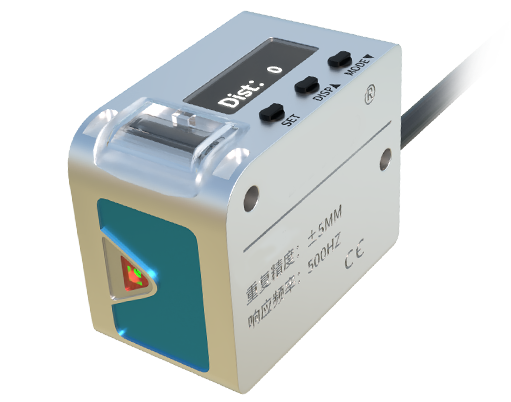
Selecting the appropriate UART laser sensor requires careful consideration of several key specifications. Measuring Range is paramount; sensors are available from short-range (a few centimeters) for precision tasks to long-range (hundreds of meters) for surveying. Accuracy and Resolution determine the sensor's precision, with high-end models offering sub-millimeter resolution. The Laser Class (typically Class 2 or Class 1) indicates safety levels, with Class 1 being inherently safe. Output Data Rate defines how many measurements per second the sensor can provide, which is crucial for high-speed processes. Finally, Environmental Robustness is assessed through Ingress Protection (IP) ratings, ensuring reliable operation in dusty, humid, or vibratory industrial environments.
In practice, integrating these sensors involves connecting the TX line of the sensor to the RX line of the host controller and vice-versa, setting matching baud rates, data bits, stop bits, and parity. Most sensors operate on a simple command-response model. For instance, sending a string like "*MDS\r\n*" might initiate a measurement, and the sensor would reply with "*+01234.5\r\n*", indicating a distance of 1234.5 units. Engineers must also consider power requirements, typically between 3.3V and 5V DC, and implement proper filtering in code to handle the asynchronous serial data stream.
Looking ahead, the convergence of UART laser sensors with Industrial Internet of Things (IIoT) architectures is a clear trend. While UART provides the foundational link, its data is often channeled through gateways to Ethernet or wireless networks (like LoRaWAN or Wi-Fi) for cloud analytics and system-wide monitoring. Furthermore, advancements in laser and CMOS sensor technology continue to push the boundaries of accuracy, miniaturization, and power efficiency.
In conclusion, the UART laser distance sensor represents an elegant synergy of precise optical measurement and robust, simple digital communication. Its role in enabling smarter, more responsive, and more efficient automated systems is undeniable. For engineers and system integrators, mastering this technology is key to unlocking new levels of performance in measurement and control applications across the modern industrial spectrum.