In the realm of industrial automation, precision measurement is not merely a requirement; it is the cornerstone of efficiency, quality, and safety. Among the various technologies enabling this precision, laser distance sensors have emerged as a critical tool. Huaying, a notable name in the sensor technology sector, has developed a range of laser distance sensors that cater to diverse and demanding industrial applications. This article delves into the technology behind these sensors, their key advantages, typical use cases, and essential factors for selection.
At its core, a Huaying laser distance sensor operates on the principle of time-of-flight or phase-shift measurement. A laser diode emits a focused beam of light towards a target. The sensor then precisely measures the time it takes for the reflected light to return to a detector. Using the constant speed of light, the sensor's internal processor calculates the distance with remarkable accuracy. Modern Huaying models often incorporate advanced signal processing algorithms to filter out ambient light noise and handle challenging surface materials, ensuring reliable readings even in complex environments.
The benefits of integrating Huaying laser distance sensors into industrial systems are multifaceted. First and foremost is their exceptional accuracy and resolution, capable of detecting minute distance changes, often down to the sub-millimeter level. This is paramount in applications like wafer alignment in semiconductor manufacturing or gap inspection in automotive assembly. Secondly, they offer non-contact measurement. This is a significant advantage when measuring delicate, hot, moving, or otherwise inaccessible objects, eliminating the risk of damage or wear associated with tactile probes. Furthermore, these sensors boast high measurement speeds, enabling real-time process control in high-throughput production lines. Their compact design and robust housing, typically rated with high IP (Ingress Protection) codes, allow for easy integration into machinery and reliable operation in harsh conditions involving dust, moisture, or vibration.
The application spectrum for Huaying laser distance sensors is remarkably broad. In logistics and warehousing, they are indispensable for palletizing, dimensioning packages, and guiding automated guided vehicles (AGVs). Within the manufacturing sector, they perform critical tasks such as thickness monitoring of rolled metals or plastics, fill level control in silos or tanks, and robot guidance for precise picking and placing. The construction industry utilizes them for monitoring structural deformation, alignment of large components, and crane anti-collision systems. Even in emerging fields like robotics and autonomous systems, these sensors provide essential environmental perception for navigation and obstacle avoidance.
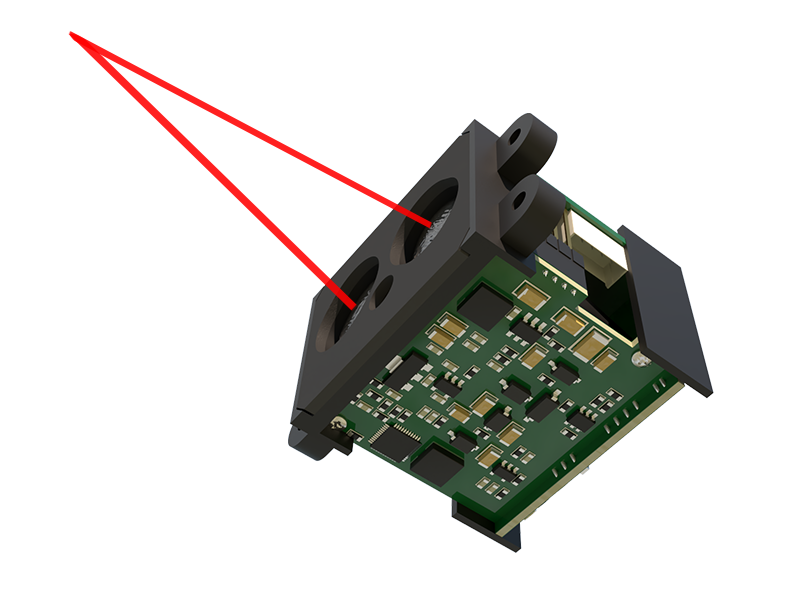
Selecting the appropriate Huaying laser distance sensor requires careful consideration of several technical parameters. The measuring range is the primary criterion; it must encompass the minimum and maximum distances expected in the application. Accuracy and repeatability specifications determine the suitability for the required tolerance levels. The response time or measurement frequency must align with the speed of the process being monitored. The laser class (typically Class 2) is important for safety compliance, indicating the power output. The output interface is another key decision point; common options include analog (4-20 mA, 0-10 V), digital (RS232, RS485), and industrial fieldbus protocols (Profibus, EtherCAT), which must be compatible with the existing control system. Finally, environmental factors such as ambient temperature, exposure to dust or water (IP rating), and potential electrical interference should guide the choice of sensor model and housing.
Installation and maintenance are straightforward but crucial for optimal performance. Proper alignment of the sensor beam perpendicular to the target surface is essential to avoid cosine error. Ensuring a stable mounting point minimizes vibration-induced inaccuracies. For targets with highly reflective or dark, absorbent surfaces, Huaying often provides models with adjustable sensitivity or built-in background suppression features. Regular cleaning of the lens and periodic verification against a known reference distance are recommended maintenance practices to sustain long-term accuracy.
In conclusion, Huaying laser distance sensors represent a sophisticated fusion of optical engineering and electronics, delivering the precision and reliability demanded by modern industry. Their ability to provide fast, non-contact, and highly accurate distance data makes them a versatile solution across countless automation and measurement challenges. By understanding the underlying technology, recognizing the vast array of applications, and meticulously matching sensor specifications to the operational requirements, engineers and system integrators can fully leverage the capabilities of Huaying sensors to enhance productivity, ensure quality, and drive innovation in their respective fields.