In the realm of industrial automation, reliability, durability, and precision are non-negotiable. Among the myriad of sensing technologies available, the magnetic proximity switch stands out as a remarkably versatile and robust universal sensor. Its operating principle is elegantly simple yet profoundly effective, making it a cornerstone in countless applications, from heavy machinery to delicate assembly lines.
At its core, a magnetic proximity switch detects the presence or absence of a magnetic field, typically generated by a permanent magnet. The sensor itself contains a reed switch or a solid-state Hall effect element. When a target magnet approaches within a specified sensing range, the magnetic field causes the contacts in a reed switch to close (or a semiconductor in a Hall effect sensor to trigger), thereby changing the output state of the switch. This contactless operation is the key to its exceptional longevity. Unlike mechanical limit switches, there is no physical contact between the sensor and the actuating magnet, eliminating wear and tear from repeated impacts. This translates to a virtually maintenance-free lifecycle measured in millions of cycles.
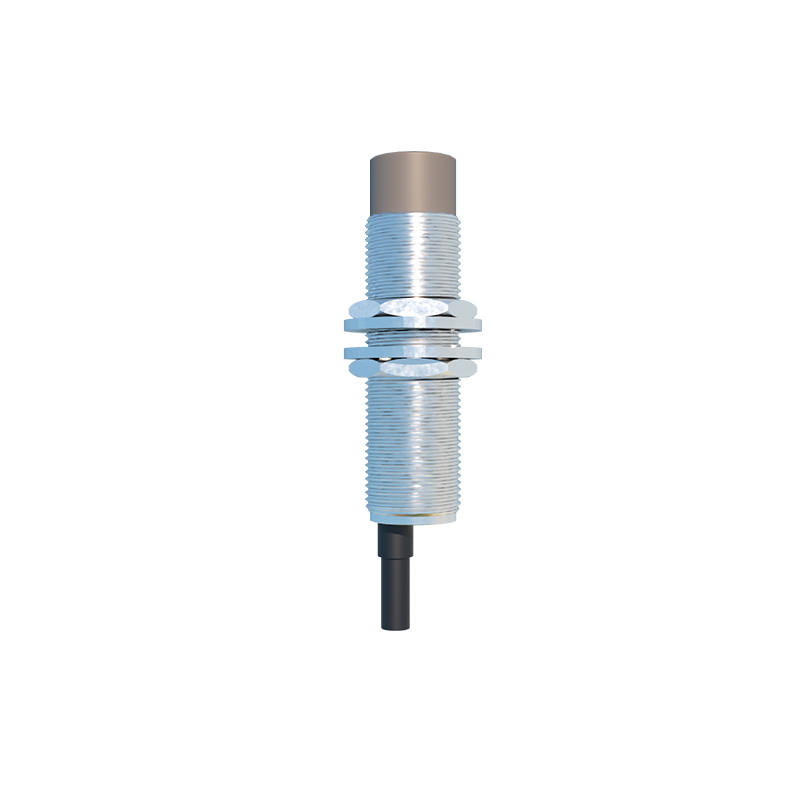
The universality of this sensor stems from its inherent characteristics. First is its environmental resilience. Sealed within robust housings, often made of stainless steel, brass, or high-grade plastics like PBT, magnetic proximity switches are impervious to dust, dirt, oil, coolant, and moisture. Many models boast IP67, IP68, or even IP69K ratings, allowing them to perform flawlessly in washdown environments, outdoor settings, and harsh industrial conditions where optical sensors would fail due to lens fouling.
Second is its insensitivity to target material. The sensor reacts solely to a magnetic field. Whether the actuating magnet is mounted on a ferrous metal bracket, an aluminum robot arm, a plastic carrier, or even a non-metallic container, the detection remains consistent. This decoupling from the target's electrical or material properties is a significant advantage over inductive proximity sensors, which only detect metals, or capacitive sensors, which can be influenced by environmental changes.
Third is its application flexibility. Magnetic proximity switches are predominantly available in two configurations: cylinder sensors (for pneumatic and hydraulic cylinders) and general-purpose limit switches. Cylinder sensors are directly mounted onto the cylinder body to detect piston position (end-of-stroke or mid-stroke) by sensing a magnet embedded in the piston. This provides critical feedback for sequential control, eliminating the need for external mechanical actuators. As general-purpose limit switches, they are used for position detection on doors, gates, slides, and rotating equipment. Their simple two-wire (AC/DC) or three-wire (DC) connection schemes facilitate easy integration into control systems.
When selecting a magnetic proximity switch, several technical parameters are critical. The sensing distance, though typically shorter than inductive sensors (ranging from a few millimeters to about 40mm), must be chosen with consideration for installation tolerances and target magnet strength. The switching frequency defines how quickly the sensor can respond to changing magnetic fields, with Hall effect models offering higher frequencies suitable for high-speed counting or speed monitoring. The electrical specifications—operating voltage, current rating, and output type (PNP/NPN, NO/NC)—must match the control system's requirements. Additionally, factors like temperature range, housing style (barrel, rectangular, slot-style), and connection type (cable, connector) are chosen based on the specific application environment.
In practice, the benefits are substantial. They enhance machine safety by reliably confirming the position of guards, doors, and moving parts. They improve process reliability by providing unambiguous positional feedback for automated sequences. Their ruggedness reduces downtime and maintenance costs. From monitoring the fill level of a non-metallic tank using a float magnet to ensuring a robotic gripper is fully open or closed, the magnetic proximity switch provides a simple, cost-effective, and utterly reliable sensing solution.
In conclusion, the magnetic proximity switch embodies the ideal of a universal sensor in industrial automation. Its contactless, material-independent sensing principle, combined with outstanding environmental robustness and straightforward integration, ensures dependable performance across a vast spectrum of challenging applications. For engineers seeking a sensor that offers a perfect balance of simplicity, durability, and functionality, the magnetic proximity switch remains an indispensable and timeless choice.