Laser sensors have become indispensable tools across numerous industrial sectors, offering unparalleled precision, speed, and reliability for measurement and detection tasks. Their operation is fundamentally based on the principle of emitting a focused beam of coherent light—laser light—toward a target and analyzing the reflected signal. The core characteristics that define their performance and suitability for various applications can be categorized into several key areas.
First and foremost is Measurement Principle. The two most prevalent types are triangulation and time-of-flight (ToF). Triangulation sensors project a laser spot onto the target. The reflected light is captured by a receiving element (like a CCD or PSD) at a known angle. Any change in the target's distance causes the spot's position on the receiver to shift, allowing for precise distance or height calculation. This method excels in high-resolution, short-range applications, such as measuring small part dimensions or surface profiles. Conversely, Time-of-Flight sensors calculate distance by measuring the time delay between the emission of a laser pulse and the reception of its reflection. They are ideal for long-range measurements, often up to several hundred meters, and are widely used in level monitoring, vehicle detection, and large-scale dimensioning.
The Performance Specifications are critical for selection. Accuracy and Resolution are paramount. Accuracy refers to the closeness of the measured value to the true value, while resolution is the smallest detectable change. High-end laser sensors can achieve micron-level accuracy. Measuring Range defines the minimum and maximum distances over which the sensor can operate reliably. Repeatability indicates the sensor's consistency in returning the same measurement under unchanged conditions. Response Time or Sampling Rate is crucial for dynamic processes; modern sensors can achieve rates in the kilohertz range, capturing rapid movements. Spot Size is another vital factor. A smaller spot allows for measurement on very small features or edges, but can be more sensitive to surface irregularities.
Environmental Robustness is a non-negotiable characteristic in industrial settings. Laser sensors must be designed to withstand Temperature Fluctuations, Vibration, and Shock. Many are housed in rugged, IP67-rated enclosures to resist dust and water ingress. Furthermore, performance under varying Ambient Light conditions is essential. Advanced models use modulated laser light and optical filters to suppress interference from sunlight or other factory lighting, ensuring stable operation.
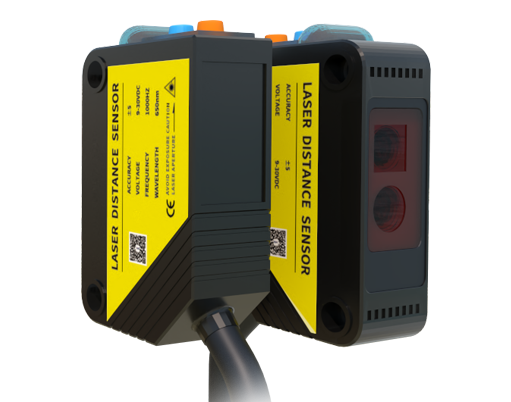
The Target Surface Properties significantly influence sensor performance. While laser sensors are versatile, highly reflective, transparent, or absorptive surfaces can pose challenges. For instance, a mirror-like surface may reflect the beam away from the receiver, causing a drop-out. Dark, matte surfaces absorb more light, potentially reducing signal strength. Many sensors feature automatic exposure control or specialized modes to compensate for different surface colors and materials, from shiny metal to black rubber.
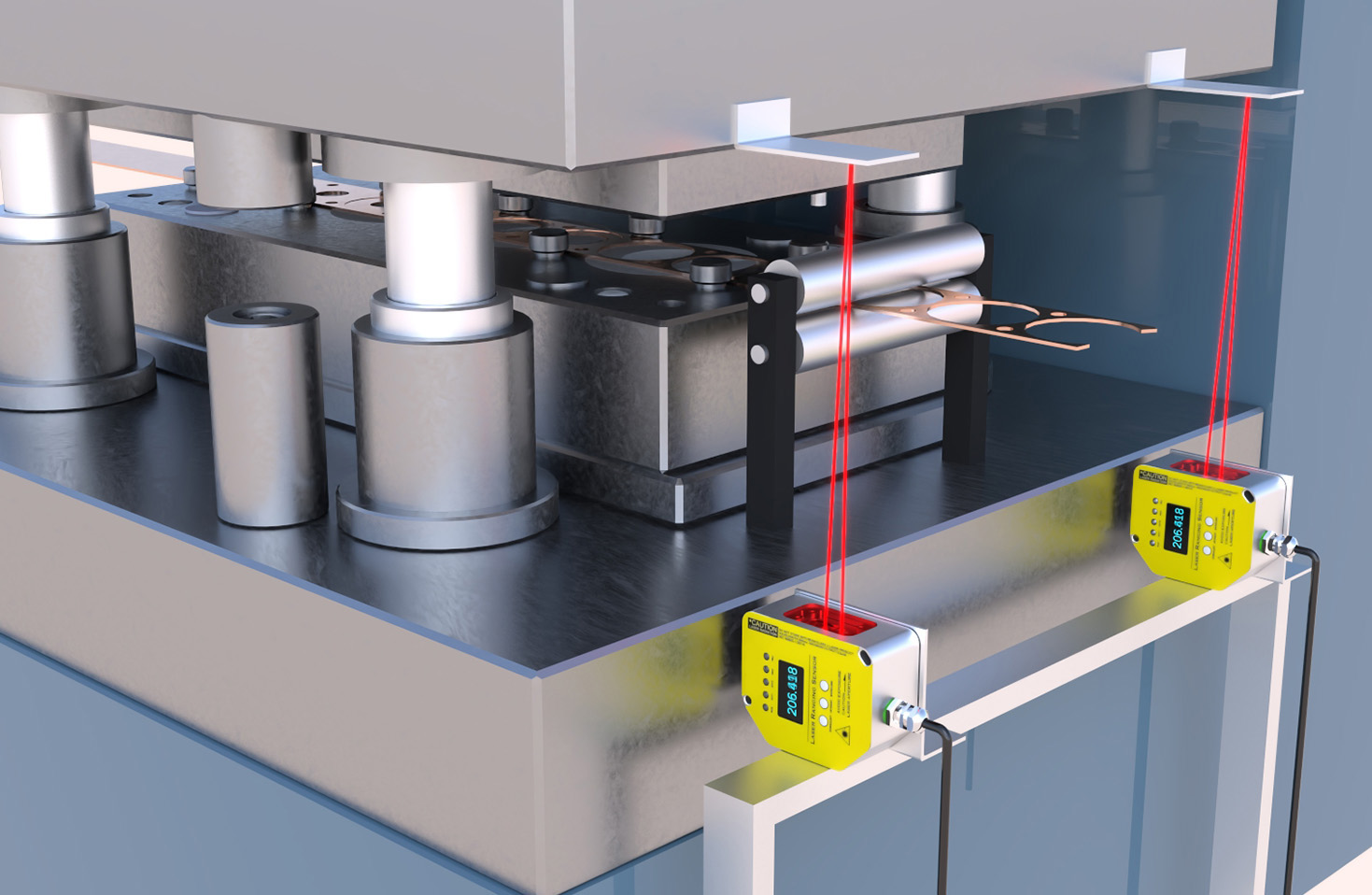
Outputs and Connectivity define how the sensor integrates into a control system. Standard digital outputs (PNP/NPN, push-pull) and analog outputs (0-10V, 4-20mA) are common for transmitting measurement values or switch signals. Increasingly, industrial communication protocols like IO-Link, PROFINET, and EtherNet/IP are integrated, providing detailed parameterization, diagnostics, and data directly to PLCs or SCADA systems, aligning with Industry 4.0 trends.
Finally, Ease of Use and Setup through intuitive software interfaces or teach-in buttons accelerates commissioning and reduces downtime. Features like programmable measurement windows, multi-point teaching, and built-in evaluation logic allow for flexible adaptation to complex tasks.
In conclusion, understanding the fundamental characteristics of laser sensors—from their underlying measurement principle and precise performance specs to their environmental durability and integration capabilities—is essential for engineers to select the optimal device. This ensures robust, accurate, and efficient solutions for applications ranging from precision assembly and robotics to logistics and heavy industry, driving automation and quality control forward.