In the realm of industrial automation and control systems, proximity sensors are indispensable components for detecting the presence or absence of objects without physical contact. Among the various types, Normally Closed (NC) AC Proximity Sensors hold a distinct and critical position, particularly in safety and fail-safe circuits. This article delves into the operational principles, key advantages, typical applications, and essential selection criteria for these robust sensing devices.
At its core, a Normally Closed AC proximity sensor is an inductive sensor designed to operate on alternating current (AC) power supplies, commonly 24VAC, 120VAC, or 240VAC. The "Normally Closed" terminology refers to the state of its output switching element when the sensor is in its idle or non-activated condition. In an NC configuration, the output circuit is closed, allowing current to flow through the sensor's load (e.g., a relay coil, PLC input, or indicator lamp) when no target is within its sensing range. When a metallic target enters the predefined sensing field, the sensor activates and opens the output circuit, interrupting the current flow. This behavior is the inverse of the more common Normally Open (NO) type.
The working principle is based on electromagnetic induction. The sensor contains an oscillator circuit that generates a high-frequency electromagnetic field at its active face. When a conductive (typically ferrous or non-ferrous metal) target approaches this field, eddy currents are induced in the target. This causes a change in the oscillation amplitude within the sensor, which is detected by a threshold circuit. This detection triggers the solid-state or relay output to change state—opening the circuit in the case of an NC sensor.
The primary advantage of the NC configuration lies in its inherent fail-safe characteristic. In many critical applications, a system failure must default to a safe state. Consider a safety guard door on a machine. A Normally Closed sensor can be used to monitor if the door is closed. The circuit is designed so that the machine can only operate when the sensor's output is open (meaning the door is properly closed and the target is present). If the sensor fails, if its wiring is cut, or if the power is lost, the output reverts to or remains in the closed state. This closed state is interpreted by the control system as a "door open" or "fault" condition, causing the machine to halt. This design ensures that a failure leads to a shutdown rather than unsafe operation, a cornerstone of safety circuit design per standards like IEC 62061 and ISO 13849.
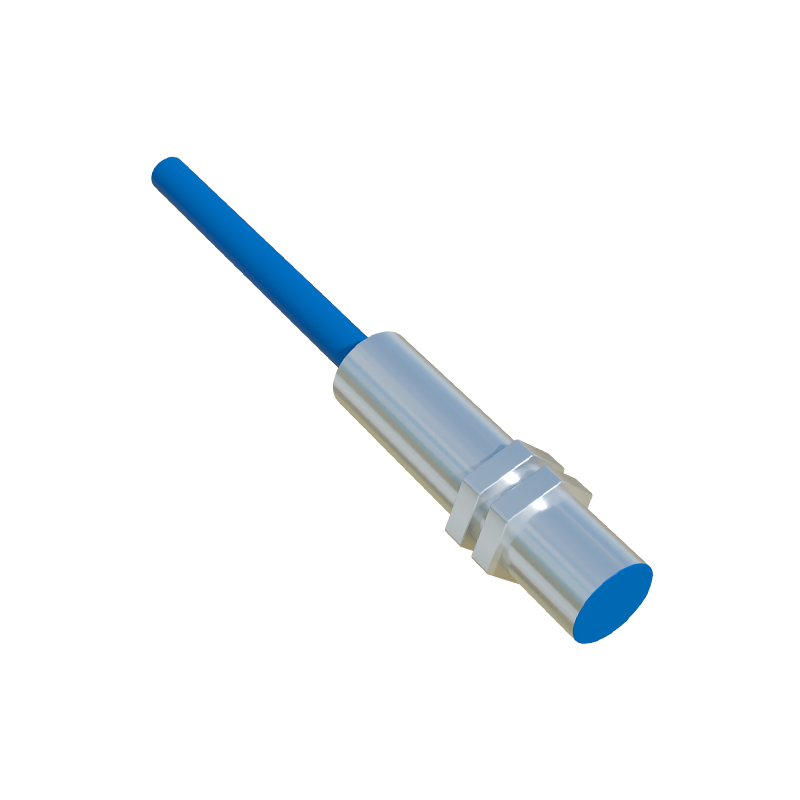
Typical applications for Normally Closed AC proximity sensors extend beyond safety. They are frequently employed in:
Safety Interlocks: On gates, guards, and access panels to ensure they are securely closed before machinery starts.
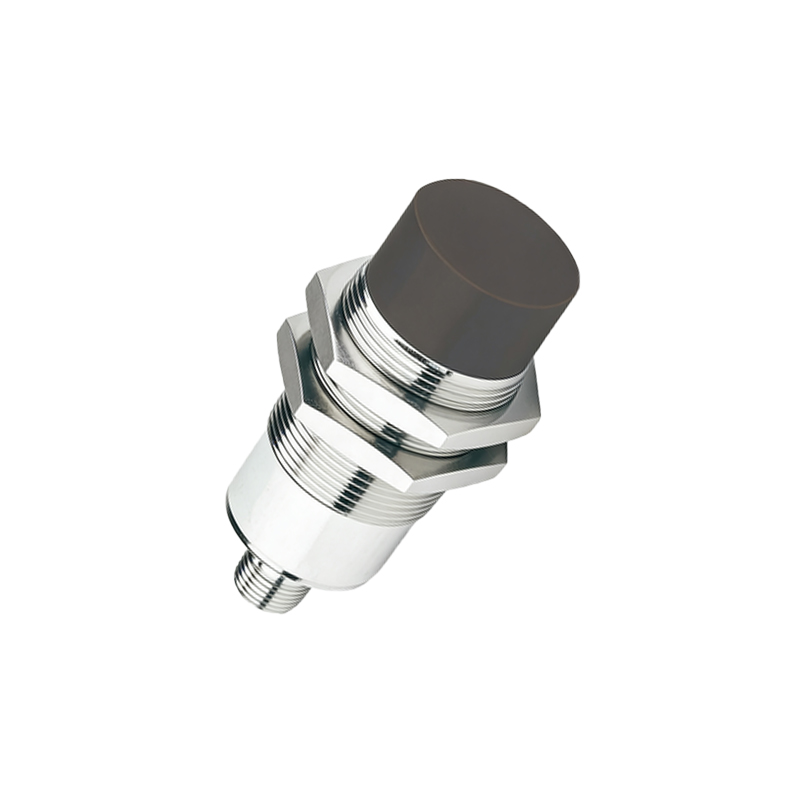
Position Verification: Confirming that a cylinder is fully retracted or a clamp is in the open position before initiating the next cycle.
Fault Detection Circuits: Where an unexpected presence of an object (like a jam in a conveyor) must trigger an immediate stop.
Redundant Monitoring Systems: Used in tandem with NO sensors for high-integrity monitoring.
Selecting the right NC AC proximity sensor requires careful consideration of several parameters:
1. Supply Voltage and Current: Match the sensor's voltage rating (e.g., 90-250VAC) with the available plant power. Ensure the load current does not exceed the sensor's maximum switching capacity.
2. Sensing Distance: The rated operating distance (Sn) must be sufficient for the application, with a safety margin. Consider factors like target material, size, and shape.
3. Output Type: While the logic is NC, the physical output can be a solid-state switch (like a TRIAC) or an electromechanical relay. Solid-state offers faster switching and longer life for resistive loads; relays can handle a wider range of load types, including small inductive loads.
4. Housing Material and Protection Rating: Metal housings offer robustness but have a shorter sensing range for non-ferrous targets. Plastic housings provide better sensing performance for various metals. The Ingress Protection (IP) rating (e.g., IP67) indicates suitability for dusty or washdown environments.
5. Electrical Connections: Choices include pre-wired cables, quick-disconnect connectors, or terminal boxes for ease of installation and maintenance.
6. Temperature Range: Ensure the sensor operates reliably within the ambient temperature range of its installation location.
Installation and wiring also demand attention. Adequate shielding and separation from power cables are necessary to prevent electrical noise interference on the signal. Most sensors feature built-in LED status indicators for diagnostics, showing power presence and output state. It is crucial to remember that, unlike DC sensors, AC sensors typically have a small residual leakage current