In the realm of industrial automation, proximity sensor transducers are fundamental components that detect the presence or absence of objects without physical contact. These devices, often simply called "prox sensors," convert information about object detection into electrical signals. However, the direct output from a sensor is not always compatible with the broader control system. This is where the concept of a proxy, or more accurately, a signal converter or interface module, becomes critical. A proximity sensor transducer proxy acts as an intermediary device that conditions, amplifies, or converts the raw sensor signal into a standardized, usable format for programmable logic controllers (PLCs), distributed control systems (DCS), or data acquisition systems.
The primary function of a standard inductive or capacitive proximity sensor is to generate a discrete on/off signal (e.g., NPN or PNP transistor output) when a target enters its sensing field. While effective for basic presence detection, modern automated processes demand more. They require integration with networks using protocols like IO-Link, PROFINET, EtherNet/IP, or Modbus TCP. A transducer proxy module serves this integration role. It takes the sensor's simple switch signal and converts it into a digital communication packet, enabling not just state transmission but also bidirectional data exchange. This allows for remote configuration, diagnostic monitoring (like operating temperature, signal strength, or contamination warnings), and parameter adjustments of the sensor itself, vastly exceeding the capabilities of a direct wiring connection.
From an engineering perspective, selecting and implementing a proxy involves several technical considerations. Electrical compatibility is paramount. The proxy must match the sensor's output type (sourcing vs. sinking) and voltage levels (e.g., 10-30V DC). Furthermore, it must provide the appropriate interface for the control network, whether it's a discrete I/O card, an analog input (for analog-output sensors measuring distance proportionally), or a specific communication module. Environmental factors also play a role; proxies designed for harsh environments will feature robust housings with high IP (Ingress Protection) ratings to withstand dust, moisture, and vibration, similar to the sensors they support.
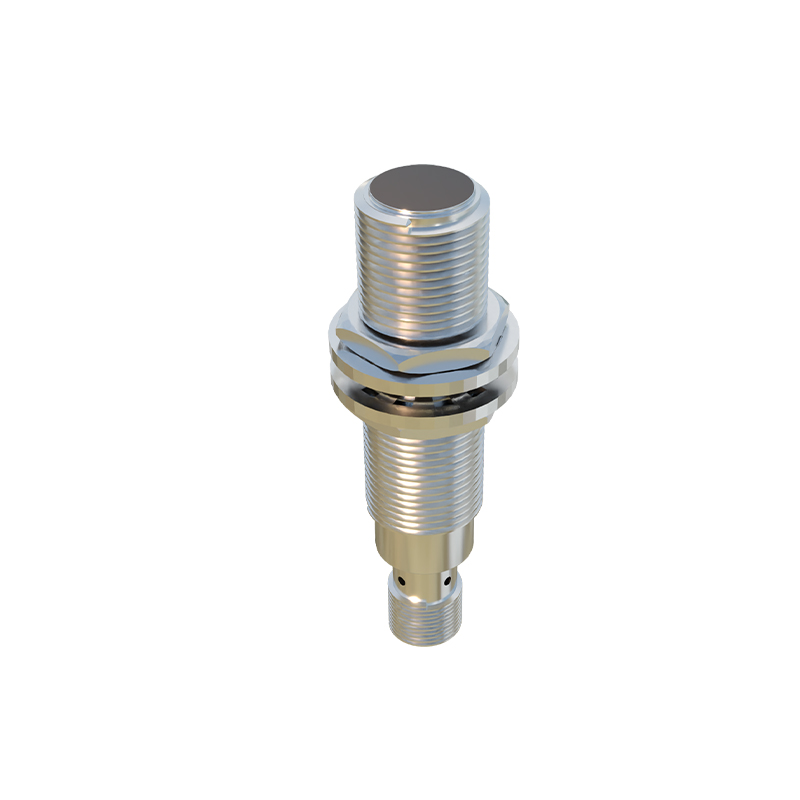
The advantages of utilizing a dedicated signal converter or proxy are multifold. Firstly, it enhances system flexibility. Sensors from different manufacturers or with varying output types can be standardized to a common network language, simplifying system design and maintenance. Secondly, it improves diagnostic capabilities and predictive maintenance. By accessing detailed sensor status via the network, engineers can preempt failures, reducing unplanned downtime. Thirdly, it simplifies wiring and reduces costs associated with long runs of individual sensor cables back to the main control cabinet. Instead, sensors connect locally to a proxy, which then communicates over a single network cable.
A common application is in modular machine designs or automated guided vehicle (AGV) systems. Here, a cluster of proximity sensors monitoring position, alignment, or part presence on a module can connect to a compact proxy module. This module then communicates wirelessly or via a quick-disconnect coupling to the main controller, allowing for rapid module exchange and reconfiguration without rewiring dozens of individual sensor connections. Another key application is with analog proximity sensors used for precise distance or position feedback. A proxy can convert the analog voltage or current signal (e.g., 0-10V, 4-20mA) into a high-resolution digital value transmitted over the network, minimizing signal degradation over long distances.
In conclusion, the proximity sensor transducer proxy is far more than a simple adapter. It is an intelligent interface that bridges the gap between basic sensing elements and sophisticated industrial networks. By transforming raw detection events into rich, communicative data, these devices empower engineers to build more resilient, flexible, and data-driven automation systems. Their role is crucial in advancing the Industrial Internet of Things (IIoT) paradigm, where every component, down to the simplest sensor, becomes a node in a connected, intelligent ecosystem. Proper selection, based on electrical specs, network protocol, and environmental needs, is essential to unlocking their full potential in optimizing operational efficiency and reliability.