In the realm of industrial automation and control systems, proximity sensors stand as fundamental components, enabling machines to "sense" the presence or absence of an object without physical contact. A proximity sensor is a non-contact device that detects the presence of a target object within its sensing range. It operates by emitting an electromagnetic field, beam, or acoustic waves and then looking for changes in the field or return signal. The key advantage is its ability to detect objects reliably in harsh environments where physical contact is impractical, such as in dirty, oily, or high-vibration settings, thereby reducing mechanical wear and enabling high-speed operation.
There are several primary types of proximity sensors, each based on different physical principles and suited for specific applications. The most common include inductive, capacitive, ultrasonic, and photoelectric sensors.
Inductive proximity sensors are widely used in metalworking and machinery. They generate an oscillating electromagnetic field from a coil at the sensing face. When a metallic object enters this field, it induces eddy currents within the target, which dampens the oscillation amplitude of the sensor. This change triggers a solid-state output switch. These sensors are robust, precise for short ranges (typically up to 60mm), and unaffected by non-metallic substances like dust or liquids. They are ideal for detecting metal parts, counting objects on a conveyor, or as end-position switches.
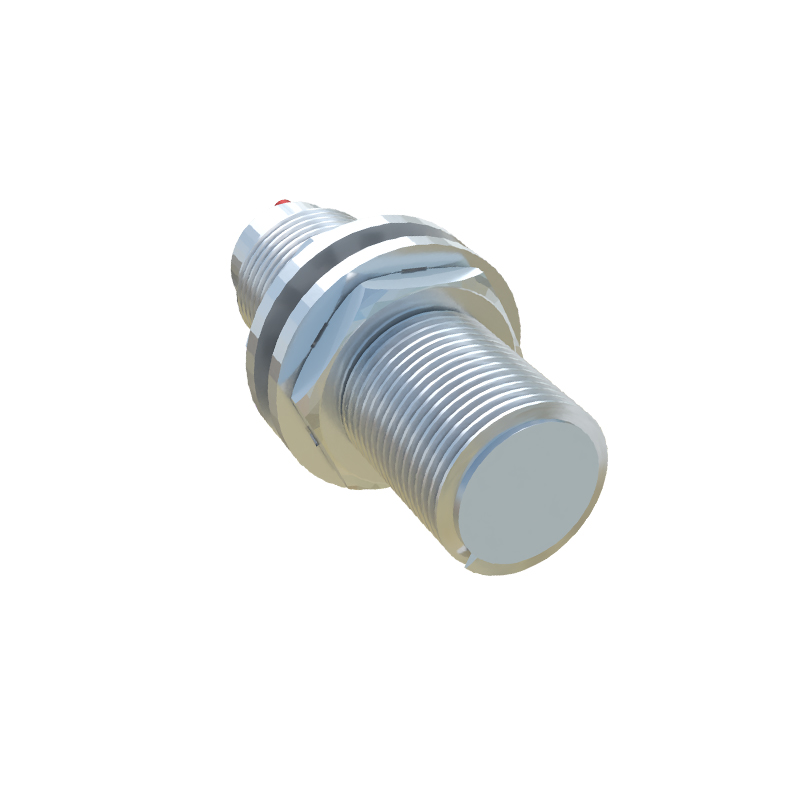
Capacitive proximity sensors can detect both metallic and non-metallic materials, including liquids, powders, plastics, and wood. They function by generating an electrostatic field. Any object with a dielectric constant different from air entering this field alters the sensor's capacitance, triggering the output. This makes them versatile for applications like level detection in tanks, presence detection of glass or cardboard, or monitoring granular materials. They generally offer a longer sensing range than inductive types for non-metals.
Ultrasonic proximity sensors emit high-frequency sound waves (typically beyond human hearing) and evaluate the echo reflected from a target. By measuring the time between emission and reception, they can determine the distance to the object. These sensors are excellent for detecting objects regardless of color, transparency, or material, and are effective over longer distances. Common uses include distance measurement, liquid level control, and detecting clear objects like glass bottles where photoelectric sensors might struggle.
Photoelectric sensors use light, usually infrared, visible red, or laser, to detect objects. They consist of an emitter and a receiver. The three main operating modes are through-beam (separate emitter and receiver), retro-reflective (a single unit with a reflector), and diffuse (reflective), where the sensor detects light reflected from the target itself. They offer the longest sensing ranges and can detect virtually any material, but their performance can be affected by environmental factors like dust, fog, or highly reflective surfaces.
Selecting the right proximity sensor requires careful consideration of several key parameters. The sensing range, or the maximum distance at which the sensor can reliably detect a standard target, is paramount. The target material (metal, plastic, liquid) directly dictates whether an inductive, capacitive, or other type is necessary. Environmental conditions such as temperature extremes, presence of chemicals, washdown requirements, and electrical noise must be evaluated to ensure sensor housing and electronics are suitably rated. Output type is another critical factor; sensors typically provide digital outputs like NPN, PNP, or analog outputs for distance-proportional signals. Finally, physical characteristics like size, shape (barrel or rectangular), and connection type must align with the mechanical constraints of the installation.
In modern manufacturing, proximity sensors are indispensable for tasks ranging from simple object detection and counting to complex positioning and automated quality control. Their non-contact nature ensures longevity and minimal maintenance, while their reliability forms the backbone of efficient, safe, and intelligent automated systems. As Industry 4.0 and the Industrial Internet of Things (IIoT) evolve, smart sensors with integrated diagnostics and communication protocols (like IO-Link) are becoming standard, providing not just detection data but also health status and process insights, pushing the boundaries of predictive maintenance and overall equipment effectiveness (OEE).