In the realm of industrial automation and control, non-contact proximity sensors stand as pivotal components, enabling the detection of objects without physical contact. These devices have revolutionized manufacturing processes, offering reliability, longevity, and precision that mechanical switches cannot match. This article delves into the fundamental principles, common types, and diverse applications of non-contact proximity sensors, providing insights for engineers and technicians in the electrical and automation fields.
The core principle behind non-contact proximity sensors involves generating an electromagnetic field or beam and detecting changes caused by a target object. When an object enters the sensor's detection range, it alters the field or reflects the beam, triggering an output signal. This operation eliminates mechanical wear, reduces maintenance needs, and allows for high-speed detection, making these sensors ideal for harsh or demanding environments.
Several types of non-contact proximity sensors are prevalent in industry, each suited to specific materials and conditions. Inductive proximity sensors are among the most common, operating on the principle of electromagnetic induction. They generate an oscillating electromagnetic field and detect eddy current losses induced in conductive metals. These sensors are highly effective for detecting ferrous and non-ferrous metals but are unsuitable for non-metallic materials. Typical sensing ranges vary from a few millimeters to several centimeters, with factors like target material, size, and shape influencing performance.
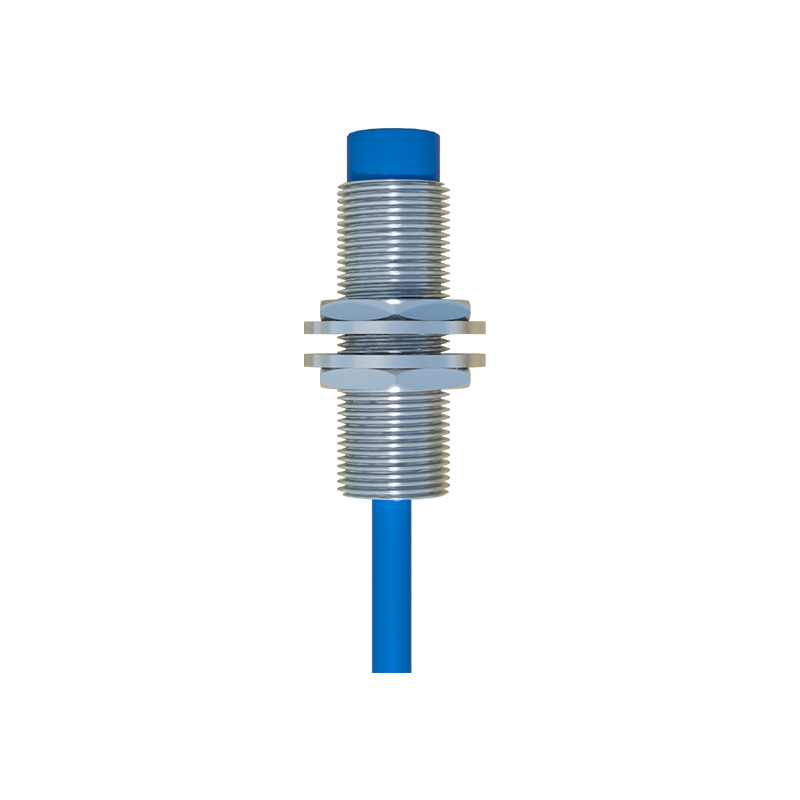
Capacitive proximity sensors, on the other hand, can detect both metallic and non-metallic objects, including liquids, plastics, and glass. They work by measuring changes in capacitance between the sensor and the target. When an object approaches, it alters the dielectric constant of the surrounding space, causing a capacitance shift that triggers detection. These sensors are valuable in applications involving material level sensing or presence detection of non-conductive items, though they may be sensitive to environmental factors like humidity.
Ultrasonic proximity sensors utilize sound waves beyond human hearing, typically at frequencies above 20 kHz. They emit ultrasonic pulses and measure the time taken for echoes to return after hitting an object. By calculating the time-of-flight, these sensors determine distance with high accuracy, making them suitable for detecting objects regardless of color, transparency, or material composition. They excel in challenging conditions such as dusty or foggy environments where optical sensors might fail. However, temperature variations can affect sound speed, requiring compensation in precise applications.
Photoelectric sensors represent another major category, using light beams—often infrared, visible, or laser—to detect objects. They consist of an emitter and a receiver, operating in through-beam, retro-reflective, or diffuse modes. In through-beam mode, the emitter and receiver are separate units; an object interrupts the beam to trigger detection. Retro-reflective sensors use a reflector to bounce light back to the receiver, while diffuse sensors rely on light reflected directly from the target. Photoelectric sensors offer long sensing ranges and fast response times but can be affected by ambient light or surface properties.
The applications of non-contact proximity sensors span numerous industries, enhancing efficiency and safety. In automotive manufacturing, inductive sensors monitor position and speed in assembly lines, such as detecting pistons in engines or controlling robotic arms. Capacitive sensors are employed in food processing to monitor liquid levels in tanks or detect plastic packaging. Ultrasonic sensors assist in warehouse automation for pallet detection and distance measurement in AGVs (Automated Guided Vehicles). Photoelectric sensors play a crucial role in packaging lines, verifying label presence or counting products on conveyors.
Selecting the right sensor involves considering factors like target material, environmental conditions, required sensing distance, and output type (e.g., digital or analog). Engineers must also account for installation constraints, electrical compatibility, and cost-effectiveness. Regular maintenance, though minimal compared to contact sensors, includes cleaning lenses for optical types or checking for debris that might interfere with detection.
In summary, non-contact proximity sensors are indispensable tools in modern industry, driving automation with their versatility and durability. By understanding their principles and types, professionals can optimize system designs, improve operational reliability, and adapt to evolving technological demands. As Industry 4.0 advances, these sensors will continue to evolve, integrating with IoT and smart systems for even greater connectivity and intelligence.