Laser sensors have become indispensable tools across a vast spectrum of industries, from advanced manufacturing and robotics to everyday consumer electronics. Their core principle involves emitting a focused beam of light and analyzing the reflected signal to measure distance, detect presence, profile objects, or gauge dimensions with exceptional speed and precision. Unlike mechanical or simple photoelectric methods, laser sensors offer non-contact measurement, minimizing wear and allowing inspection of delicate or moving objects. The diversity of laser sensor types available today allows engineers and technicians to select the optimal technology for their specific application. Understanding the common categories is the first step in this selection process.
One of the most prevalent and versatile types is the Laser Distance Sensor. These sensors calculate the distance to a target by measuring the time it takes for the laser pulse to travel to the object and back (Time-of-Flight or ToF principle) or by using triangulation for higher precision at shorter ranges. ToF sensors are excellent for longer distances, such as in construction (e.g., laser rangefinders), warehouse logistics for bin level sensing, or vehicle navigation. Triangulation sensors, on the other hand, provide micron-level accuracy for tasks like measuring part thickness on an assembly line, monitoring wafer position in semiconductor fabrication, or ensuring precise focus in imaging systems.
For applications requiring detection of an object's presence or absence within a specific zone, Laser Photoelectric Sensors are the go-to choice. They operate similarly to traditional photoelectric sensors but use a highly collimated laser beam. This focused beam allows for precise detection of very small objects, reliable operation over longer ranges, and the ability to ignore background interference. Common configurations include through-beam (where a separate receiver detects the beam broken by an object), retro-reflective (using a reflector), and diffuse reflective (detecting light bounced directly off the target). They are ubiquitous in packaging machinery for detecting labels or missing products, in material handling for counting objects on a conveyor, and in security systems for intrusion detection.
When the requirement extends beyond simple presence to capturing a detailed cross-sectional profile or a complete 3D shape, Laser Profilers and 3D Scanners come into play. These systems typically use a laser line (or multiple lines/patterns) that is swept across an object. A camera or detector array captures the deformation of this line, and sophisticated software reconstructs the surface geometry. This technology is fundamental for quality control, such as inspecting weld seams for consistency, verifying the dimensional accuracy of machined parts, reverse engineering components, and guiding robotic arms for precise bin-picking operations. In sectors like automotive and aerospace, they ensure critical assemblies meet stringent tolerances.
A specialized category focused on measuring velocity and length is the Laser Doppler Vibrometer (LDV). This sensor exploits the Doppler effect—the shift in frequency of light reflected from a moving surface. By analyzing this frequency shift, an LDV can measure vibration velocity with extreme accuracy without any physical contact. This is crucial for predictive maintenance, where engineers monitor the vibration signatures of motors, turbines, or bearings to detect imbalance, misalignment, or wear before catastrophic failure occurs. It is also extensively used in acoustic research, structural health monitoring of bridges or buildings, and in the development of micro-electromechanical systems (MEMS).
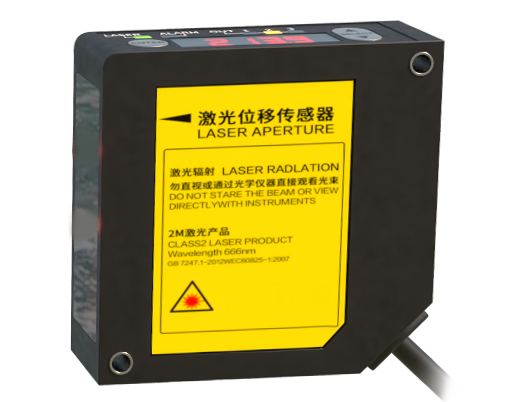
Finally, for applications demanding the highest possible resolution in displacement measurement—often at the nanometer scale—Laser Interferometers are employed. These sensors work on the principle of interference, splitting the laser beam into a reference path and a measurement path. The beam reflected from the target recombines with the reference beam, creating an interference pattern. Displacement of the target causes shifts in this pattern, allowing for incredibly precise calculation of movement. Interferometers are the backbone of precision metrology, used to calibrate machine tools, measure the flatness of optical surfaces, and in semiconductor lithography equipment where positioning accuracy is paramount.
Selecting the right laser sensor involves a careful analysis of key parameters: required measurement range, accuracy, resolution, response speed, target surface properties (color, reflectivity, material), and environmental conditions (ambient light, dust, temperature). By matching the strengths of each laser sensor type—be it the long-range capability of a ToF sensor, the pinpoint accuracy of a triangulation sensor, the detailed profiling of a laser scanner, the sensitive vibration detection of an LDV, or the nanometric precision of an interferometer—to the specific task, industries can achieve new levels of automation, quality, and efficiency.