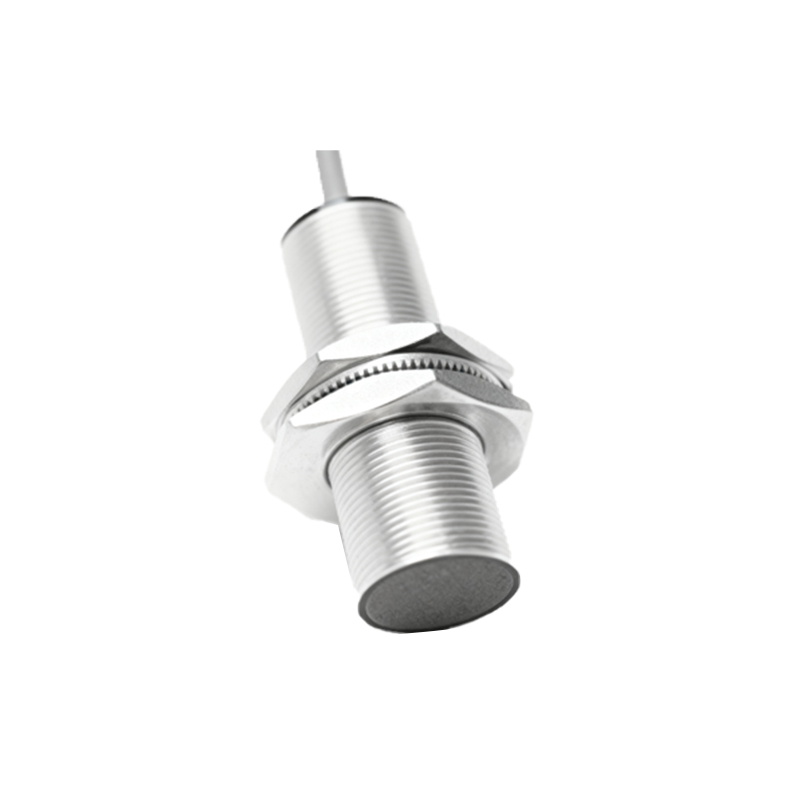
In the world of industrial automation, robotics, and consumer electronics, the ability to detect the presence, absence, or position of an object without physical contact is fundamental. Among the various technologies enabling this capability, flat proximity sensors have emerged as a particularly versatile and space-efficient solution. Unlike their cylindrical or block-shaped counterparts, these sensors feature a low-profile, flat housing that allows for installation in tight spaces and offers unique design and functional benefits.
The core operating principle of a flat proximity sensor remains aligned with standard inductive or capacitive sensing technology. Inductive flat sensors generate an electromagnetic field. When a metallic object enters this field, it induces eddy currents within the object, which in turn dampen the sensor's own oscillation. This change is detected by the sensor's circuitry, triggering a switching signal. Capacitive flat sensors, on the other hand, generate an electrostatic field and react to the presence of both conductive and non-conductive materials by detecting changes in capacitance. The "flat" designation refers primarily to the physical form factor—a thin, often rectangular or square housing—rather than a distinct sensing methodology.
This distinctive form factor unlocks a wide array of applications. In automated machinery and packaging lines, flat sensors are ideal for end-of-stroke detection on thin pneumatic cylinders or for monitoring the position of metal parts on conveyors where mounting space is severely limited. Their slim design allows them to be embedded directly into machine frames, tooling plates, or robotic gripper jaws without protruding, thereby minimizing the risk of snagging or impact damage. Within the automotive industry, they are used for precise position verification in assembly jigs and welding fixtures. Furthermore, the consumer electronics sector leverages ultra-thin capacitive variants for touch-sensitive controls and cover detection in smartphones, laptops, and home appliances.
The advantages of opting for a flat proximity sensor are compelling. First and foremost is their space-saving design. Engineers are frequently challenged to integrate sensing functions into increasingly compact devices; the low-profile nature of these sensors provides a critical solution. This design also enhances durability. With no protruding parts, they are less susceptible to mechanical damage from accidental bumps or shearing forces in crowded industrial environments. Many models are manufactured with robust, laser-welded stainless steel housings or high-grade plastics, offering high resistance to oils, coolants, and washdowns, making them suitable for harsh conditions. Installation is often simplified through standardized mounting holes or adhesive backing options, reducing assembly time. Additionally, their flat surface can sometimes be utilized for direct labeling or mounting ancillary components.
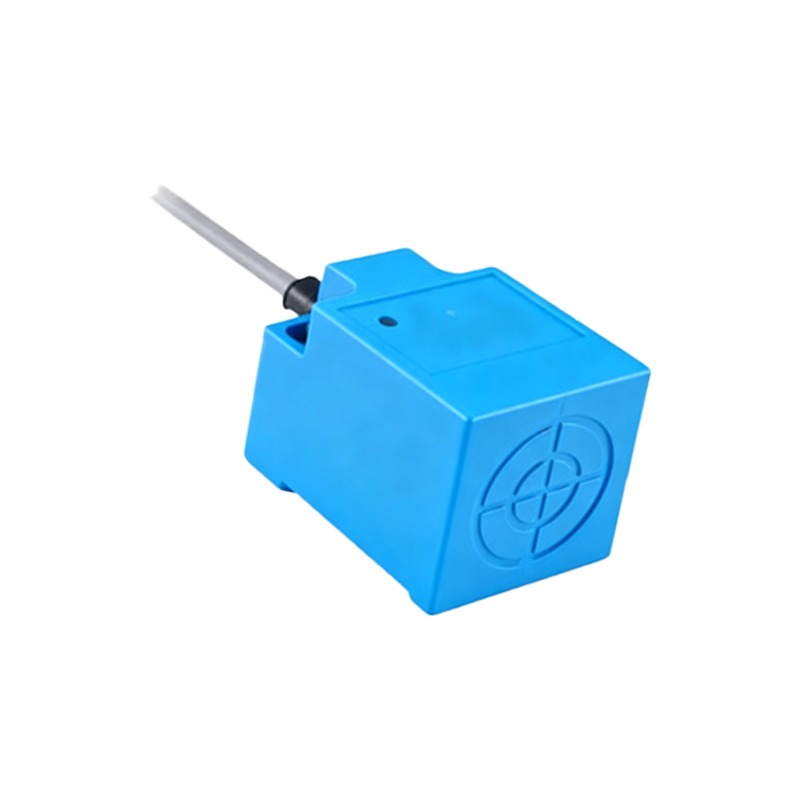
When selecting a flat proximity sensor for a specific task, several key parameters must be considered. Sensing range, while typically shorter than larger cylindrical sensors due to the smaller coil size, must be adequate for the application. The sensing face material is also crucial; some feature a non-metallic (e.g., plastic) front face for detecting non-ferrous metals at slightly improved ranges, while all-metal faces offer maximum durability. Electrical specifications such as operating voltage (commonly 10-30V DC or 90-250V AC), output type (PNP/NPN transistor, or analog), and connection method (pre-wired cable or quick-disconnect) must align with the control system. Environmental ratings, particularly Ingress Protection (IP) codes like IP67 or IP69K, are vital for applications exposed to dust, moisture, or high-pressure cleaning.
Looking ahead, the evolution of flat proximity sensors continues. Trends point toward even miniaturization, the integration of advanced diagnostics via IO-Link communication for predictive maintenance, and the development of hybrid sensors that combine proximity sensing with other functions like temperature measurement. Their inherent design flexibility ensures they will remain a cornerstone component in the advancement of smart factories, collaborative robotics, and next-generation electronic devices. By providing reliable, non-contact detection in a minimalist footprint, flat proximity sensors effectively bridge the gap between mechanical design constraints and the growing demand for automated sensing intelligence.