In the dynamic landscape of industrial automation and control systems, proximity switches stand as fundamental components for non-contact detection. Among the prominent manufacturers, RIO SENSORS has carved a niche with its robust and reliable proximity switch offerings. This article delves into the technical specifications, operational principles, and application considerations of RIO SENSORS proximity switches, providing a detailed overview for electrical engineers and industry professionals.
Proximity switches, by design, detect the presence or absence of an object without physical contact. RIO SENSORS primarily produces inductive and capacitive proximity switches. Inductive sensors are the workhorses for detecting metallic objects. They operate on the principle of electromagnetic induction. Inside the sensor, an oscillator generates a high-frequency electromagnetic field at the active face. When a metallic target enters this field, eddy currents are induced in the target, causing a load on the oscillator. This change is detected by the sensor's circuitry, which subsequently switches the output state (e.g., from OFF to ON). RIO SENSORS' inductive switches are renowned for their high switching frequency, excellent repeat accuracy, and resilience in harsh industrial environments, often featuring IP67 or higher ingress protection ratings.
Conversely, capacitive proximity switches from RIO SENSORS can detect both metallic and non-metallic materials, such as plastics, glass, wood, and liquids. They function by generating an electrostatic field. The presence of any material with a dielectric constant different from air alters the capacitance of the sensing circuit, triggering the output. This makes them exceptionally versatile for level detection, material handling, and applications involving non-conductive substances.
Key technical parameters define the selection and performance of these switches. The sensing distance, or nominal range (Sn), is critical. RIO SENSORS provides precise specifications, typically ranging from a few millimeters to several tens of millimeters, with a derating factor for non-steel targets in inductive models. The housing material, often nickel-plated brass or stainless steel in RIO models, ensures durability against mechanical stress and corrosive agents. Output configurations are another vital aspect. Engineers can choose from NPN (sinking) or PNP (sourcing) transistor outputs, as well as analog (4-20mA, 0-10V) or IO-Link versions for smart factory integration. The switching frequency, indicating how many on/off cycles per second the device can handle, is crucial for high-speed applications.
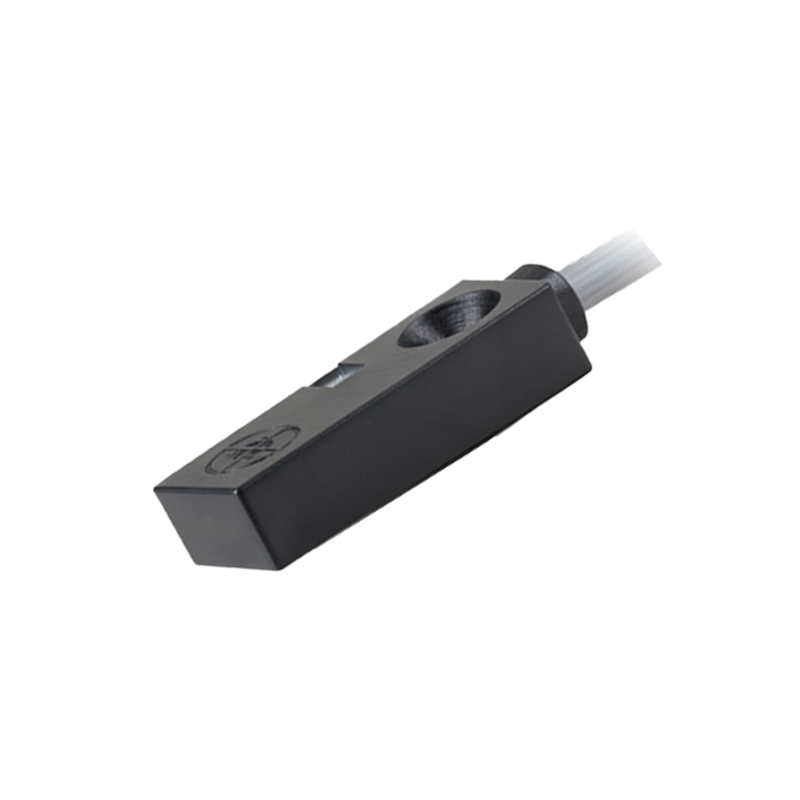
Installation and environmental considerations are paramount for optimal performance. RIO SENSORS emphasizes proper mounting in their documentation. For inductive sensors, maintaining a minimum distance between multiple sensors (typically 2-3 times the sensor diameter) is essential to prevent mutual interference. Flush-mounted sensors can be installed level with a metal surface, while non-flush types require a clear surrounding area for their extended field. Factors like ambient temperature, supply voltage stability, and exposure to cutting fluids or welding spatter must be evaluated. Many RIO SENSORS switches are designed with built-in protection against short-circuits, reverse polarity, and voltage spikes, enhancing system reliability.
Application scenarios for RIO SENSORS proximity switches are vast. In automotive manufacturing, they count parts on conveyor belts or verify robot end-effector positions. In packaging machinery, they detect the presence of bottles or cartons. In metalworking, they serve as end-position limit switches for CNC machines. The capacitive variants are indispensable in food and beverage processing for liquid level control in tanks or detecting plastic caps.
Troubleshooting common issues involves a systematic approach. If a sensor fails to detect, verify the target material and size are within specifications, check the sensing distance, and ensure the target is moving within the sensor's field. Electrical checks should include confirming the correct supply voltage (commonly 10-30V DC for RIO models) and load current. LED indicators on the sensor housing, a standard feature in RIO SENSORS products, provide immediate status feedback for power, output state, and sometimes diagnostic warnings.
In conclusion, RIO SENSORS proximity switches represent a blend of precision engineering and practical durability. Their comprehensive product range allows engineers to select the ideal sensor for specific detection challenges, from simple presence sensing to complex positioning tasks in Industry 4.0 environments. Understanding their operating principles, key specifications, and installation guidelines is essential for designing efficient, reliable, and maintainable automated control systems. As technology advances, the integration of smart sensor features like IO-Link in RIO's portfolio further bridges the gap between basic switching and predictive maintenance data collection.