Proximity sensors are indispensable components in modern industrial automation, offering non-contact detection of objects with high reliability and precision. Among the various mounting styles, through-hole or direct-insertion proximity sensors are widely utilized for their robust installation and stable performance in demanding environments. This article delves into the working principles, types, selection criteria, and application best practices for these critical devices.
At their core, proximity sensors detect the presence or absence of an object without physical contact. This is achieved by emitting an electromagnetic field, light beam, or ultrasonic waves and monitoring changes in the return signal. Direct-insertion variants are designed with a threaded barrel, allowing them to be securely mounted into pre-drilled holes in machinery, frames, or enclosures. This design provides excellent mechanical stability, protection against vibration, and often enhanced environmental sealing—key attributes for applications in manufacturing, material handling, and automotive assembly lines.
The three primary technologies for through-hole proximity sensors are inductive, capacitive, and magnetic. Inductive sensors are the most common, generating an oscillating electromagnetic field. When a metallic object (ferrous or non-ferrous) enters this field, it induces eddy currents, causing a change in oscillation amplitude that triggers the sensor's output switch. They are ideal for detecting metals in short ranges, typically up to 60 mm, and are unaffected by non-metallic substances like dust or oil. Common applications include position sensing of machine parts, counting metallic objects on conveyors, and end-of-travel detection in actuators.
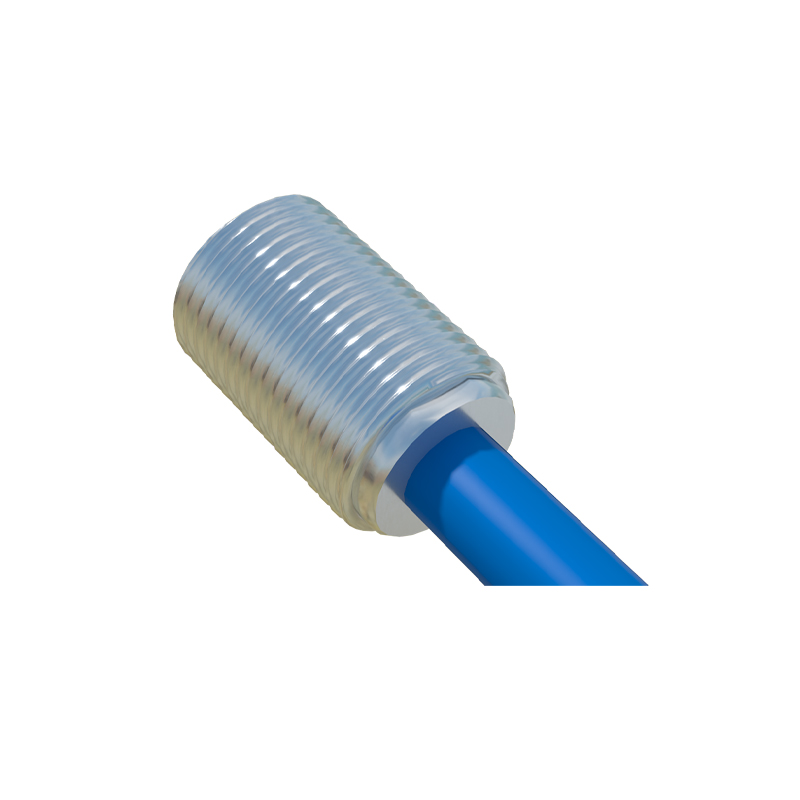
Capacitive proximity sensors, conversely, can detect both metallic and non-metallic materials, including liquids, plastics, wood, and granular substances. They operate by generating an electrostatic field. Any object with a dielectric constant different from air alters the capacitance of the sensor's circuit, triggering detection. These sensors are suitable for level detection in tanks, presence sensing of packaged goods, or material handling where object composition varies. Their sensing range is generally shorter than inductive types but sufficient for many industrial tasks.
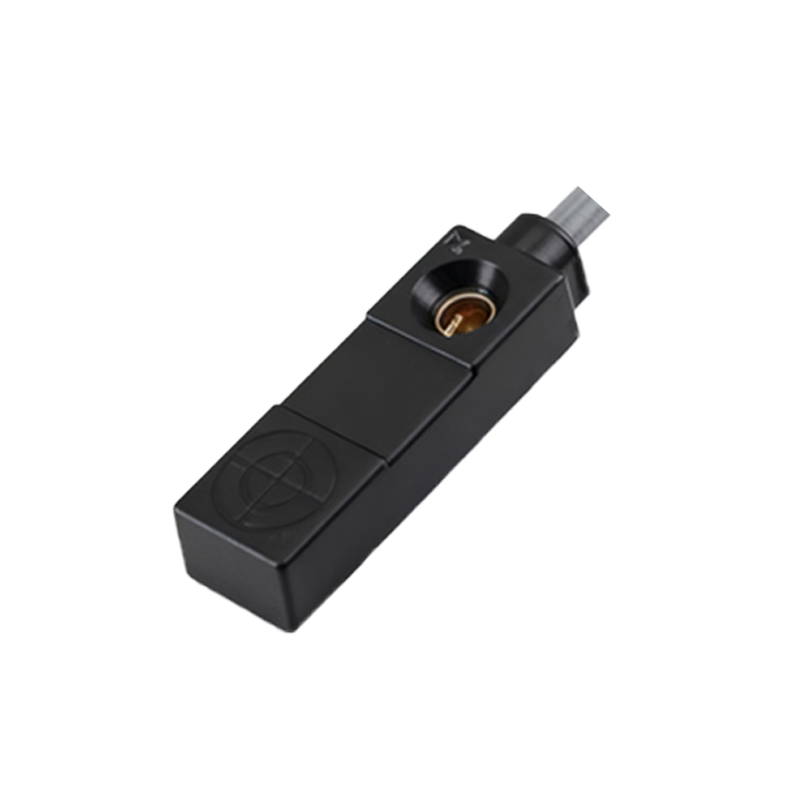
Magnetic proximity sensors, often referred to as reed switches or Hall-effect sensors, specifically detect permanent magnets. They are highly reliable for sensing the position of pneumatic cylinder pistons (via embedded magnets) or in safety door interlocks. Their operation is simple: a magnetic field closes a reed contact or triggers a Hall-effect semiconductor, providing a clean switching signal. These sensors are prized for their low power consumption and long operational life.
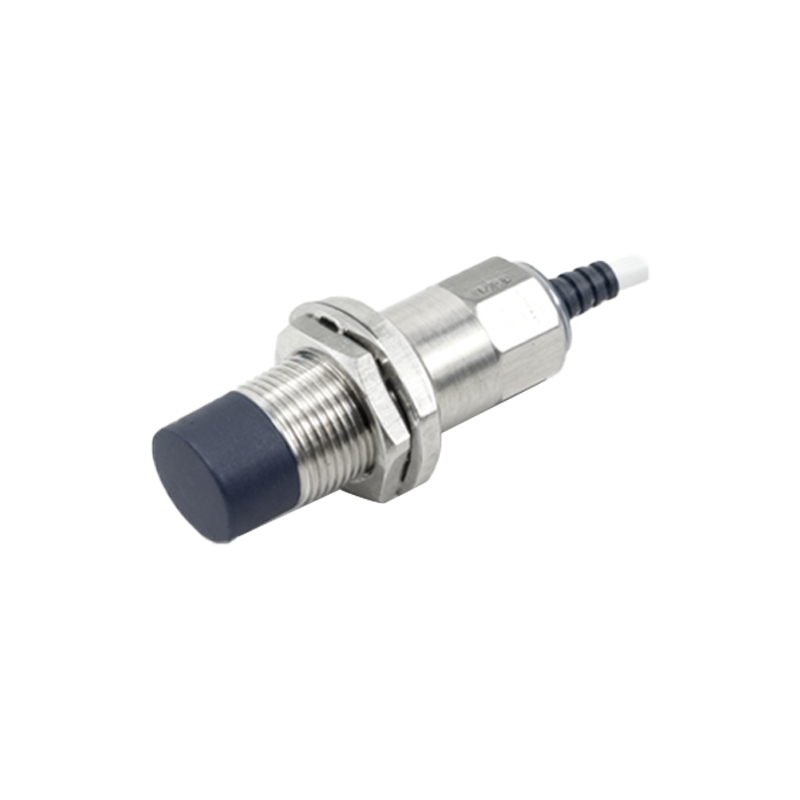
Selecting the right direct-insertion proximity sensor requires careful consideration of several parameters. First, determine the target material—metal, non-metal, or magnet—to choose the appropriate technology (inductive, capacitive, or magnetic). Next, consider the required sensing distance, noting that rated operating distance is specified for standard conditions; factors like target size, shape, and temperature can affect real-world performance. The sensor's housing material, typically nickel-plated brass or stainless steel, must withstand the environmental conditions, including exposure to coolants, chemicals, washdowns, or extreme temperatures. Electrical characteristics are equally vital: output type (PNP/NPN, NO/NC), supply voltage (commonly 10-30 VDC), and current rating must match the control system. Additionally, look for ingress protection ratings (e.g., IP67, IP69K) for dust and water resistance, and output indicators for easy diagnostics.
Installation and wiring are straightforward but crucial for optimal function. Ensure the mounting hole is drilled to the exact specified diameter to prevent housing damage and maintain sealing integrity. Adequate clearance around the sensing face is necessary to avoid interference from surrounding metal (for inductive sensors). Always follow the manufacturer's wiring diagram, connecting the brown wire (typically +V), blue wire (0V or common), and black wire (load output) correctly. Shielding or twisting cables in electrically noisy environments can prevent false triggering. Regular maintenance involves checking for physical damage, buildup of contaminants on the sensing face, and verifying the output signal under operational conditions.
In practice, through-hole proximity sensors enable countless automation solutions. On a packaging line, an inductive sensor verifies the presence of metal lids on containers before capping. In automotive welding robots, arrays of these sensors confirm component positioning for precise weld gun operation. Capacitive sensors monitor fluid levels in chemical processing, while magnetic sensors ensure machine guards are securely closed before initiating a cycle. Their versatility, durability, and non-contact nature minimize wear, reduce downtime, and enhance overall system safety and efficiency.
As Industry 4.0 and smart manufacturing evolve, proximity sensors are integrating more digital features, such as IO-Link communication for parameter setting, diagnostics, and process data exchange. This intelligence allows for predictive maintenance and finer process control. However, the fundamental advantages of direct-insertion design—mechanical robustness, easy installation, and consistent performance—remain as relevant