Proximity sensors are critical components in modern industrial automation, enabling non-contact detection of objects within a defined range. These sensors have evolved significantly over the past decade, driven by advancements in materials science, signal processing, and integration with digital systems. The current research landscape focuses on enhancing sensitivity, accuracy, and adaptability across diverse environments, from manufacturing floors to hazardous zones.
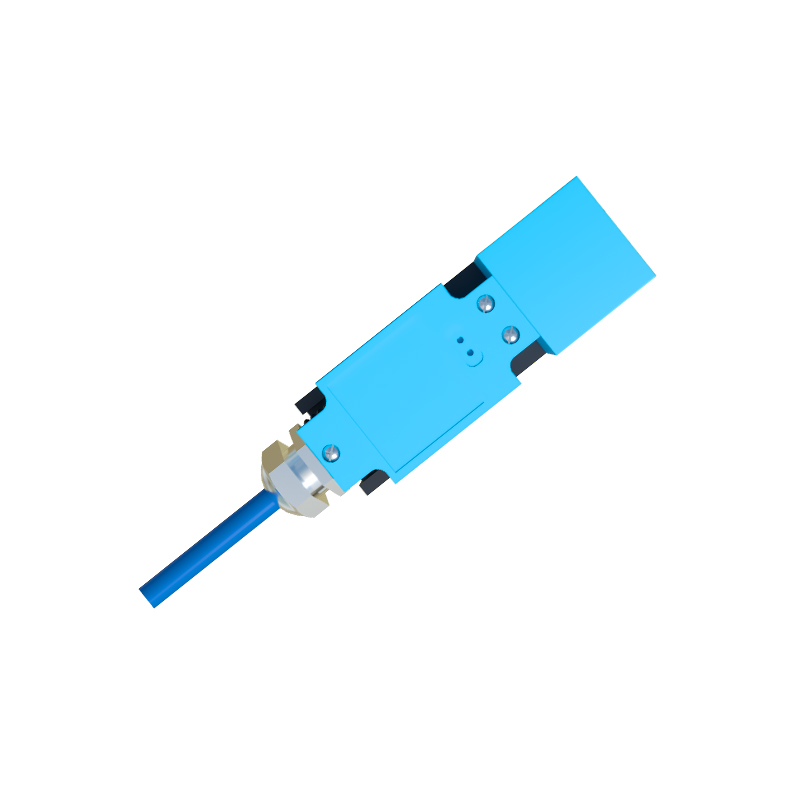
One of the primary trends in proximity sensor research is the development of high-precision capacitive and inductive sensors. Capacitive sensors, known for their ability to detect non-metallic objects, are being refined to reduce false triggers caused by environmental factors like humidity or temperature fluctuations. Recent studies have incorporated advanced dielectric materials and adaptive algorithms to compensate for interference, improving reliability in applications such as packaging, food processing, and pharmaceutical production. Inductive sensors, traditionally used for metal detection, are seeing innovations in miniaturization and extended sensing ranges. Researchers are exploring novel coil designs and ferrite cores to achieve sub-millimeter accuracy, which is crucial for robotics and precision assembly lines.
Another key area of progress is the integration of proximity sensors with Internet of Things (IoT) and Industry 4.0 frameworks. Smart sensors equipped with embedded microprocessors can now perform real-time data analysis, self-diagnosis, and wireless communication. This allows for predictive maintenance, where sensors monitor their own health and alert operators to potential failures before downtime occurs. For instance, in automotive manufacturing, networked proximity sensors track component positioning and wear, optimizing production efficiency. Research is also advancing in energy-efficient designs, such as low-power wake-up modes, to support battery-operated sensors in remote or mobile installations.
Emerging technologies like LiDAR (Light Detection and Ranging) and ultrasonic sensors are expanding the capabilities of proximity sensing. LiDAR-based systems, once limited to autonomous vehicles, are now being adapted for industrial use due to their high-resolution 3D mapping. They enable precise object recognition in complex environments, such as warehouse logistics or construction sites. Ultrasonic sensors, valued for their robustness in dusty or humid conditions, are undergoing improvements in signal-to-noise ratio and response time. Recent prototypes incorporate piezoelectric composites and digital filtering techniques to enhance performance in challenging settings like mining or agriculture.
Safety and compliance remain central to proximity sensor research. In hazardous industries like oil and gas or chemical processing, sensors must meet stringent standards for explosion-proof and corrosion-resistant designs. Studies are focusing on developing sensors with intrinsic safety certifications, using materials like stainless steel or ceramics to withstand extreme temperatures and pressures. Additionally, research into multi-functional sensors that combine proximity detection with other measurements—such as temperature or vibration—is gaining traction, reducing the need for multiple devices and simplifying system architecture.
Despite these advancements, challenges persist. Cross-talk between sensors in dense installations can lead to inaccurate readings, prompting investigations into frequency modulation and shielding techniques. Cost reduction is another focus, particularly for high-end sensors like LiDAR, where researchers are exploring mass-production methods using silicon photonics. The future of proximity sensors lies in hybrid systems that leverage multiple sensing principles, artificial intelligence for adaptive calibration, and seamless integration with cloud platforms for data analytics. As industries continue to automate, the demand for smarter, more resilient proximity sensors will drive further innovation, shaping the next generation of industrial ecosystems.