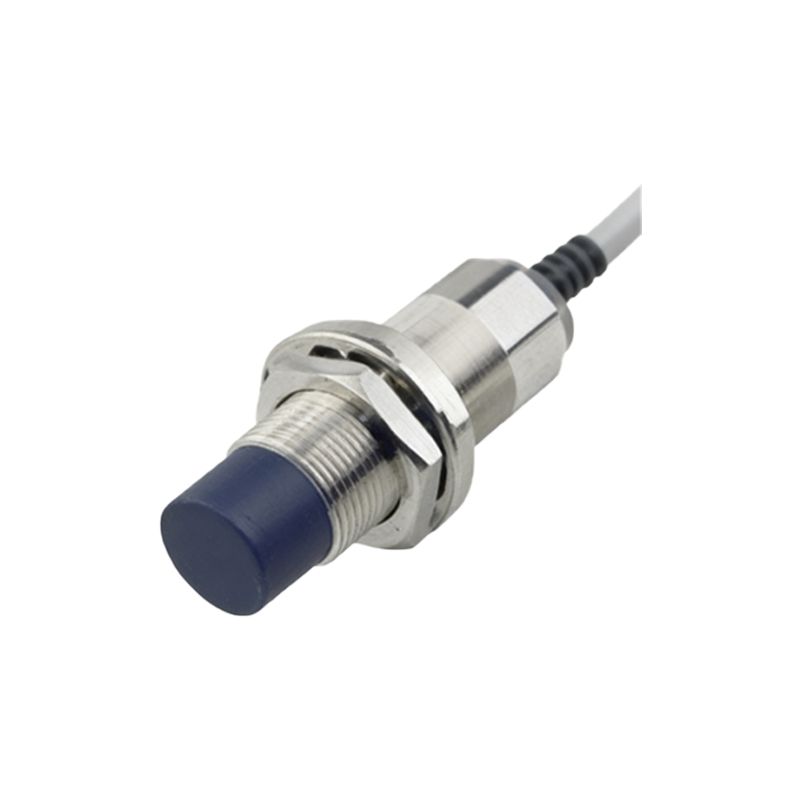
In the realm of industrial automation and control systems, proximity sensors are indispensable components. They detect the presence or absence of an object without physical contact, enabling precise, reliable, and wear-free operation in countless applications. Understanding the different sensing categories is crucial for selecting the right sensor for a specific task. This guide delves into the primary sensing technologies: inductive, capacitive, ultrasonic, and photoelectric, outlining their principles, strengths, and typical use cases.
Inductive proximity sensors are the workhorses of metal detection. They operate on the principle of electromagnetic induction. The sensor generates an oscillating electromagnetic field from its active face. When a metallic object enters this field, eddy currents are induced within the object, causing a change in the oscillation amplitude. This change is detected by the sensor's circuitry, triggering a switching output. Inductive sensors are highly reliable, resistant to environmental factors like dust, oil, and moisture, and offer excellent switching frequencies. They are predominantly used for detecting ferrous metals (like steel and iron) and, with specialized designs, non-ferrous metals (like aluminum or copper). Common applications include position sensing of machine parts, limit switching, and counting metallic objects on conveyor lines. Their limitation is clear: they only detect metallic targets.
For non-metallic materials, capacitive proximity sensors provide the solution. These sensors function similarly to an open capacitor. The sensor's active face and the grounded sensor body form one plate of a capacitor, with the target object acting as the other plate. As an object enters the sensing field, it alters the dielectric constant and thus the capacitance of the system. The sensor's internal oscillator detects this change and triggers the output. Capacitive sensors can detect a wide variety of materials, including plastics, glass, wood, liquids, and granular substances. They are ideal for level detection in tanks (liquid or solid), material handling of non-metals, and detecting filled vs. empty containers. However, they can be sensitive to environmental changes like humidity and require careful adjustment to avoid false triggers from background objects.
Ultrasonic proximity sensors utilize sound waves beyond the human hearing range (typically >20 kHz). They operate on the time-of-flight principle. The sensor emits a burst of ultrasonic pulses and then listens for the echo reflected from a target object. By measuring the time interval between emission and reception, the sensor calculates the distance to the object. This technology allows for precise distance measurement and detection of objects regardless of their material, color, or transparency. Ultrasonic sensors excel in challenging environments with dust, smoke, or fog, where optical sensors might fail. Typical applications include pallet detection, loop control, liquid level sensing in harsh conditions, and collision avoidance in automated guided vehicles (AGVs). Factors like temperature, air turbulence, and the object's sound-absorbing properties can influence their performance.
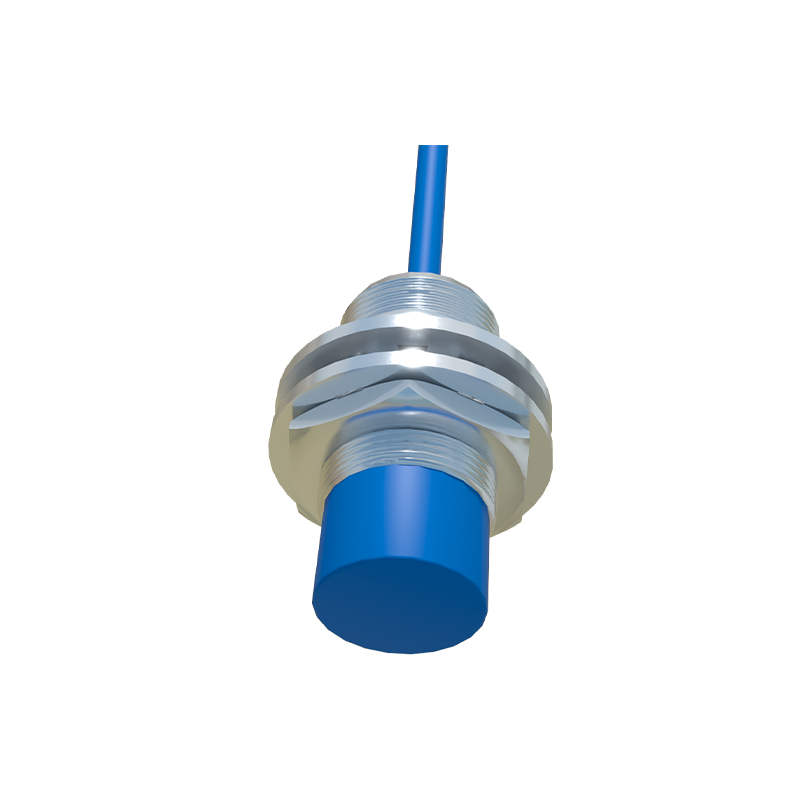
Photoelectric sensors, often called photo-eyes, use light beams to detect objects. They consist of a light emitter (usually LED) and a receiver. They are categorized into three main modes: through-beam, retro-reflective, and diffuse (proximity). Through-beam sensors have separate emitter and receiver units; an object is detected when it interrupts the light beam. This mode offers the longest sensing range and highest reliability. Retro-reflective sensors house both emitter and receiver in one unit, using a reflector to bounce the beam back; detection occurs when the beam is blocked. Diffuse sensors rely on light reflected directly from the target object itself. Photoelectric sensors are incredibly versatile, capable of detecting virtually any material—opaque, transparent, or reflective—over long distances. They are used for object counting, web break detection, bottle cap presence verification, and door safety systems. Their performance can be affected by ambient light, color, and surface properties of the target.
Selecting the appropriate proximity sensor category hinges on several key factors: the target material, required sensing distance, environmental conditions (presence of contaminants, temperature extremes), required output type (digital or analog), and installation constraints. Inductive sensors are the default for metals in harsh industrial settings. Capacitive sensors handle non-metals and level control. Ultrasonic sensors provide solution for complex object detection and distance measurement in dirty environments. Photoelectric sensors offer maximum flexibility for diverse materials and longer ranges in cleaner settings.
In conclusion, a deep understanding of these four core sensing categories—inductive, capacitive, ultrasonic, and photoelectric—empowers engineers to design more efficient, robust, and intelligent automated systems. The correct choice ensures optimal performance, reduces downtime, and enhances overall system reliability, forming the bedrock of modern industrial automation.