In the intricate world of industrial automation and machinery, the reliable detection of objects without physical contact is paramount. Proximity sensors, particularly those designed for small-scale applications, have become indispensable components. This guide delves into the critical considerations for sourcing and procuring these compact yet powerful devices, offering insights tailored for electrical engineers, procurement specialists, and system integrators.
Small-scale proximity sensors are engineered for precision in confined spaces. Their primary function is to detect the presence or absence of metallic or, in some cases, non-metallic objects within a short range, typically from a few millimeters up to about 60mm. The most common technologies employed are Inductive, Capacitive, and Magnetic (Reed or Hall Effect). Inductive sensors are the workhorses for detecting ferrous and non-ferrous metals. Capacitive sensors can detect a wider range of materials, including liquids, powders, and plastics, making them versatile for various applications. Magnetic sensors are ideal for detecting permanent magnets, often used in cylinder position sensing.
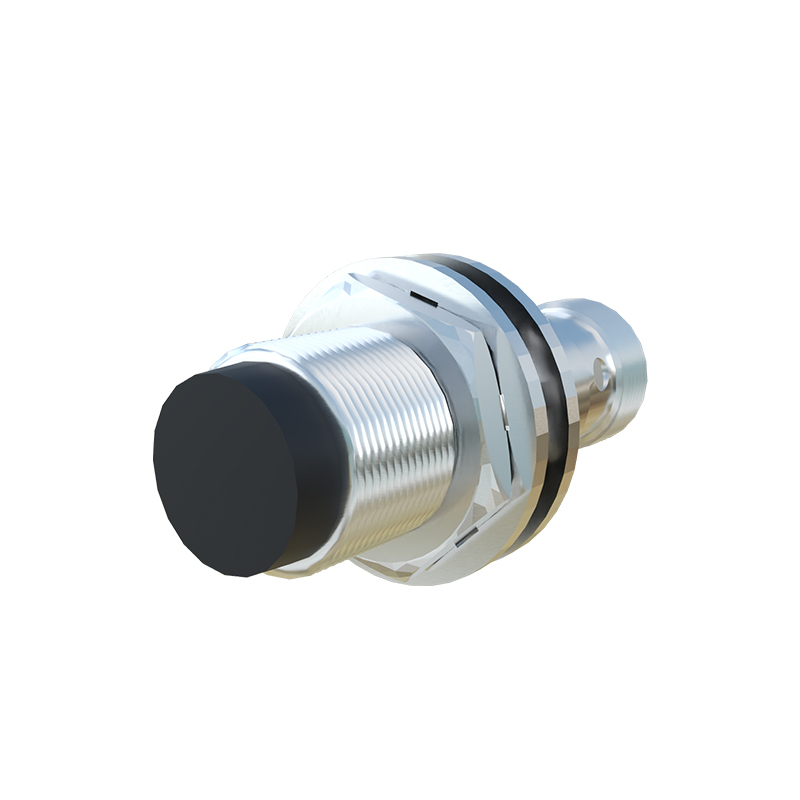
When procuring these sensors for supply chain integration, several technical specifications demand rigorous evaluation. First is the sensing distance, or 'Sn.' It is crucial to note that the rated sensing distance is defined under ideal conditions (standard target material, size, and temperature). In practice, a derating factor, often 70-80%, should be applied for reliable operation. The second key parameter is the housing size and form factor. Small-scale sensors come in cylindrical (e.g., M5, M8, M12, M18 threads) and rectangular or block-style housings. The choice depends entirely on the available mounting space and environmental constraints.
Electrical characteristics form the next critical pillar. The operating voltage range (commonly 10-30V DC or 20-250V AC), output type (PNP/NPN, NO/NC), and current rating must be compatible with the existing control system, typically a PLC. The protection class, denoted by IP (Ingress Protection) ratings like IP67 or IP69K, is non-negotiable for sensors exposed to dust, coolants, or high-pressure washdowns. Similarly, robust housing materials such as stainless steel (V2A, V4A) or PBT plastic are selected based on exposure to chemicals, mechanical stress, or extreme temperatures.
From a procurement and supply perspective, standardization is a powerful tool for cost control and inventory management. Limiting the variety of sensor types, thread sizes, and connector styles across a facility can significantly reduce complexity. However, this must be balanced against application-specific needs. Engaging with reputable suppliers who offer comprehensive technical data sheets, 3D models for design integration, and consistent global availability is essential. Consider the total cost of ownership, which includes not just the unit price but also factors in installation time, wiring accessories, mean time between failures (MTBF), and the supplier's lead time and technical support capability.
The application landscape for these sensors is vast. They are ubiquitously found in packaging machinery for detecting product presence on conveyors, in robotic arms for end-effector positioning, in CNC machines for tool change verification, and in assembly lines for part counting and orientation checks. A common pitfall during procurement is overlooking the target material. An inductive sensor calibrated for mild steel will have a reduced sensing range for aluminum or stainless steel. Always consult the correction factors in the datasheet.
Future trends in small-scale proximity sensor technology are leaning towards miniaturization without sacrificing performance, enhanced intelligence with IO-Link communication for diagnostics and parameter setting, and increased resilience in harsh environments. For procurement teams, this underscores the importance of partnering with suppliers who are at the forefront of R&D and can provide future-proof solutions.
In conclusion, the strategic sourcing of small-scale proximity sensors requires a synergy between deep technical understanding and astute supply chain management. By meticulously evaluating application requirements, environmental conditions, electrical compatibility, and supplier capabilities, professionals can ensure the procurement of reliable, efficient, and cost-effective sensing solutions that form the reliable sensory backbone of modern automated systems.