In the rapidly evolving landscape of industrial automation and precision measurement, the VToF (Vertical Cavity Surface Emitting Laser Time-of-Flight) sensor module has emerged as a pivotal technology. This article delves into the operational principles, key advantages, diverse applications, and critical selection criteria for VToF laser sensor modules, providing essential insights for engineers and system integrators.
At its core, a VToF laser sensor module operates on the time-of-flight principle. It emits short pulses of laser light from a Vertical Cavity Surface Emitting Laser (VCSEL) source towards a target object. The light reflects off the object and returns to a photodetector within the module. A high-precision timer circuit measures the elapsed time between the emission and the reception of the light pulse. Since the speed of light is a known constant, the distance to the target can be calculated with remarkable accuracy using the formula: Distance = (Speed of Light × Time of Flight) / 2. The "Vertical" aspect refers to the unique VCSEL design, where light emission is perpendicular to the chip surface, enabling efficient, low-power, and highly integrated modules.
The advantages of VToF modules over traditional sensing technologies are substantial. Firstly, they offer exceptional precision and accuracy, often in the sub-millimeter range, even at varying distances. Unlike ultrasonic sensors, they are unaffected by ambient noise, air temperature, or humidity. Compared to triangulation-based laser sensors, VToF modules maintain consistent accuracy regardless of the target's color, reflectivity, or surface texture, a significant benefit for handling diverse materials on a production line. Their solid-state design, with no moving parts, ensures high reliability, longevity, and resistance to vibration. Furthermore, VCSEL technology allows for compact form factors, low power consumption, and eye-safe operation, making them suitable for integration into portable devices and collaborative workspaces.

The applications of VToF laser sensor modules span numerous industries. In robotics and logistics, they are indispensable for object detection, palletizing, bin picking, and providing 3D vision for autonomous guided vehicles (AGVs). In consumer electronics, they enable facial recognition, gesture control, and augmented reality features. The automotive sector leverages them for in-cabin occupancy monitoring, driver drowsiness detection, and as a component in LiDAR systems for advanced driver-assistance systems (ADAS). Industrial automation utilizes VToF sensors for precise level monitoring in tanks, conveyor belt profiling, and robot collision avoidance. Their ability to generate accurate point-cloud data also makes them valuable for volume measurement and quality inspection tasks.
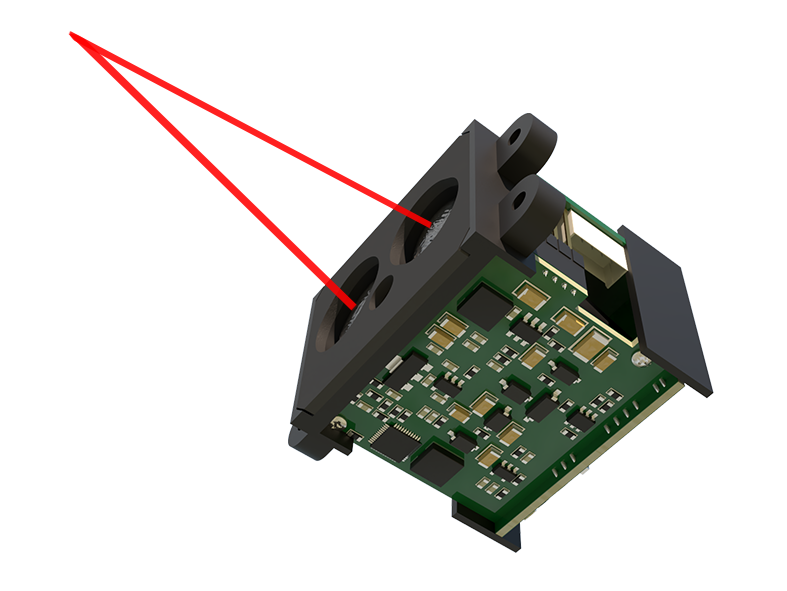
Selecting the right VToF module for a specific application requires careful consideration of several technical parameters. The primary specification is the measurement range, which can vary from a few centimeters to several meters. Engineers must match this to their operational distance. The measurement rate or frequency determines how quickly the sensor can update distance readings, crucial for high-speed automation. Field of View (FoV) defines the angular cone within which the sensor can detect objects; a narrow FoV is good for precise targeting, while a wide FoV is better for area monitoring. Environmental ratings like IP (Ingress Protection) are critical for operation in dusty or wet conditions. Interface options (e.g., USB, UART, I2C, Ethernet) dictate how easily the module integrates into existing control systems. Finally, the availability of software development kits (SDKs) and support for standard protocols can significantly accelerate deployment.
In conclusion, the VToF laser sensor module represents a sophisticated fusion of optoelectronics and precision timing, delivering robust, accurate, and versatile non-contact measurement. Its immunity to environmental variables and target surface characteristics solves many limitations of older technologies. As VCSEL and timing circuitry technologies continue to advance, we can expect future modules to offer even higher accuracy, longer ranges, lower power consumption, and reduced costs. For engineers designing the next generation of automated systems, understanding and leveraging the capabilities of VToF sensing is no longer optional but a fundamental requirement for achieving superior performance, efficiency, and intelligence in industrial and commercial applications. Proper selection and integration will unlock their full potential, driving innovation across the manufacturing, automotive, and technology sectors.