In the realm of industrial automation and control systems, proximity sensors stand as fundamental components for non-contact object detection. While traditional sensors often utilize metal housings, the adoption of plastic materials in their construction has become increasingly prevalent. This article delves into the operational principles of proximity sensors specifically constructed with plastic bodies, exploring their functionality, advantages, and typical applications.
At their core, plastic proximity sensors operate on the same fundamental principles as their metal-cased counterparts. The primary distinction lies in the housing material, which is typically a high-performance engineering plastic such as PBT (Polybutylene Terephthalate), PPS (Polyphenylene Sulfide), or PEEK (Polyether Ether Ketone). These plastics are selected for their robustness, chemical resistance, and stable dielectric properties. The most common operating principle for plastic-bodied sensors is the inductive method, used for detecting metallic objects. Inside the plastic housing, a coil is wound around a ferrite core, forming an oscillator circuit. When an alternating current passes through this coil, it generates an alternating electromagnetic field that emanates from the active face of the sensor, which is also made of or protected by plastic.
When a metallic target enters this electromagnetic field, eddy currents are induced on the surface of the target. These eddy currents draw energy from the oscillator circuit, causing a change in its amplitude. An evaluation circuit within the sensor monitors this amplitude. Once the amplitude drop reaches a predetermined threshold—corresponding to the set sensing distance—the sensor's output state switches. This switch can control a solid-state switch (PNP/NPN) or a relay output, sending a signal to a programmable logic controller (PLC) or other control unit. The plastic housing does not interfere with this electromagnetic field; in fact, its non-conductive nature prevents the housing itself from affecting the field, ensuring stable detection characteristics.
Another common type is the capacitive plastic proximity sensor. These sensors can detect both metallic and non-metallic objects (like plastics, liquids, or wood). They generate an electrostatic field. The sensing face forms one plate of a capacitor, the target object forms the other, and the air gap is the dielectric. When a target enters the sensing field, it alters the capacitance of the circuit, which is detected by the internal electronics to trigger an output change. The plastic housing is crucial here as well, as it must have consistent dielectric properties to ensure the stability of the electrostatic field and prevent false triggering from environmental humidity or contaminants.
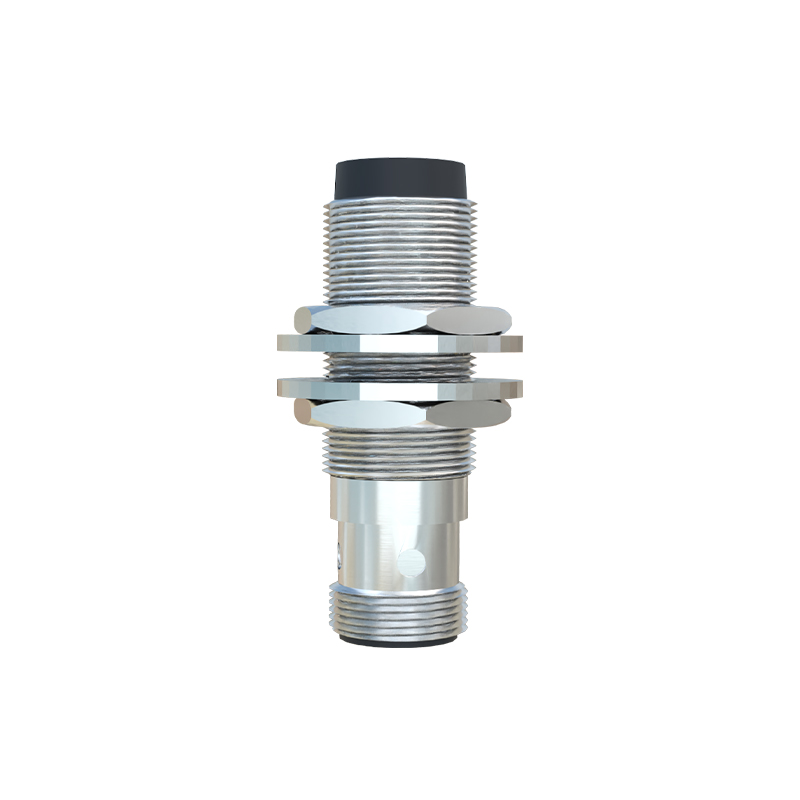
The use of plastic offers several distinct advantages. First and foremost is corrosion resistance. In harsh environments where exposure to chemicals, salts, or cleaning agents is common, plastic sensors outperform many metals, leading to longer service life and reduced maintenance. Secondly, plastic sensors are inherently non-metallic in their outer structure. This makes them ideal for applications in metal detection systems or in environments with strong magnetic fields where a metal housing could cause interference or be mistakenly detected. Furthermore, plastic is an electrical insulator, enhancing safety by preventing accidental short circuits if the sensor contacts live wiring. Weight reduction is another benefit, simplifying mounting and handling. Finally, plastics can be easily molded into complex shapes, allowing for designs that facilitate easier installation, better sealing (often achieving IP67, IP68, or IP69K ratings), and integration of mounting features.
Typical applications for plastic proximity sensors are widespread. They are extensively used in packaging machinery, food and beverage processing, pharmaceutical manufacturing, and chemical plants where washdowns and corrosive substances are routine. In conveyor systems, they detect the presence of products, often packaged in non-metallic materials. They are also found in automotive assembly lines, woodworking machinery, and material handling equipment. Their non-interfering nature makes them suitable for use near sensitive electronic equipment or in metal detection frameworks.
In conclusion, the principle of operation for a plastic proximity sensor is identical to that of a standard sensor, governed by inductive or capacitive field interaction. The key innovation is the strategic use of advanced engineering plastics for the housing. This material shift does not hinder functionality but instead unlocks significant benefits in durability, application specificity, and performance in challenging industrial environments. Understanding these principles allows engineers to make informed selections, leveraging the strengths of plastic-bodied sensors to create more reliable, efficient, and cost-effective automation solutions.