In today's fast-paced industrial landscape, efficiency and precision in material separation are paramount. Laser sorting sensors have emerged as a transformative technology, enabling industries to achieve unprecedented levels of accuracy, speed, and automation in sorting processes. Unlike traditional methods that rely on mechanical contact or basic optical systems, laser sorting sensors utilize advanced laser-induced breakdown spectroscopy (LIBS), near-infrared (NIR) spectroscopy, or high-resolution imaging to analyze and differentiate materials based on their intrinsic chemical and physical properties.
The core principle involves directing a focused laser beam onto individual particles or items on a conveyor belt. As the laser interacts with the material, it generates specific spectral signatures or reflected signals. Sophisticated sensors and high-speed cameras capture this data in real-time. An integrated computer system, powered by machine learning algorithms, instantly analyzes the spectral information against a pre-defined library of material profiles. Within milliseconds, the system makes a determination—identifying the material type, composition, or detecting contaminants. Based on this decision, a precise air jet, mechanical arm, or diverter is activated to eject the target particle from the product stream, ensuring a pure and sorted output.
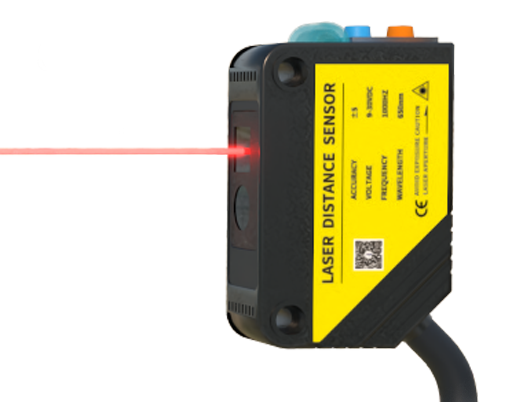
The applications of laser sorting sensors are vast and critical across multiple sectors. In the mining and mineral processing industry, they are indispensable for ore sorting, effectively separating valuable minerals from waste rock, thereby increasing yield and reducing energy consumption in downstream processing. The recycling industry relies heavily on this technology to sort complex waste streams, such as plastics, metals, and electronic waste, with high purity, which is essential for creating high-quality recycled materials. In the food processing sector, laser sorters ensure food safety by detecting and removing foreign materials, defective products, or items with undesirable color or composition, all without any physical contact that could cause contamination. Furthermore, the pharmaceutical industry uses these sensors to verify the composition of powders and tablets, guaranteeing product integrity.
The advantages of implementing laser sorting sensor systems are compelling. First and foremost is the exceptional accuracy and consistency, far surpassing human operators or simpler systems, which leads to a significant reduction in product loss and an increase in final product quality. The non-contact nature of the technology means there is no wear and tear on the sensor from the materials being sorted and no risk of damaging delicate products. These systems operate at remarkable speeds, capable of analyzing and sorting thousands of items per minute, which directly translates to higher throughput and operational efficiency. While the initial investment can be substantial, the long-term return on investment is strong due to reduced labor costs, lower waste, and the ability to recover more high-value material.
Looking ahead, the future of laser sorting sensors is intertwined with advancements in artificial intelligence and data analytics. Next-generation systems will feature even more powerful deep learning models capable of identifying increasingly subtle material differences and adapting to new materials autonomously. The integration of multi-sensor fusion, combining laser data with X-ray or 3D imaging, will provide a more comprehensive material analysis. Furthermore, the trend towards Industry 4.0 and the Industrial Internet of Things (IIoT) will see these sensors becoming intelligent nodes within a connected factory, providing valuable data for predictive maintenance and optimizing entire production workflows in real-time.
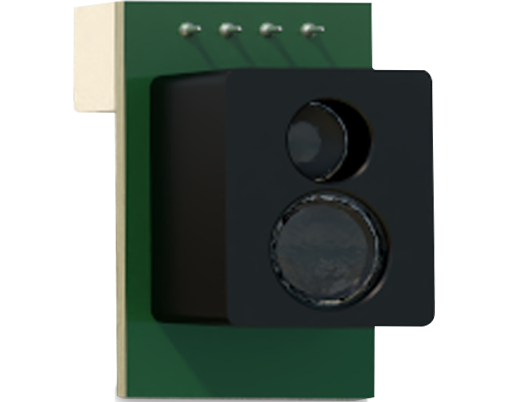
In conclusion, laser sorting sensors represent a cornerstone of modern industrial automation. By providing a reliable, high-speed, and non-destructive method for material identification and separation, they drive quality, sustainability, and profitability. As the technology continues to evolve with smarter software and more robust hardware, its role in shaping efficient and intelligent manufacturing and recycling processes will only become more profound. For engineers and operations managers, understanding and leveraging this technology is key to maintaining a competitive edge in an increasingly automated world.