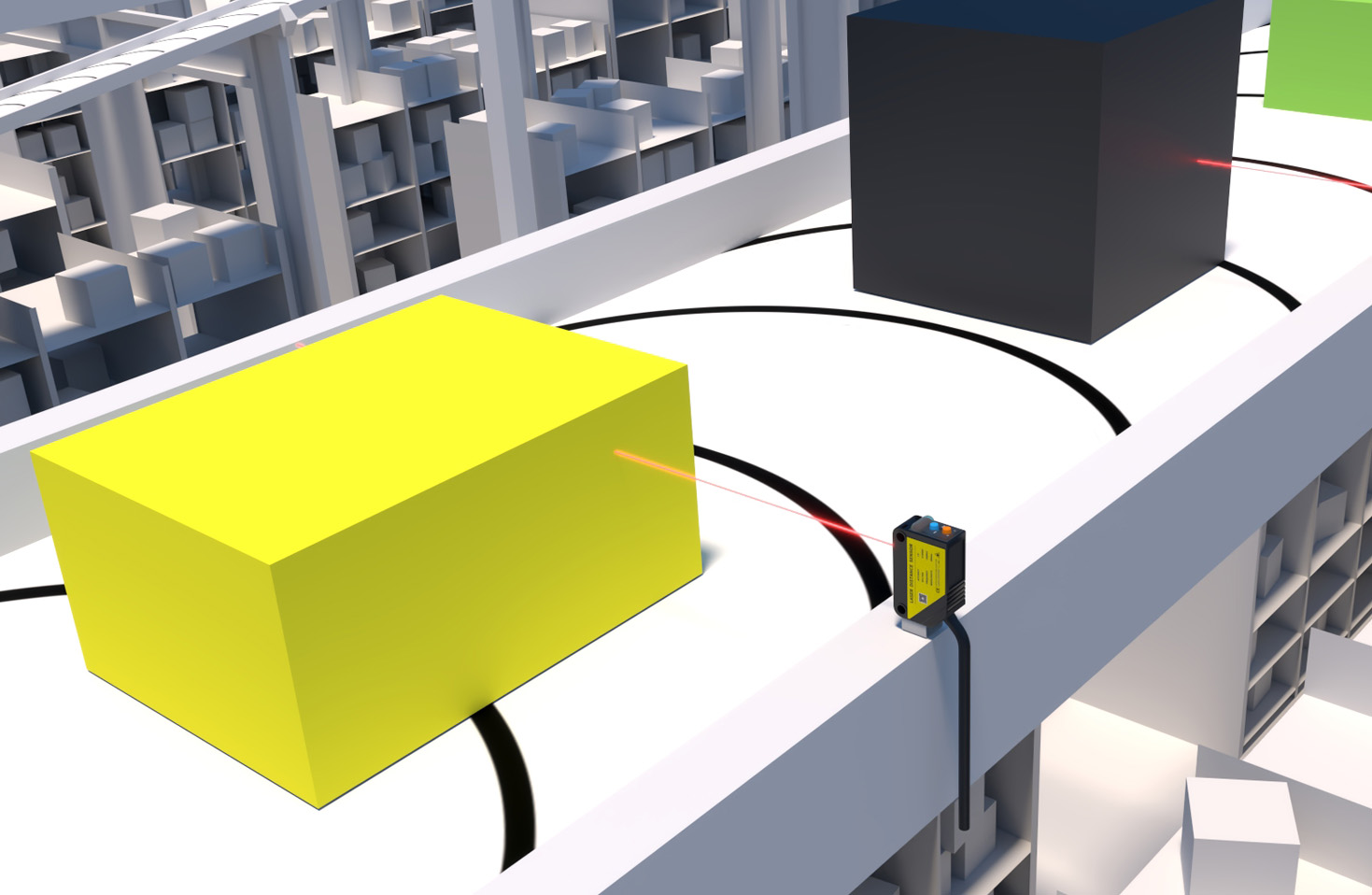
Interactive laser sensors represent a cutting-edge advancement in industrial automation, offering unparalleled precision, speed, and adaptability. These sophisticated devices operate by emitting a focused laser beam toward a target object. The interaction—whether through reflection, refraction, or diffraction—is captured and analyzed by the sensor's receiver. This process generates real-time data on parameters such as distance, position, thickness, vibration, and surface profile. Unlike traditional contact or passive optical sensors, interactive laser sensors engage dynamically with their environment, enabling closed-loop control systems that respond instantaneously to changes.
The core technology hinges on several principles, including time-of-flight (ToF), triangulation, and interferometry. Time-of-flight sensors calculate distance by measuring the round-trip time of a laser pulse. They excel in long-range applications, such as warehouse logistics for pallet positioning or autonomous vehicle navigation. Triangulation-based sensors, using a laser emitter, a receiver at a known angle, and sophisticated algorithms, achieve micron-level accuracy. They are indispensable in manufacturing for tasks like inspecting semiconductor wafers or verifying assembly tolerances. Interferometric sensors, leveraging wave interference patterns, provide nanometer resolution, crucial for calibrating precision machinery and conducting scientific research.
What truly defines interactive laser sensors is their ability to facilitate two-way communication within automated systems. Integrated with IoT platforms and industrial networks like EtherCAT or PROFINET, these sensors do not merely collect data; they actively participate in decision-making processes. For instance, on a robotic assembly line, a laser sensor can detect a misaligned component and immediately instruct the robotic arm to adjust its grip or trajectory. This interaction minimizes downtime, reduces material waste, and enhances overall equipment effectiveness (OEE). In quality control, sensors can interact with marking systems to tag defective products or with sorting mechanisms to divert them from the production stream.
The applications span diverse sectors. In automotive manufacturing, interactive laser sensors guide robots in precise welding and adhesive dispensing, ensuring structural integrity and safety. In the electronics industry, they monitor soldering processes and inspect micro-components for defects. The pharmaceutical sector relies on them for verifying pill coating uniformity and checking packaging seal integrity. Even in agriculture, laser sensors interact with automated harvesters to identify and selectively pick ripe produce.
However, deploying these systems requires careful consideration. Environmental factors like ambient light, dust, smoke, or target surface properties (e.g., transparency, reflectivity) can influence performance. Modern sensors incorporate adaptive features—such as automatic gain control, filter tuning, and software-based signal processing—to mitigate these challenges. Regular calibration and maintenance are paramount to sustain accuracy. Additionally, cybersecurity measures must be integrated, as networked interactive sensors could be vulnerable to intrusions that disrupt industrial operations.
Looking ahead, the convergence of interactive laser sensors with artificial intelligence and edge computing is set to unlock new potentials. AI algorithms can analyze sensor data streams to predict maintenance needs, optimize processes, and even enable adaptive manufacturing where production lines reconfigure themselves based on real-time feedback. As industries stride toward smart factories and Industry 4.0, interactive laser sensors will undoubtedly serve as critical enablers, transforming passive observation into active, intelligent interaction. Their role in enhancing precision, efficiency, and automation flexibility makes them not just tools, but collaborative partners in technological progress.
