In the realm of industrial automation and control systems, proximity sensors stand as fundamental components for non-contact object detection. Their reliability, precision, and durability are critical for ensuring seamless operations. This guide delves into the standard models and specifications of inductive and capacitive proximity sensors, providing engineers with the essential knowledge for optimal selection and application.
Core Operating Principles
Proximity sensors function by generating an electromagnetic field or electrostatic field. Inductive sensors detect metallic objects, while capacitive sensors can detect both metallic and non-metallic materials, including liquids and powders. The absence of mechanical contact eliminates wear and tear, granting them a significant advantage over traditional limit switches.
Standard Model Classifications
Manufacturers typically categorize standard models based on several key parameters:
1. Sensing Distance: This is the nominal range at which a standard target can be reliably detected. Common standardized sensing distances for cylindrical inductive sensors include 2mm, 4mm, 5mm, 8mm, 10mm, 12mm, 15mm, 20mm, and 30mm. Models are clearly marked with this specification (e.g., SN10-N for a 10mm range).
2. Housing Shape and Size: The physical form factor is crucial for installation.
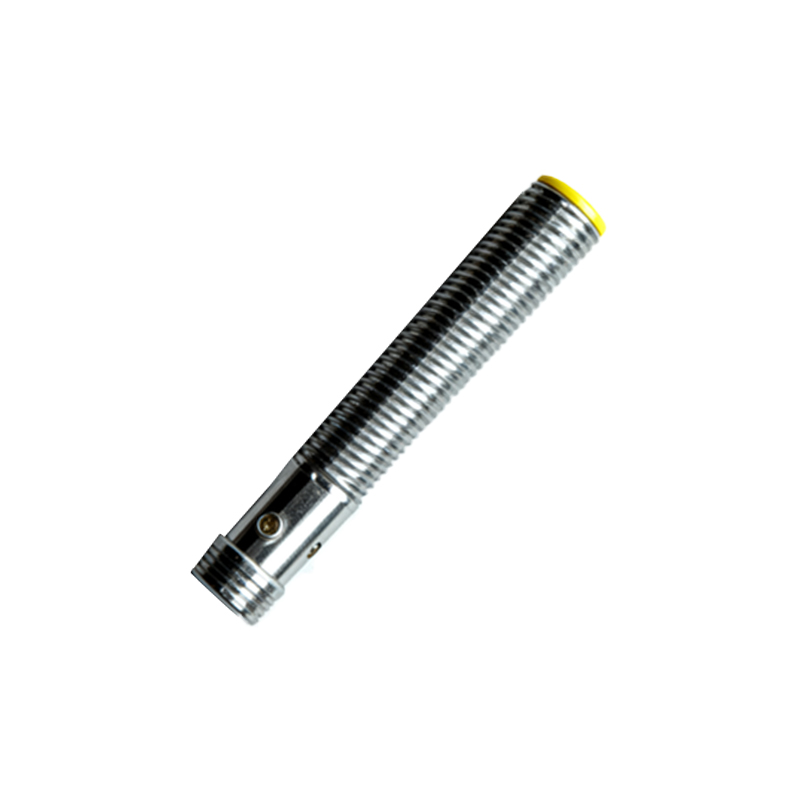
Cylindrical (Threaded): The most common type, available in standard metric thread sizes such as M8, M12, M18, M30, and M40. US standard threads like ⅜" and ½" are also available.
Rectangular/Block: Often used where space constraints exist or for specific sensing applications.
Ring/U-shaped: Designed for detecting objects passing through their aperture, useful for counting or verifying part presence.
3. Output Configuration: This defines the electrical switching signal.
PNP (Sourcing): The output switches the positive voltage to the load. Predominant in Europe and Asia.
NPN (Sinking): The output switches the ground connection to the load. Common in North America and Japan.
Analog (0-10V or 4-20mA): Provides a continuous signal proportional to the distance to the target.
IO-Link: A digital point-to-point communication interface enabling smart sensor capabilities like parameter setting, process data, and diagnostics.
4. Connection Type:
Cable Exit: Pre-attached cable of specified length and conductor count (e.g., 2m, 3-wire).
Quick-Disconnect (Connector): Uses a standardized plug (e.g., M12 4-pin or 5-pin connector), facilitating easy replacement and maintenance.
Critical Specifications for Selection
Beyond the model type, engineers must scrutinize the following detailed specifications from the datasheet:
Rated Operating Voltage: The DC or AC voltage range for reliable operation, e.g., 10-30V DC or 20-250V AC.
Output Current (Max.): The maximum continuous current the sensor's output can handle, typically 100mA to 500mA for standard DC models.
Switching Frequency: The maximum number of on/off cycles per second (Hz), indicating response speed. High-speed models can exceed 5 kHz.
Hysteresis: The difference between the switch-on and switch-off points, expressed as a percentage of the sensing distance. This prevents chatter when a target is at the detection boundary.
Protection Class (IP Rating): Ingress Protection rating against solids and liquids. IP67 (dust-tight and protected against temporary immersion) is a common industrial standard. IP69K indicates protection against high-pressure, high-temperature washdowns.
Material: Housing materials are typically nickel-plated brass, stainless steel (V4A/AISI 316), or PBT/PS plastic. The sensing face material is also critical for chemical resistance.
Temperature Range: Standard operating temperature ranges are usually -25°C to +70°C. Extended temperature models are available for harsh environments.
Compliance and Standards: Look for certifications like UL, CE, ATEX (for hazardous areas), and IEC 60947-5-2, which define performance and testing standards.
Application Considerations
Selecting the correct model requires analyzing the application environment. For metal detection in a standard machine tool, an inductive M18, 8mm range, PNP, IP67 sensor is a typical choice. For detecting glass bottles on a conveyor, a capacitive rectangular sensor would be necessary. Always consider factors like target material, size, approach direction, ambient temperature, and potential exposure to chemicals