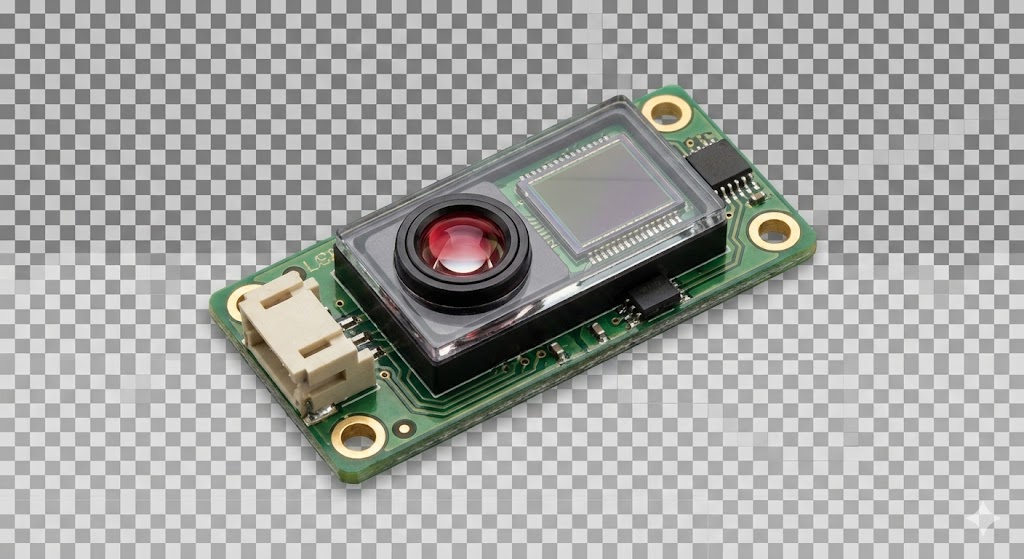
Laser displacement sensors are non-contact measurement devices that utilize a focused laser beam to determine the distance to a target object with high precision. Operating on the principle of triangulation or time-of-flight, these sensors emit laser light onto a surface. The reflected light is captured by a receiving element, such as a Position Sensitive Detector (PSD) or a CMOS/CCD array. By analyzing the position of the reflected light spot on the detector, the sensor's internal processor calculates the exact distance to the target. This method allows for accurate measurements regardless of the object's material, color, or surface texture, though highly reflective or transparent surfaces may require specific sensor models or setup adjustments.
The core technology can be broadly categorized into two types: triangulation-based and time-of-flight (ToF) based. Triangulation sensors are the most common for high-precision, short to medium-range applications. They offer exceptional resolution, often in the micrometer range, and high sampling speeds. These are ideal for tasks like thickness gauging, vibration analysis, and profile measurement on production lines. Time-of-flight sensors, which measure the round-trip time of a laser pulse, are suited for longer ranges, typically from several meters to over a hundred meters. While generally offering slightly lower resolution than triangulation sensors, they provide excellent performance for large-scale positioning, vehicle detection, and bulk material level monitoring.
Selecting the appropriate laser displacement sensor requires careful consideration of several key specifications. Measurement range defines the minimum and maximum distances over which the sensor can operate accurately. Resolution indicates the smallest detectable change in distance, critical for precision tasks. Linearity error specifies the maximum deviation from a perfect straight-line response across the measurement range. Sampling speed, or response frequency, determines how many measurements per second the sensor can perform, which is vital for high-speed production environments or dynamic object tracking. Environmental factors like ambient light, temperature fluctuations, and the presence of dust or steam must also be evaluated, as they can influence sensor performance. Many industrial-grade sensors feature robust housings (IP67 or higher), integrated temperature compensation, and filters to mitigate ambient light interference.
In modern industrial automation, laser displacement sensors are indispensable tools. In automotive manufacturing, they are deployed for precise gap and flush measurement between body panels, brake disc thickness inspection, and robotic guidance during assembly. The electronics industry relies on them for coplanarity checks of chip leads, solder paste height measurement, and wafer warpage inspection. In metal processing, they monitor roll gap dimensions, sheet flatness, and part dimensions with relentless accuracy. Beyond traditional manufacturing, they enable advanced robotics for bin picking, contour following, and autonomous navigation. They also play a crucial role in quality control systems, providing real-time data for Statistical Process Control (SPC) to minimize defects and ensure consistent product quality.

The integration of these sensors into larger systems is facilitated by various output options, including analog voltage/current, digital interfaces like RS-485 or Ethernet, and high-speed transistor outputs. This connectivity allows seamless data transmission to Programmable Logic Controllers (PLCs), industrial PCs, and data acquisition systems for immediate analysis and feedback control. Modern sensors often come with sophisticated software for easy configuration, data visualization, and advanced filtering, enabling engineers to tailor the sensor's behavior to specific application needs quickly.
Looking forward, advancements in laser diode technology, detector sensitivity, and processing algorithms continue to push the boundaries of what is possible. Emerging trends include the development of ultra-high-speed sensors for capturing rapid transient events, blue laser models for improved performance on organic materials, and miniaturized sensors for integration into increasingly compact machinery. The fusion of laser displacement data with 3D vision systems and artificial intelligence for predictive maintenance and adaptive manufacturing represents the next frontier. As Industry 4.0 and smart factory concepts mature, the role of the laser displacement sensor as a fundamental provider of precise, reliable metrological data will only become more central, driving efficiency, quality, and innovation across countless industrial sectors.