In the realm of industrial automation and quality control, precision measurement is paramount. Among the various technologies employed, laser thickness sensors stand out for their non-contact, high-speed, and exceptionally accurate capabilities. These sensors are critical in industries ranging from metal processing and plastics manufacturing to semiconductor and glass production. This guide delves into the key models, their operating principles, and selection criteria to empower engineers and procurement specialists in making informed decisions.
The fundamental principle behind laser thickness sensors is triangulation. A laser diode projects a focused beam onto the target material's surface. The reflected light is captured by a high-resolution CMOS or CCD receiver at a specific angle. Any variation in the target's position (i.e., its thickness if measuring from two sides) causes a proportional shift of the laser spot on the receiver. Sophisticated onboard processors calculate this displacement to determine the thickness with micron-level resolution. Common configurations include single-sensor systems for measuring thickness relative to a known reference (like a roller) and dual-sensor systems, where two synchronized laser sensors measure from opposite sides, providing absolute thickness independent of target movement or vibration.

Several prominent models dominate the market, each with unique strengths. The KEYENCE LJ-V Series is renowned for its ultra-high speed and precision. Models like the LJ-V7080 offer measurement frequencies up to 64 kHz and resolutions down to 0.1 µm, making them ideal for fast-moving production lines of thin films, foils, and high-precision components. Their built-in algorithms effectively handle challenging surfaces, including transparent and glossy materials.
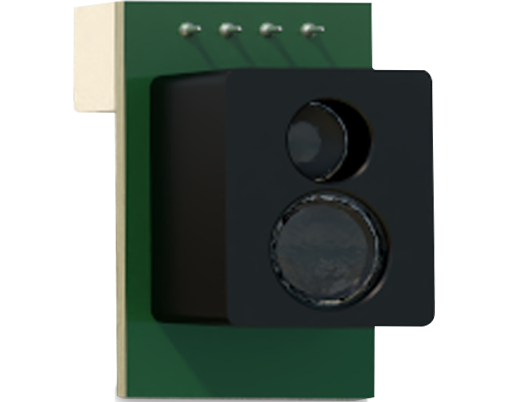
The MICRO-EPSILON optoNCDT 2300 series represents a benchmark for long-range and robust measurements. These sensors are designed for harsh industrial environments, featuring robust metal housings, high IP ratings for dust and water resistance, and excellent temperature stability. They are particularly suited for measuring hot targets in metal rolling mills or the thickness of extruded rubber and plastic profiles where distance and environmental factors are concerns.
For applications demanding exceptional value and compact design, the OMRON ZX-L Series offers a compelling solution. These laser displacement sensors provide stable measurements against a wide variety of surface colors and textures. Their slim housing allows for easy integration into space-constrained machinery, perfect for in-line measurement of PCB thickness, small molded parts, or battery electrodes.

The Panasonic HG-C Series focuses on high-speed, cost-effective 2-point thickness measurement. By using two laser sensors in a master-slave configuration, they directly output a thickness value, simplifying system architecture. This model is frequently deployed in paper, non-woven fabric, and sheet metal processing lines where consistent monitoring of material thickness is crucial for product quality and waste reduction.
Selecting the appropriate laser thickness sensor model requires a careful analysis of application parameters. Key considerations include: Measurement Range and Resolution: Define the minimum and maximum thicknesses and the required precision. A sensor with a 10mm range and 1µm resolution is vastly different from one with a 100mm range and 0.1mm resolution. Target Material and Surface: The surface color (black absorbs light, white reflects), texture (rough, shiny), and transparency significantly impact sensor performance. Some models feature automatic exposure control or special modes for translucent materials. Speed Requirement: The sensor's sampling rate must exceed the production line speed to capture meaningful data without aliasing. Environmental Conditions: Factors like ambient light, temperature fluctuations, dust, oil mist, and vibrations dictate the need for protective housings, cooling units, or specialized filters. Output and Interface: Ensure the sensor's analog (4-20mA, 0-10V) or digital (Ethernet/IP, PROFINET, RS-485) outputs are compatible with your PLC or data acquisition system. Form Factor and Mounting: The physical size and mounting options of the sensor must align with the mechanical constraints of the installation site.
In conclusion, laser thickness sensors are indispensable tools for modern manufacturing. Models from industry leaders like KEYENCE, MICRO-EPSILON, OMRON, and Panasonic cater to a broad spectrum of precision needs. A successful implementation hinges on a thorough understanding of the application's specific demands—resolution, speed, environment, and material properties—paired with the technical specifications of the available sensor models. By leveraging this non-contact technology, industries can achieve unprecedented levels of quality control, process optimization, and operational efficiency.