In the realm of industrial automation, efficiency, reliability, and safety are paramount. Among the myriad components that drive modern manufacturing and processing systems, plug-in proximity sensors stand out as critical enablers of seamless operation. These non-contact sensing devices detect the presence or absence of objects without physical interaction, making them indispensable in harsh environments where durability and precision are non-negotiable.
Plug-in proximity sensors, often referred to as inductive, capacitive, or magnetic sensors depending on their detection principle, are designed for easy installation and maintenance. Their "plug-in" design typically features a standardized connector or quick-disconnect coupling, allowing for rapid replacement without the need for complex wiring or recalibration. This modularity significantly reduces downtime during maintenance or system reconfiguration, a key advantage in high-throughput production lines.
Inductive proximity sensors are the most common variant, utilizing an electromagnetic field to detect metallic objects. They are ideal for applications involving ferrous and non-ferrous metals, such as part positioning on conveyor belts, robotic arm end-effector sensing, or metal detection in assembly processes. Their robust construction, often with IP67 or higher ingress protection ratings, ensures reliable performance in environments contaminated with dust, oil, or coolant fluids.
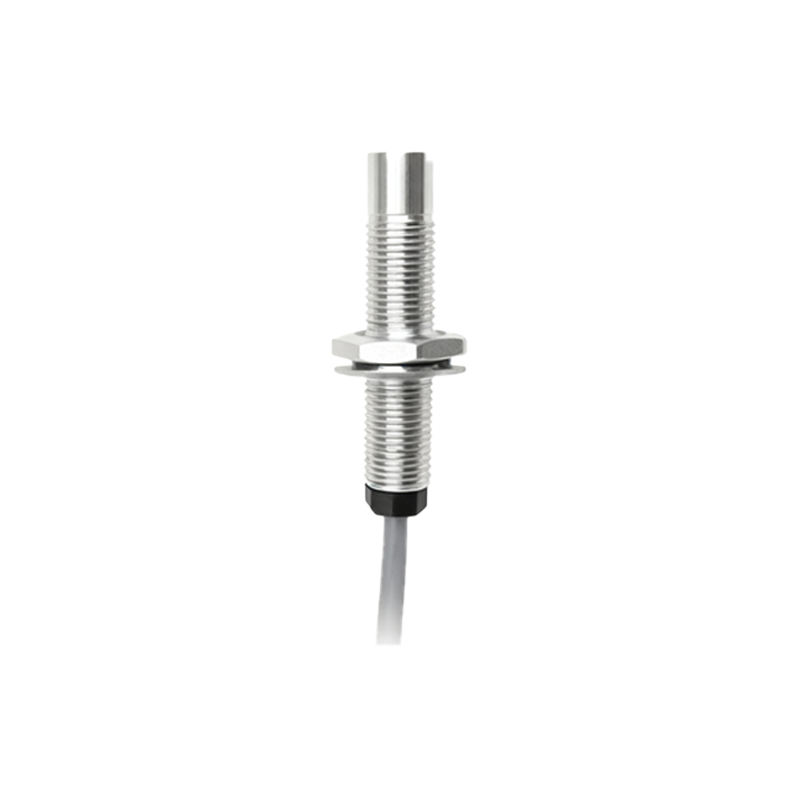
Capacitive proximity sensors, on the other hand, can detect both metallic and non-metallic materials, including liquids, plastics, and wood. They operate by measuring changes in capacitance caused by the presence of an object within their sensing field. This versatility makes them suitable for level detection in tanks, material handling in packaging industries, or presence verification of non-conductive products.
Magnetic proximity sensors are specifically tuned to detect permanent magnets, commonly used in conjunction with pneumatic cylinders to monitor piston position. Their simplicity and immunity to environmental factors like dirt or humidity make them a staple in hydraulic and pneumatic systems.
The integration of plug-in proximity sensors into industrial networks has been revolutionized by the advent of IO-Link technology. IO-Link enables bidirectional digital communication, allowing sensors to transmit not just binary signals (on/off) but also detailed diagnostic data, parameter settings, and process values. This smart functionality facilitates predictive maintenance, remote configuration, and enhanced system diagnostics, aligning with Industry 4.0 principles.
When selecting a plug-in proximity sensor, engineers must consider several technical parameters: sensing range, response frequency, output type (e.g., PNP/NPN, analog, or IO-Link), housing material (typically stainless steel, brass, or PBT plastic), and environmental certifications. Proper mounting, alignment, and electrical compatibility with controllers (PLCs) are crucial to avoid false triggers or sensing errors.
Applications span virtually every industrial sector. In automotive manufacturing, these sensors ensure precise component placement in robotic welding cells. In food and beverage processing, stainless steel variants with hygienic designs monitor filling levels and container presence. In material handling, they safeguard automated guided vehicles (AGVs) by detecting obstacles or guiding navigation.
Despite their robustness, challenges such as electrical interference, extreme temperatures, or mechanical stress can affect performance. Shielding, proper grounding, and adherence to manufacturer specifications mitigate these risks. Regular testing with target objects at operational speeds ensures sustained accuracy.
Looking ahead, advancements in miniaturization, energy efficiency, and wireless connectivity are shaping the next generation of plug-in proximity sensors. Integration with AI for adaptive sensing thresholds and enhanced noise immunity are emerging trends, promising even greater contributions to automated system resilience and intelligence.
In conclusion, plug-in proximity sensors are more than mere switches; they are the silent sentinels of industrial automation. Their evolution from simple detection devices to smart, connected components underscores their vital role in enhancing productivity, safety, and operational agility. As industries continue to embrace digital transformation, these sensors will remain at the forefront, enabling smarter, more responsive manufacturing ecosystems.