In the realm of industrial automation and precision measurement, laser sensors have emerged as indispensable tools, offering unparalleled accuracy, speed, and reliability. These devices operate on the fundamental principle of emitting a focused beam of light—typically from a laser diode—and analyzing the reflected signal to determine various parameters such as distance, displacement, presence, or profile of a target object. Unlike conventional sensors, laser sensors utilize coherent light, which allows for highly concentrated energy over long distances with minimal divergence, making them ideal for applications requiring fine resolution and non-contact operation.
The core working mechanism involves triangulation or time-of-flight (ToF) methods. In triangulation sensors, the emitted laser beam strikes the target, and the reflected light is captured by a receiver at a known angle. By calculating the position of the reflected spot on the receiver, the sensor determines the distance to the object with micron-level precision. This method is widely used in dimensional gauging and surface inspection. Conversely, ToF sensors measure the time taken for a laser pulse to travel to the target and back, calculating distance based on the speed of light. ToF technology is favored for long-range applications, such as in autonomous vehicles or warehouse logistics, where distances up to several hundred meters need to be monitored.
Several types of laser sensors cater to diverse industrial needs. Distance sensors, for instance, are crucial in robotics for obstacle detection and positioning, while displacement sensors ensure precise control in manufacturing processes like semiconductor fabrication. Profile sensors capture 2D or 3D contours of objects, enabling quality control in automotive assembly lines. Additionally, contrast sensors distinguish between materials based on reflectivity, and color sensors identify hues for sorting tasks. Each type leverages specific laser wavelengths—often in the visible red or infrared spectrum—to optimize performance for different surface properties and environmental conditions.

The advantages of laser sensors are manifold. Their high resolution and accuracy, often down to sub-micron levels, surpass mechanical or ultrasonic alternatives. They provide rapid response times, essential for high-speed production lines, and maintain consistency even in challenging environments with dust, vibration, or variable lighting. Non-contact operation eliminates wear and tear, reducing maintenance costs and preventing damage to delicate targets. However, limitations exist: highly reflective or transparent surfaces can cause measurement errors, and ambient light interference may affect performance, though advanced models incorporate filters and algorithms to mitigate these issues.
Industrial applications span across sectors. In manufacturing, laser sensors enable precise part alignment, thickness monitoring, and defect detection, enhancing product quality and throughput. The automotive industry relies on them for weld seam inspection and robotic guidance, while electronics manufacturing uses them for component placement and PCB inspection. In logistics, they facilitate package dimensioning and automated sorting. Emerging fields like smart agriculture employ laser sensors for crop monitoring, and healthcare utilizes them in diagnostic equipment for non-invasive measurements.
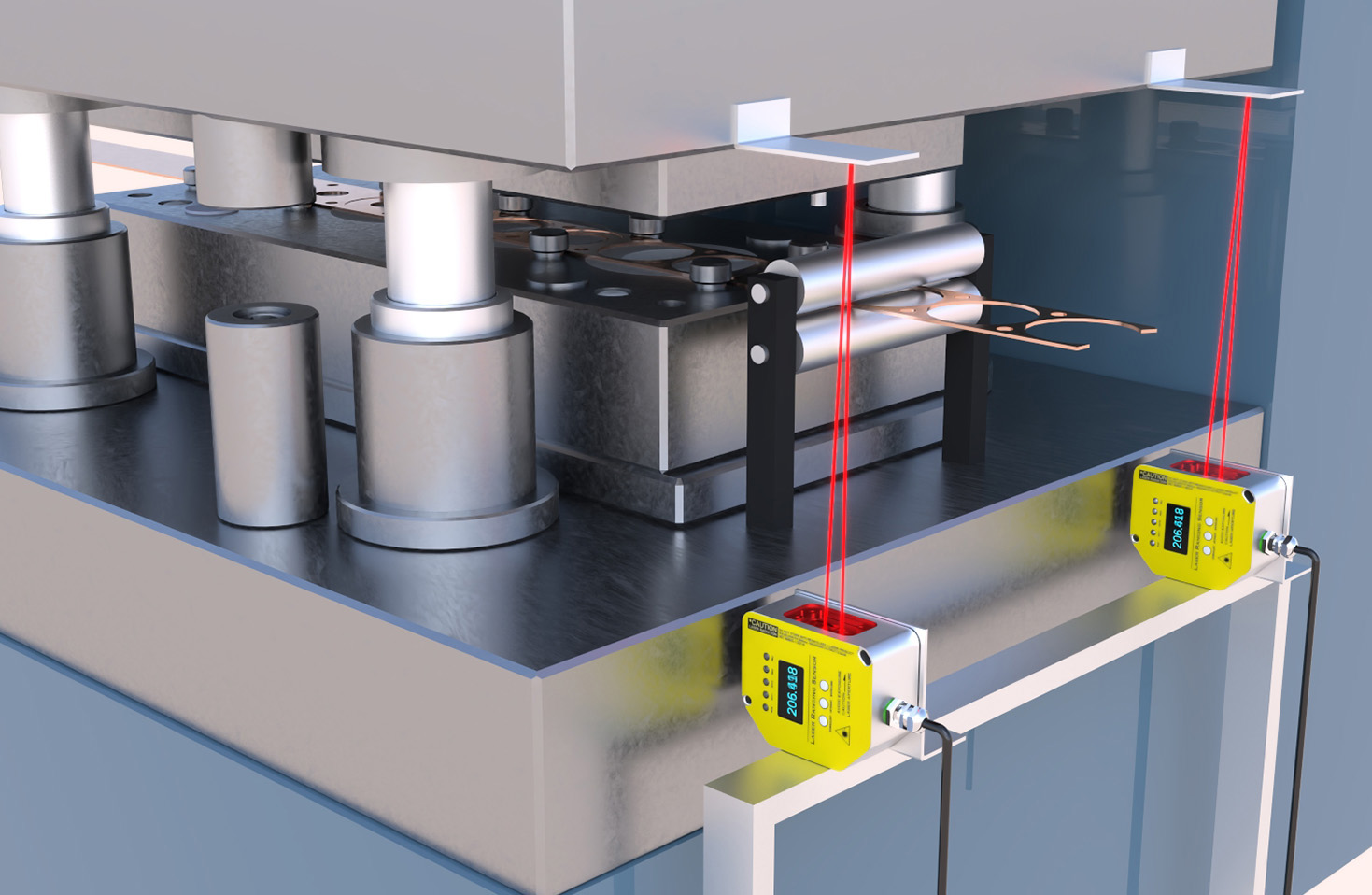
When selecting a laser sensor, engineers must consider factors such as measurement range, resolution, response time, and environmental robustness. Integration with PLCs (Programmable Logic Controllers) and industrial networks like Ethernet/IP or PROFINET is also critical for seamless automation. Regular calibration and adherence to safety standards—such as IEC 60825 for laser product safety—are imperative to ensure reliable operation and protect personnel from potential eye hazards.

Looking ahead, advancements in miniaturization, cost reduction, and AI-driven data analysis are poised to expand the capabilities of laser sensors. Innovations like LiDAR (Light Detection and Ranging) are revolutionizing autonomous systems, while integration with IoT (Internet of Things) platforms enables predictive maintenance and real-time analytics. As industries strive for greater efficiency and precision, laser sensors will continue to be at the forefront of technological evolution, driving automation forward with their versatile and accurate sensing solutions.