Laser Scanning LiDAR (Light Detection and Ranging) sensors have emerged as a cornerstone technology in modern industrial automation and robotics. Unlike simple proximity sensors, LiDAR systems construct high-resolution, three-dimensional point cloud maps of their surroundings by emitting rapid pulses of laser light and measuring the time it takes for each pulse to reflect back to the receiver. This principle, known as time-of-flight (ToF), enables precise distance measurement and object detection with remarkable accuracy, often down to the millimeter level.
The core components of a scanning LiDAR sensor include a laser emitter, a sensitive photodetector, and a rotating or oscillating mirror mechanism that directs the laser beam across a defined field of view. Industrial-grade LiDARs typically operate using near-infrared wavelengths, which balance performance, eye safety, and resilience to ambient light interference. Key performance metrics for engineers to evaluate include angular resolution, scanning frequency, maximum range, and data output rate. Higher angular resolution yields denser point clouds, crucial for detecting small objects or intricate shapes, while a faster scanning frequency is vital for tracking dynamic processes on a production line.
In industrial settings, the applications of laser scanning LiDAR are vast and transformative. One primary use is in autonomous guided vehicles (AGVs) and autonomous mobile robots (AMRs). These vehicles rely on LiDAR for real-time navigation, obstacle avoidance, and safe path planning within warehouses and factories, enabling flexible material handling without the need for fixed tracks or magnetic guides. Another critical application is in volume measurement and logistics. LiDAR sensors mounted on gantries can quickly and accurately scan pallets or containers to calculate fill levels and dimensions, optimizing storage space and load planning.
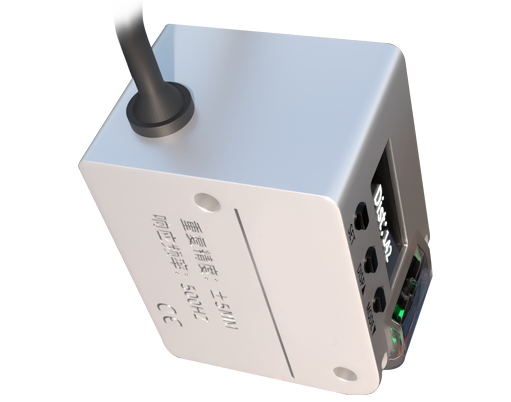
Furthermore, LiDAR plays an essential role in safety systems. Safety laser scanners create invisible protective fields around hazardous machinery, such as robotic arms or press brakes. If the laser field is breached by a person or object, the system triggers an immediate machine shutdown, preventing accidents and ensuring compliance with stringent safety standards like ISO 13849. In quality control and reverse engineering, high-precision 3D LiDAR scanners capture the exact geometry of components, allowing for comparison against digital CAD models to detect manufacturing defects, deformations, or wear.

The integration of LiDAR data with other systems, such as inertial measurement units (IMUs) and machine vision cameras, through industrial communication protocols like EtherCAT or PROFINET, creates a more robust and comprehensive perception system. This sensor fusion is key to building the "digital twin" of a physical production environment, enabling predictive maintenance, process optimization, and real-time system simulation.
Looking ahead, several trends are shaping the future of industrial LiDAR technology. Solid-state LiDAR, which eliminates moving mechanical parts, promises enhanced durability, smaller form factors, and lower costs—factors critical for widespread adoption. The development of more sophisticated algorithms for point cloud processing, often leveraging edge computing and artificial intelligence, will allow for faster object classification and scene interpretation directly at the sensor level. Additionally, the push for smarter, more interconnected factories within Industry 4.0 frameworks will drive demand for LiDAR sensors that offer not just raw data, but actionable insights, seamlessly feeding into Manufacturing Execution Systems (MES) and cloud platforms.
Despite its advantages, challenges remain, including performance degradation in certain environmental conditions like heavy dust, fog, or direct sunlight, and the ongoing need for cost reduction for high-end models. However, continuous advancements in laser technology, detector sensitivity, and signal processing are steadily overcoming these hurdles.
In conclusion, laser scanning LiDAR sensors are far more than just distance-measuring devices; they are enabling technologies for autonomy, safety, and precision in the industrial landscape. As they become more capable, affordable, and integrated, their role in building the intelligent, flexible, and efficient factories of the future will only become more pronounced. For engineers and system integrators, a deep understanding of LiDAR capabilities and selection criteria is now an indispensable part of designing advanced automation solutions.