Flat proximity sensors represent a significant advancement in industrial automation, offering unique advantages in space-constrained environments. These sensors, characterized by their low-profile, rectangular, or disc-shaped housings, are designed to detect the presence or absence of metallic or non-metallic objects without physical contact. Their operational principle is primarily based on electromagnetic, capacitive, or magnetic field technologies, with inductive flat sensors being the most common for metal detection.
The defining feature of a flat proximity sensor is its minimal installation depth. Unlike cylindrical sensors, they require very little space behind the mounting surface, making them ideal for applications where clearance is limited, such as within compact machinery, robotic grippers, conveyor systems, and automated guided vehicles (AGVs). The flat design allows for flush or non-flush mounting on metal surfaces, providing flexibility in integration. Key performance parameters include sensing distance, which is typically shorter than standard cylindrical sensors due to the smaller coil diameter, response frequency, and environmental ratings like IP67 or IP69K for resistance to dust, water, and chemicals.
In practical applications, flat proximity sensors excel in precision positioning and end-position detection. For instance, they are extensively used to monitor the position of hydraulic or pneumatic cylinders by detecting the piston or a built-in trigger magnet. Their slim profile is crucial in semiconductor manufacturing equipment, packaging machines, and printing presses where every millimeter counts. Furthermore, the availability of models with analog outputs or IO-Link communication enables not just binary detection but also precise distance measurement and condition monitoring, feeding valuable data into Industry 4.0 networks.
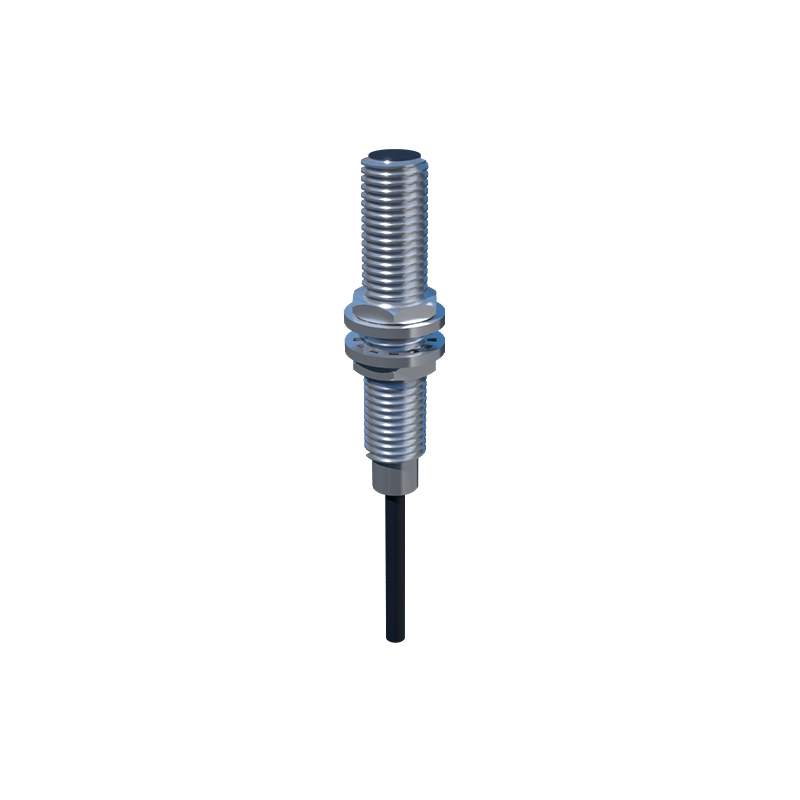
Selection and installation require careful consideration. Engineers must evaluate the target material (ferrous, non-ferrous, or non-metallic), the required sensing range, electrical specifications (DC/AC, PNP/NPN output), and environmental conditions such as temperature extremes and potential exposure to cutting fluids or washdowns. Incorrect mounting, especially with flush-mounted inductive sensors, can reduce the effective sensing distance. It is also vital to ensure that the sensor housing, often made of stainless steel or PBT plastic, is compatible with the operational environment to prevent premature failure.
Looking ahead, the evolution of flat proximity sensors is geared towards smarter, more integrated solutions. The integration of advanced diagnostics, enhanced noise immunity, and higher switching frequencies aligns with the demands of high-speed automation. Their role in enabling leaner, more compact machine designs continues to grow, solidifying their status as a critical component in modern industrial sensing technology. For any automation project where space is at a premium, the flat proximity sensor offers a reliable, efficient, and versatile solution for non-contact detection.