Laser sensors represent a critical technology in modern industrial automation, measurement, and control systems. At their core, these devices operate on fundamental principles of light interaction, leveraging the unique properties of laser light to achieve high precision and reliability. Understanding the underlying light principles is essential for engineers and technicians deploying these sensors in various applications.
The term "laser" stands for Light Amplification by Stimulated Emission of Radiation. Unlike ordinary light sources that emit incoherent light in multiple wavelengths and directions, a laser produces a highly focused, monochromatic (single wavelength), and coherent beam of light. This coherence means the light waves are in phase, both spatially and temporally, allowing the beam to travel long distances with minimal divergence. This property is foundational for laser sensing, as it enables precise targeting and measurement.

Most industrial laser sensors operate based on one of three primary light principles: triangulation, time-of-flight (ToF), or interferometry. The triangulation method is commonly used for precise distance and displacement measurement. In this setup, a laser diode emits a focused beam onto a target surface. The reflected light is then captured by a position-sensitive detector (PSD), such as a CMOS or CCD array, located at a known angle from the emitter. By calculating the angle of the reflected light spot on the detector, the sensor's internal processor can determine the exact distance to the target using trigonometric principles. This method offers high resolution, often in the micrometer range, making it ideal for applications like thickness gauging, profile scanning, and vibration analysis.
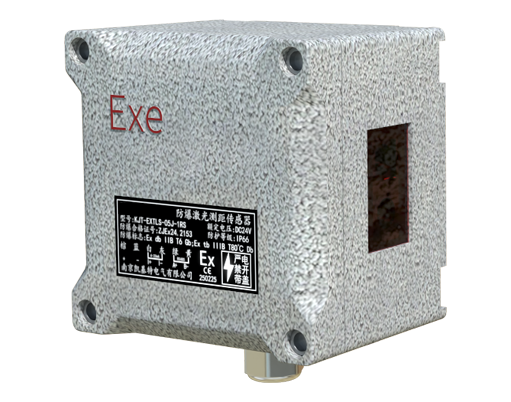
Time-of-flight laser sensors, on the other hand, measure distance by calculating the time it takes for a laser pulse to travel to a target and back. The sensor emits short, intense pulses of laser light. A high-speed photodetector receives the reflected pulse. Since the speed of light is a constant (approximately 3×10^8 meters per second), the distance is derived from the simple formula: Distance = (Speed of Light × Time Delay) / 2. Modern ToF sensors use advanced timing circuits to measure these nanosecond-level intervals with great accuracy. This principle is suitable for longer-range measurements, from a few centimeters to several hundred meters, and is widely used in LiDAR, robotics navigation, and bulk level monitoring.
Interferometric laser sensors represent the pinnacle of precision, capable of nanometer-scale measurements. They operate on the principle of light wave interference. The sensor splits the laser beam into a reference beam and a measurement beam. The measurement beam is directed at the target, while the reference beam travels a fixed path. When the reflected measurement beam recombines with the reference beam, they create an interference pattern. Any minute displacement of the target alters the optical path length of the measurement beam, causing a shift in the interference fringes. By analyzing these shifts, the sensor can determine displacement with extreme accuracy. This technology is indispensable in semiconductor manufacturing, precision metrology, and calibration of mechanical stages.
Beyond the measurement principle, the choice of laser wavelength is a critical engineering consideration. Common industrial lasers use visible red light (around 650 nm), infrared (e.g., 850 nm or 905 nm), or, for high-precision applications, blue or violet lasers. The wavelength affects the sensor's performance regarding the target material's reflectivity, ambient light immunity, and eye safety regulations. For instance, infrared lasers are less susceptible to ambient visible light interference, while red lasers provide a visible spot for easier alignment.
The photodetector component is equally vital. It converts the received light energy into an electrical signal. Silicon photodiodes are common for visible and near-infrared ranges. The detector's response time, sensitivity, and signal-to-noise ratio directly impact the sensor's speed and accuracy. Advanced sensors incorporate digital signal processors (DSPs) to filter noise, compensate for environmental factors like temperature, and provide stable, linearized output signals.
In practical application, environmental factors pose significant challenges. Dust, steam, ambient light, and varying surface properties (color, texture, reflectivity) can affect the laser beam's return signal. Modern laser sensors integrate sophisticated algorithms to compensate for these issues. For example, background suppression techniques help ignore reflections from objects beyond the set sensing range. Some models use modulated laser light and synchronous detection to reject ambient light noise entirely.
Laser sensors are deployed across countless industries. In automotive manufacturing, they ensure precise robot positioning and part inspection. In packaging, they monitor fill levels and check label placement. In logistics, they guide autonomous mobile robots (AMRs). Their non-contact nature prevents wear and tear on both the sensor and the target, enabling high-speed, reliable operation in harsh environments where mechanical probes would fail.
Future trends point towards miniaturization, increased intelligence, and multi-functional integration. The development of Vertical-Cavity Surface-Emitting Lasers (VCSELs) allows for compact, low-power sensor arrays. Integration with AI and machine vision is creating smart sensors capable of not just measuring distance but also recognizing shapes, defects, and complex patterns.
In conclusion, the operation of laser sensors is a direct application of optical physics. From the generation of a coherent laser beam to the sophisticated interpretation of its reflection or time delay, these devices translate the principles of light into actionable data. For engineers, a deep understanding of these principles—triangulation, time-of-flight, and interferometry—is crucial for selecting the right sensor, configuring it optimally, and troubleshooting issues in the field, thereby ensuring robust and precise automated systems.