Laser through-beam sensors, also known as photoelectric through-beam sensors, are a cornerstone of modern industrial automation, offering unparalleled precision and reliability for object detection, positioning, and counting applications. Unlike diffuse or retro-reflective sensors, the through-beam configuration consists of two separate units: a laser transmitter and a receiver. The transmitter emits a focused, coherent beam of light—typically in the visible red or infrared spectrum—which is directly aimed at the receiver. The receiver continuously monitors the intensity of this incoming light. An object is detected the moment it interrupts this beam, causing a significant drop in the received light intensity at the receiver unit. This simple yet robust principle forms the basis of their operation.
The advantages of this technology are significant. First and foremost is their exceptional sensing range. Through-beam sensors can reliably detect objects over distances far greater than other photoelectric types, often spanning several meters, even in challenging industrial environments. This makes them ideal for large-scale applications like warehouse door monitoring or conveyor belt systems in logistics centers. Secondly, they offer very high precision. The sharply focused laser beam allows for the detection of extremely small objects or precise edges, which is critical in high-precision manufacturing, semiconductor handling, or pharmaceutical packaging. Their accuracy is largely unaffected by the object's surface color, texture, or reflectivity, as detection depends solely on beam interruption, not on the reflection of light. This solves common problems faced by diffuse sensors, which can struggle with dark or absorbent materials.
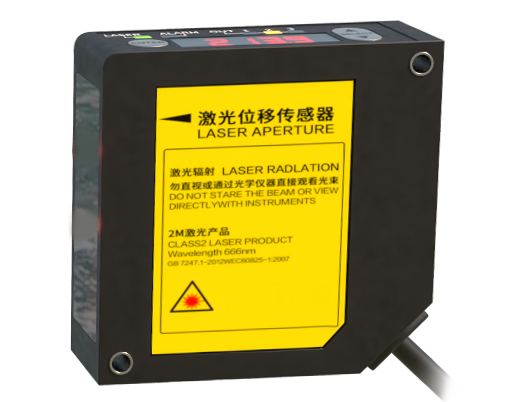
Furthermore, laser through-beam sensors are renowned for their stability and resistance to environmental interference. The coherent nature of laser light minimizes dispersion, allowing for a stable beam over long distances. Advanced models incorporate modulation techniques, where the emitted light is pulsed at a specific frequency. The receiver is tuned to recognize only this frequency, effectively filtering out ambient light from factory lamps, sunlight, or other optical noise. This ensures reliable operation in brightly lit or fluctuating light conditions. Their robust housing, often rated at IP67 or higher, provides protection against dust, water jets, and mechanical impacts, guaranteeing longevity in harsh settings like automotive plants or food and beverage processing.
Typical applications are vast and varied. In material handling and packaging, they are used for precise carton counting, bottle cap presence verification, and detecting the breakage of transparent films. In automotive assembly lines, they ensure components are correctly positioned before robotic welding or assembly. Within the electronics industry, they facilitate the precise alignment of printed circuit boards (PCBs) and detect the presence of tiny components. Safety is another critical domain, where they form the invisible "light curtains" guarding hazardous areas around presses, robots, or automated guided vehicles (AGVs), instantly halting machinery if the beam is broken.
When selecting a laser through-beam sensor, several key parameters must be considered. The sensing distance, or operating range, must match the physical layout of the application. The response time, often in the microsecond range, determines how fast the sensor can detect an object passing through the beam—a vital factor for high-speed production lines. The size of the minimum detectable object is governed by the laser spot diameter. For detecting very thin wires or small gaps, a sensor with a minute, focused spot is essential. Finally, the choice of output type (e.g., NPN, PNP, analog, or IO-Link) must integrate seamlessly with the existing programmable logic controller (PLC) or control system.
In conclusion, laser through-beam sensors represent a mature, highly effective sensing solution. Their combination of long range, high precision, environmental robustness, and operational simplicity makes them an indispensable tool for engineers designing automated systems. As industries continue to push for higher speeds, greater accuracy, and improved reliability, the fundamental role of the laser through-beam sensor in enabling these advancements remains firmly secured. Their continued evolution, including integration with Industrial Internet of Things (IIoT) platforms for predictive maintenance and data analytics, promises to further enhance their value in the smart factories of the future.