Proximity sensors have become indispensable in modern textile and garment manufacturing, particularly for fabric detection and handling. These sensors enable non-contact detection of various fabric types, ensuring precise positioning, tension control, and automation in processes such as cutting, sewing, and folding. Unlike traditional mechanical sensors, proximity sensors offer high reliability, minimal maintenance, and the ability to operate in challenging environments without physical wear.
The most commonly used proximity sensors for fabric detection include capacitive, inductive, and optical types. Capacitive sensors are highly effective for detecting non-metallic materials like cotton, polyester, and blended fabrics. They work by measuring changes in capacitance when fabric enters the sensor's field. These sensors can detect fabrics through barriers, making them suitable for applications where the fabric is covered or layered. Inductive sensors, on the other hand, are primarily used for detecting metallic threads or fabrics with conductive elements. Although less common in pure fabric detection, they play a role in specialized textile applications. Optical sensors, including infrared and laser variants, offer high precision for detecting fabric edges, colors, and thickness variations. They are ideal for high-speed production lines where accuracy is critical.
Selecting the right proximity sensor depends on several factors: fabric composition, environmental conditions, required detection range, and response speed. For instance, capacitive sensors are preferred for lightweight or transparent fabrics, while optical sensors excel in detecting precise fabric edges during cutting operations. Industrial environments with dust, humidity, or temperature fluctuations require sensors with appropriate ingress protection (IP) ratings and temperature stability. Modern sensors often feature adjustable sensitivity and output modes (e.g., NPN/PNP) to integrate seamlessly with PLCs and automation systems.
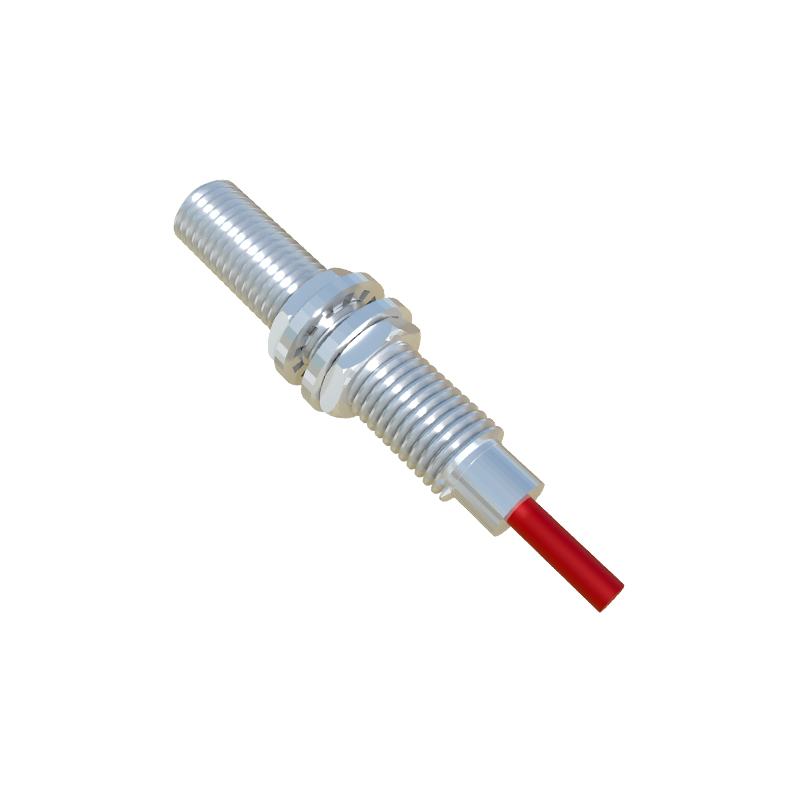
Installation and calibration are crucial for optimal performance. Sensors should be mounted securely to avoid vibrations, with the sensing area aligned perpendicular to the fabric path. Regular calibration ensures consistent detection, especially when dealing with fabrics of varying thickness or texture. Advanced sensors with self-diagnostic functions can alert operators to issues like contamination or misalignment, reducing downtime.
In practice, proximity sensors enhance efficiency in multiple textile processes. In automated cutting machines, sensors detect fabric presence and alignment, preventing material waste. In sewing machines, they ensure thread tension and fabric feed accuracy, improving stitch quality. For folding and packaging, sensors verify fabric layers and positioning, enabling fully automated workflows. The integration of IoT-enabled sensors allows real-time monitoring and data analytics, facilitating predictive maintenance and quality control.
Despite their advantages, challenges exist. Highly reflective or dark fabrics can affect optical sensor accuracy, while electrostatic charges may interfere with capacitive sensors. Engineers must conduct thorough testing during sensor selection and implementation. Future trends include the development of smart sensors with AI capabilities for adaptive fabric recognition and the use of miniaturized sensors for wearable textile manufacturing.
In conclusion, proximity sensors are vital for advancing textile automation, offering precision, durability, and versatility. By understanding sensor types and applications, engineers can optimize fabric detection systems, leading to increased productivity and reduced operational costs in the evolving textile industry.