Laser oxygen sensors represent a significant advancement in gas detection technology, offering unparalleled accuracy and reliability for industrial monitoring. These sensors operate on the principle of tunable diode laser absorption spectroscopy (TDLAS), where a laser beam is directed through a gas sample. Oxygen molecules absorb specific wavelengths of light, and by measuring the attenuation of the laser beam, the sensor can precisely determine the oxygen concentration. This method is highly selective, minimizing interference from other gases, which is a common limitation in traditional electrochemical or zirconia-based sensors.
In industrial settings, such as combustion control, chemical processing, and safety systems, maintaining optimal oxygen levels is critical. For instance, in boiler operations, precise oxygen measurement ensures efficient fuel combustion, reducing emissions and operational costs. Laser sensors excel in harsh environments with high temperatures, dust, or corrosive gases, thanks to their non-contact design. The laser and detector are often housed in a single unit, with the beam reflecting off a retroreflector installed across the duct or pipe. This setup allows for in-situ measurements without sample extraction, eliminating delays and potential contamination.
The advantages of laser oxygen sensors include fast response times, typically in milliseconds, and long-term stability with minimal calibration needs. Unlike electrochemical sensors that degrade over time, laser-based systems maintain accuracy for years, reducing maintenance downtime. Additionally, they can measure oxygen in percentage volume or trace levels, making them versatile for applications from furnace atmospheres to pharmaceutical packaging. However, initial costs are higher than conventional sensors, but the total cost of ownership is often lower due to reduced upkeep and improved process efficiency.
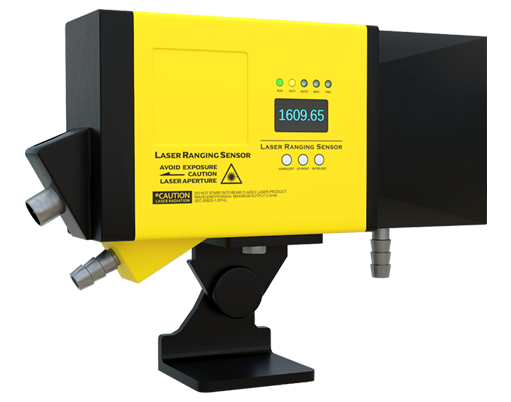
Recent innovations focus on enhancing durability and integration with Industrial Internet of Things (IIoT) platforms. Modern laser sensors feature digital outputs and connectivity for real-time data analytics, enabling predictive maintenance and process optimization. As industries prioritize sustainability and safety, the adoption of laser oxygen sensors is expected to grow, driven by their precision and adaptability in demanding conditions.