Proximity sensors are indispensable components in modern industrial automation, serving as the critical "eyes" of machinery for non-contact detection of objects. Their reliability directly impacts system uptime, safety, and product quality. For engineers specifying and applying these sensors, a deep understanding of key considerations is paramount to ensuring optimal performance and longevity.
The foremost consideration is the selection of the sensing technology itself. Inductive sensors are the workhorse for detecting metallic objects, primarily ferrous metals. Their sensing range is influenced by the target's material, size, and shape. For instance, a mild steel target provides the nominal sensing distance, while stainless steel or aluminum reduces it significantly, often requiring a correction factor. Capacitive sensors, on the other hand, can detect nearly any material, including liquids, plastics, and wood, by sensing changes in dielectric constant. They are ideal for level detection or presence sensing of non-metals but are more susceptible to environmental factors like humidity or contamination. Ultrasonic sensors use sound waves to measure distance or detect presence, excelling in applications requiring longer ranges or where the target's material is inconsistent. Photoelectric sensors, while sometimes categorized separately, offer another form of proximity detection using light beams, suitable for long-range and small object detection but sensitive to ambient light and dirt.
Environmental factors constitute a major challenge. Industrial settings are harsh. Excessive ambient temperature can derate a sensor's performance or cause premature failure. Always consult the sensor's operating temperature range and consider thermal buildup in enclosures. For washdown areas in food & beverage or pharmaceutical applications, sensors must have appropriate Ingress Protection (IP) ratings (e.g., IP67, IP69K) to withstand high-pressure, high-temperature cleaning. Chemical exposure is another critical factor; housing material (e.g., stainless steel 316L, PBT plastic) must be compatible with present vapors or splashes. Electrical noise from variable frequency drives (VFDs), motors, or welding equipment can cause erratic switching. Selecting sensors with robust noise immunity, shielded cables, and proper grounding practices is essential. Physical factors like vibration and mechanical shock demand sensors with rugged construction and secure mounting.
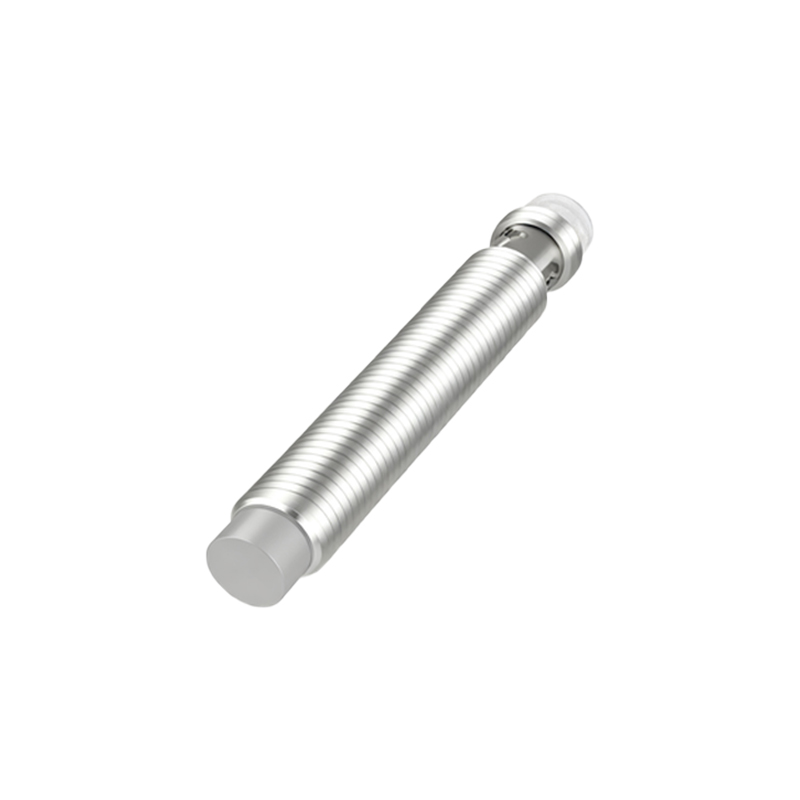
Installation and mounting are often overlooked sources of failure. A fundamental rule is to respect the "flush-mountable" or "non-flush-mountable" design. Non-flush (cylindrical) inductive sensors have an extended sensing face and must be mounted with a clearance zone free of metal to prevent false triggering. Flush-mounted sensors can be embedded in metal without issue but typically offer a shorter sensing range. The sensing direction must be precisely aligned with the target's approach path. For cylindrical sensors, the lateral clearance between the sensor body and adjacent metal (like a mounting bracket) must be maintained as per datasheet specifications to prevent shielding effects. Ensuring a stable power supply within the sensor's voltage tolerance is basic yet crucial; voltage spikes or sags can cause malfunction.
Interfacing and output configuration must match the control system. The classic choice is between NPN (sinking) and PNP (sourcing) DC outputs. The selection depends on the PLC input module's architecture—a common error is mismatching these. For AC sensors, residual current when "off" must be considered to avoid ghost voltage issues. Analog output sensors (4-20mA, 0-10V) for distance measurement require attention to resolution, linearity, and response time. Digital communication options like IO-Link are becoming standard, offering advanced diagnostics, parameter setting, and process data exchange, which greatly aids in predictive maintenance and troubleshooting.
Finally, application-specific nuances are decisive. In fast-moving assembly lines, the sensor's response frequency (switching speed) must exceed the rate of object passage. For small parts detection, the target size must be at least 70-80% of the sensor's face diameter for reliable operation. When detecting threaded parts like bolts, the sensing distance may vary based on the thread orientation. In metal chip environments, inductive sensors with a "Weld Field Immune" or "All-Metal" design resist interference from surrounding metallic debris. Always perform real-world testing with the actual target material and under normal operating conditions before finalizing the design.
In conclusion, successful proximity sensor application is a systems engineering task. It requires a holistic view that balances sensor technology, environmental survivability, correct installation, electrical compatibility, and precise application needs. By meticulously addressing these considerations, engineers can build robust, reliable, and maintainable automation systems that maximize productivity and minimize downtime.