In the realm of industrial automation and control systems, proximity sensors are indispensable components that detect the presence or absence of an object without physical contact. These devices are crucial for enhancing efficiency, safety, and precision in various applications, from manufacturing lines to robotics. This article explores the common types of proximity sensors, their operating principles, and typical use cases, providing a comprehensive overview for engineers and technicians.
The first widely used type is the inductive proximity sensor. Designed to detect metallic objects, these sensors operate based on electromagnetic induction. Inside the sensor, an oscillator generates a high-frequency electromagnetic field. When a metal target enters this field, eddy currents are induced in the target, causing a change in the oscillation amplitude. This change is detected by a threshold circuit, which triggers an output signal. Inductive sensors are highly reliable and resistant to environmental factors like dust, oil, and moisture, making them ideal for harsh industrial environments. Common applications include position sensing of metal parts, counting metallic objects on conveyor belts, and detecting the presence of tools in machinery.
Another prevalent type is the capacitive proximity sensor. Unlike inductive sensors, capacitive variants can detect both metallic and non-metallic materials, such as plastics, glass, liquids, and granular substances. They function by measuring changes in capacitance. The sensor generates an electrostatic field, and when an object enters this field, it alters the capacitance relative to a reference value. This alteration is processed to switch the output. Capacitive sensors are versatile and often used in level detection for tanks or silos, material handling systems, and presence sensing of non-conductive items. However, they can be sensitive to environmental changes like humidity, requiring careful calibration.
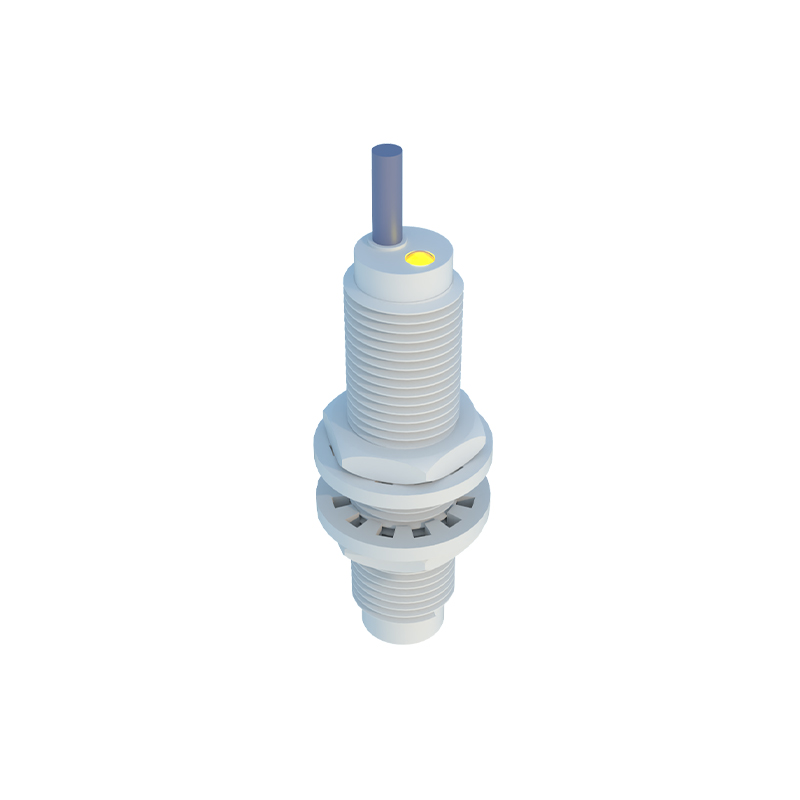
Magnetic proximity sensors, also known as reed switches or Hall effect sensors, are specialized for detecting magnetic fields. Reed switches consist of two ferromagnetic reeds sealed in a glass tube; when a magnet approaches, the reeds attract and close the circuit. Hall effect sensors, on the other hand, use semiconductor technology to detect magnetic field variations and produce a voltage output. These sensors are commonly employed in applications where contactless sensing of permanent magnets or electromagnets is needed, such as in door position sensing, speed measurement of rotating shafts, and safety interlocks. They offer long operational life and are immune to non-magnetic interference.
Ultrasonic proximity sensors utilize sound waves to detect objects. They emit high-frequency ultrasonic pulses and measure the time taken for the echo to return after hitting a target. By calculating the distance based on the speed of sound, these sensors can determine presence, distance, or level. Ultrasonic sensors are effective for detecting a wide range of materials, regardless of color, transparency, or surface texture. Typical uses include liquid level control, object detection in packaging lines, and collision avoidance in automated guided vehicles (AGVs). Their performance can be affected by temperature variations and acoustic noise, but advanced models include temperature compensation for accuracy.
Optical proximity sensors, including photoelectric sensors, use light beams to sense objects. They consist of a light emitter (usually LED or laser) and a receiver. When an object interrupts or reflects the light beam, the receiver detects the change and triggers an output. There are three main configurations: through-beam (separate emitter and receiver), retro-reflective (with a reflector), and diffuse reflective (sensing reflected light from the object). Optical sensors are highly precise and suitable for detecting small or fast-moving objects, such as in bottling plants, electronic assembly, and security systems. They may require clean environments to avoid false triggers from dust or dirt.
Each type of proximity sensor has distinct advantages and limitations. Selection depends on factors like target material, sensing distance, environmental conditions, and cost. For instance, inductive sensors are best for metal detection in tough settings, while capacitive sensors excel with non-metals. Magnetic sensors are optimal for magnetic targets, ultrasonic for distance measurement, and optical for high-speed applications. Understanding these differences enables engineers to choose the right sensor for specific automation tasks, ensuring reliable performance and system integration.
In summary, proximity sensors are vital tools in modern industry, offering non-contact detection that minimizes wear and enhances operational longevity. By leveraging technologies from electromagnetism to optics, they support diverse automation needs, driving productivity and innovation. As industries evolve with trends like the Industrial Internet of Things (IIoT), proximity sensors continue to advance, incorporating features like smart diagnostics and connectivity for improved monitoring and control.