In the realm of industrial automation and precision metrology, the demand for accurate, reliable, and non-contact measurement solutions is paramount. Among the various technologies available, PL (Point Laser) displacement sensors have emerged as a cornerstone for countless applications, from quality control on production lines to intricate R&D measurements. This article delves into the operational principles, key advantages, diverse applications, and critical selection criteria for PL laser displacement sensors.
At its core, a PL laser displacement sensor operates on the principle of optical triangulation. The sensor projects a focused, visible or infrared laser spot onto the target surface. The diffusely reflected light from this spot is then captured by a receiving lens and focused onto a position-sensitive detector, typically a CCD or CMOS array. When the target's distance changes, the position of the reflected light spot shifts on the detector. The sensor's internal processor calculates the displacement value based on this positional shift, providing a high-precision, real-time measurement of distance or position. This method allows for measurements that are immune to the target's material, color, or surface texture within specified tolerances, a significant advantage over contact probes.
The benefits of utilizing PL laser sensors are substantial. Firstly, they offer non-contact measurement, eliminating the risk of damaging delicate surfaces or influencing the measurement through physical force. Secondly, they provide exceptionally high resolution and repeatability, often down to the sub-micron level, enabling the detection of minute variations. Their fast response speed, capable of thousands of measurements per second, makes them ideal for dynamic processes and high-speed production lines. Furthermore, their compact size and robust housing designs allow for easy integration into machinery and operation in challenging industrial environments with vibrations, dust, or varying temperatures.
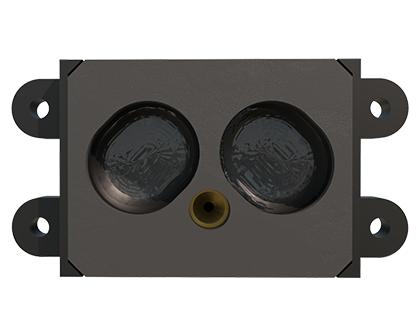
The applications of PL laser displacement sensors span a vast array of industries. In automotive manufacturing, they are used to measure component thickness, check coplanarity of engine blocks, and inspect brake disc runout. In electronics, they ensure the precise height of solder paste, measure wafer warpage, and verify the flatness of display panels. The semiconductor industry relies on them for wafer positioning and chip lead inspection. In metal processing, they monitor thickness during rolling processes and control vibration in machining centers. They are also indispensable in robotics for precise positioning and guidance, and in civil engineering for monitoring structural deformation.
Selecting the appropriate PL laser sensor for a specific task requires careful consideration of several parameters. The measurement range defines the minimum and maximum distances over which the sensor can operate accurately. The standoff distance is the optimal working distance from the sensor head to the target. Resolution indicates the smallest detectable change in distance, while linearity defines the accuracy across the entire measurement range. The spot size is crucial for measuring small features or uneven surfaces. Sampling rate determines how quickly measurements can be taken, essential for high-speed applications. Environmental factors such as ambient light, temperature fluctuations, and the presence of dust or coolant must be matched with the sensor's specifications regarding light source type (red laser, blue laser for shiny surfaces), housing rating (IP67 for dust/water resistance), and temperature compensation features.
Integration typically involves connecting the sensor to a controller or PLC via analog outputs (e.g., 0-10V, 4-20mA) or digital interfaces (RS-485, Ethernet/IP, PROFINET). Many modern sensors also offer built-in programmable logic for simple in-sensor decision-making, like go/no-go judgments. Proper mounting, alignment, and calibration are critical to achieving specified performance. It is also vital to consider the target surface characteristics; highly reflective or transparent materials may require specialized sensor models with diffused lighting or coaxial optical designs to ensure stable readings.

In conclusion, PL laser displacement sensors are versatile, high-performance tools that address the critical need for precision measurement in modern industry. By understanding their operating principle, recognizing their broad advantages, and meticulously evaluating application requirements against sensor specifications, engineers and technicians can effectively harness this technology to enhance quality, optimize processes, and drive innovation. As manufacturing tolerances tighten and automation becomes more sophisticated, the role of these precise optical measurement devices will only continue to grow.