In the rapidly evolving landscape of industrial automation, the demand for compact, reliable, and high-performance sensing solutions has never been greater. Miniature proximity sensors, often the unsung heroes on production lines and within intricate machinery, play a pivotal role in enabling precise object detection, positioning, and counting without physical contact. Their small form factor allows for installation in space-constrained environments where traditional sensors simply cannot fit. For engineers and system integrators, selecting the right miniature sensor is critical for ensuring operational efficiency, reducing downtime, and maintaining product quality. This article provides a professional overview and recommendation of five leading miniature proximity sensor series, evaluating them based on key performance metrics, environmental robustness, and application suitability.
First on the list is the Omron E2E Miniature Proximity Sensor Series. Renowned for their exceptional durability and consistent performance, these sensors are a staple in demanding environments. Available in both shielded and unshielded cylindrical metal housings with diameters as small as M5 and M8, they offer a remarkable sensing range for their size. The series features all-welded, stainless-steel sensing faces that resist corrosion from cutting oils and coolants. With a high switching frequency and embedded surge and overload protection circuits, they excel in high-speed counting applications on packaging machinery and CNC equipment. Their robust construction ensures minimal false triggers from electrical noise, a common challenge in industrial settings.
Next, the Sick W4-3 Miniature Photoelectric Sensor represents a leap in optical sensing technology within a tiny package. Measuring only 20mm x 10mm x 10mm, this sensor utilizes advanced background suppression technology to reliably detect objects regardless of color or surface texture, a significant advantage over standard diffuse sensors. Its precise, adjustable sensing window allows it to ignore objects beyond a set distance, preventing erroneous readings from conveyor belts or machine parts in the background. Ideal for robotic end-effector tooling, small parts assembly, and electronic component handling, the W4-3 provides the optical precision of a much larger sensor in a miniature format, offering both through-beam and diffuse reflection operating modes.
For applications requiring extreme resistance to harsh chemicals, washdowns, or outdoor exposure, the Balluff BOS M8M Magnetostrictive Miniature Sensor is a top contender. While slightly larger than some pure inductive sensors, its M8 housing is still considered miniature for many applications. Its true strength lies in its immunity to contaminants like dust, chips, and fluids that can plague optical and standard inductive sensors. It detects only permanent magnets, making it perfect for reliable position feedback on hydraulic cylinders, valve position detection, or in food and beverage processing plants where frequent high-pressure cleaning is necessary. Its solid-state design guarantees a long service life with no mechanical wear.
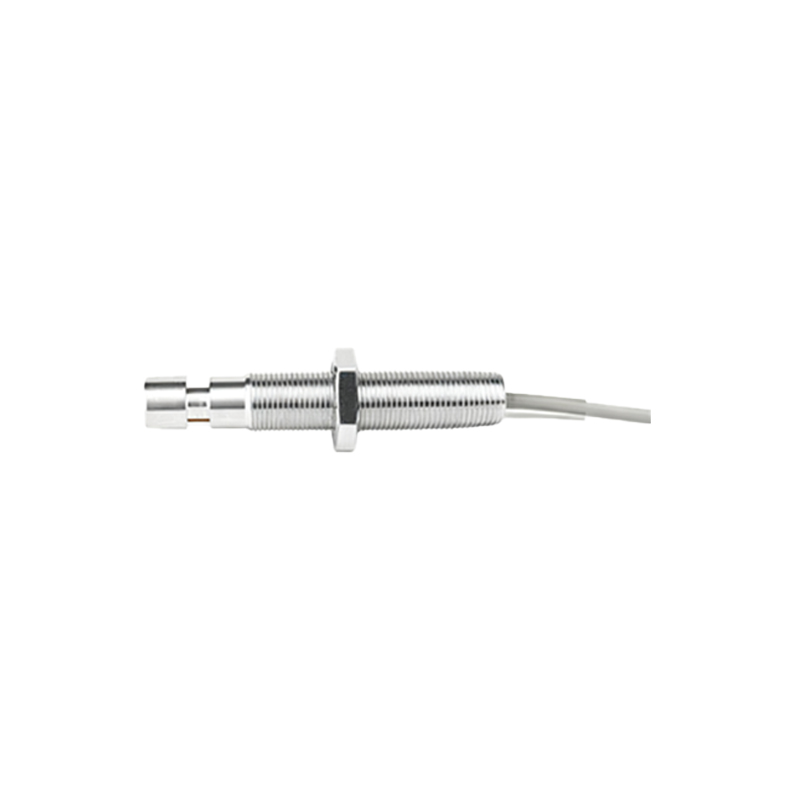
The Pepperl+Fuchs UC500-F77 Miniature Ultrasonic Sensor solves complex detection tasks where other technologies fail. This tiny sensor, with a 30mm x 15mm x 15mm housing, uses ultrasonic sound waves to detect objects of virtually any material—transparent, shiny, metallic, or liquid. It provides a precise switching output based on a programmable sensing window, ignoring everything outside it. This makes it invaluable for monitoring fill levels in small containers, detecting clear glass or plastic bottles on high-speed lines, and ensuring proper stacking of materials. Its ability to function reliably in environments with airborne dust or light fog gives it a distinct advantage in challenging industrial atmospheres.
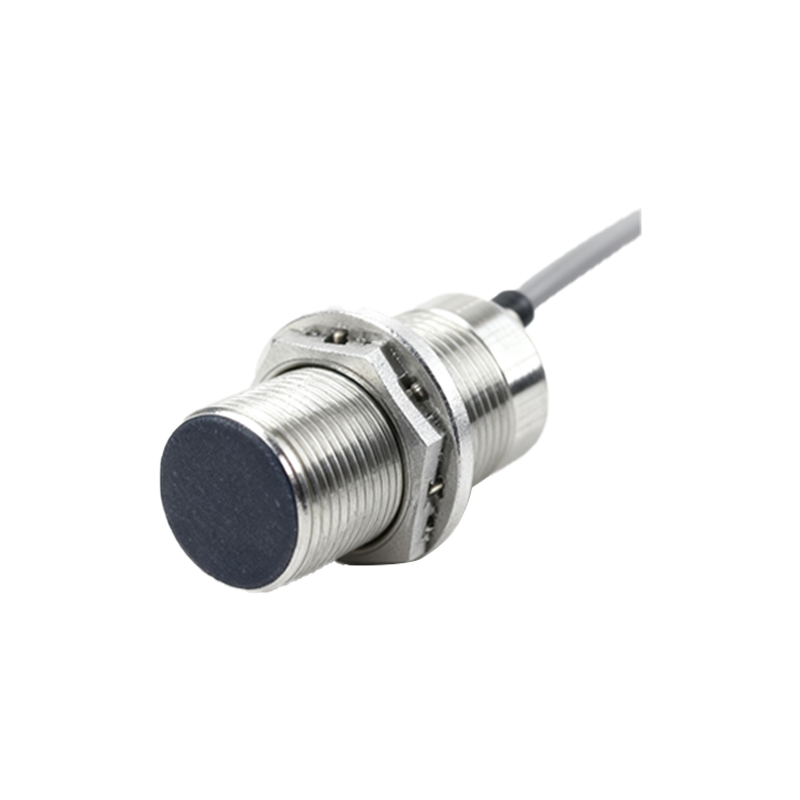
Finally, the IFM IW Series Miniature Inductive Cylindrical Sensors offer an outstanding balance of performance, cost-effectiveness, and versatility. Available in M5, M8, and M12 form factors with both flush-mounted and non-flush designs, they are engineered for general-purpose metal detection. A standout feature is their IO-Link capability, which transforms them from simple switches into smart devices. Through IO-Link, users can remotely read diagnostic data (like operating hours or switching cycles), adjust parameters like switching hysteresis, and receive early warnings for potential failures, enabling predictive maintenance. This smart functionality in a miniature package is ideal for modern, data-driven smart factories and Industry 4.0 applications.
When specifying a miniature proximity sensor, engineers must carefully consider the target material, required sensing distance, environmental conditions (IP rating, temperature range), electrical output type (PNP/NPN, analog, IO-Link), and housing material. A sensor perfect for detecting steel pistons in an automotive plant may fail completely on a plastic cap assembly line. Similarly, a standard inductive sensor will not detect a liquid level. Therefore, the "best" sensor is inherently defined by the specific application parameters. The five series highlighted here—Omron for robust metal detection, Sick for precise optics, Balluff for harsh environments, Pepperl+Fuchs for material versatility, and IFM for smart