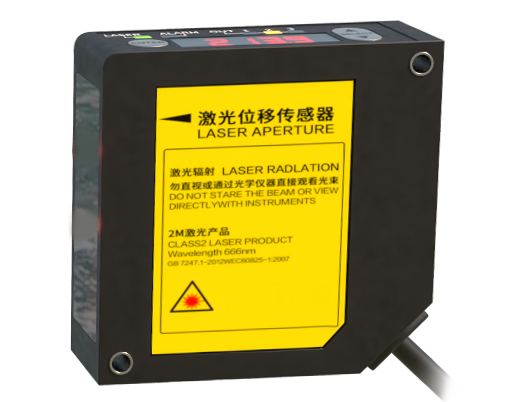
In the realm of precision measurement and industrial automation, the laser phase focus sensor (LPFS) has emerged as a critical technology for non-contact, high-resolution surface profiling and displacement measurement. Unlike traditional confocal or triangulation-based sensors, LPFS leverages the principle of optical interference and phase detection to achieve sub-nanometer axial resolution, making it indispensable in sectors demanding extreme precision, such as semiconductor manufacturing, precision optics, and advanced materials science.
The core operating principle of an LPFS is based on low-coherence interferometry. A broadband laser source emits light that is split into two paths: a reference beam and a measurement beam. The measurement beam is focused onto the target surface. The reflected light from the target recombines with the reference beam, creating an interference pattern. The key parameter is the optical path difference (OPD) between the two beams. The sensor precisely analyzes the phase of the interference signal. Maximum interference contrast, or coherence, occurs only when the OPD is nearly zero, meaning the target surface is exactly at the focal point of the objective lens. By dynamically adjusting the position of the objective lens or the reference mirror to maintain this peak interference condition, the system continuously tracks the surface height. The displacement of the focusing mechanism directly correlates to the topographic changes of the target, providing real-time, high-fidelity 3D surface data.
The advantages of LPFS are manifold. Its primary strength lies in its exceptional axial resolution, often down to 0.1 nm, far surpassing chromatic confocal sensors in precision for smooth surfaces. It is largely immune to variations in surface reflectivity and color, as it detects the phase of the interference signal rather than just intensity. This makes it robust for measuring diverse materials, from highly reflective metals to transparent films and dark, absorptive substrates. Furthermore, the focused spot size can be extremely small, enabling high lateral resolution for measuring fine features and steep sidewalls.
Industrial applications of Laser Phase Focus Sensors are vast and growing. In semiconductor fabrication, LPFS systems are integral for wafer bow/warp measurement, photomask inspection, and critical dimension (CD) metrology of intricate circuit patterns. The ability to measure thin film thicknesses and multilayer structures without contact is crucial for process control. In the field of precision optics, these sensors are used to characterize the surface form and roughness of lenses, mirrors, and aspheric elements. The automotive and aerospace industries employ LPFS for quality control of engine components, turbine blades, and other high-tolerance parts, ensuring surface integrity and coating uniformity. Additionally, in life sciences, they facilitate the 3D imaging of biological samples and microstructures.
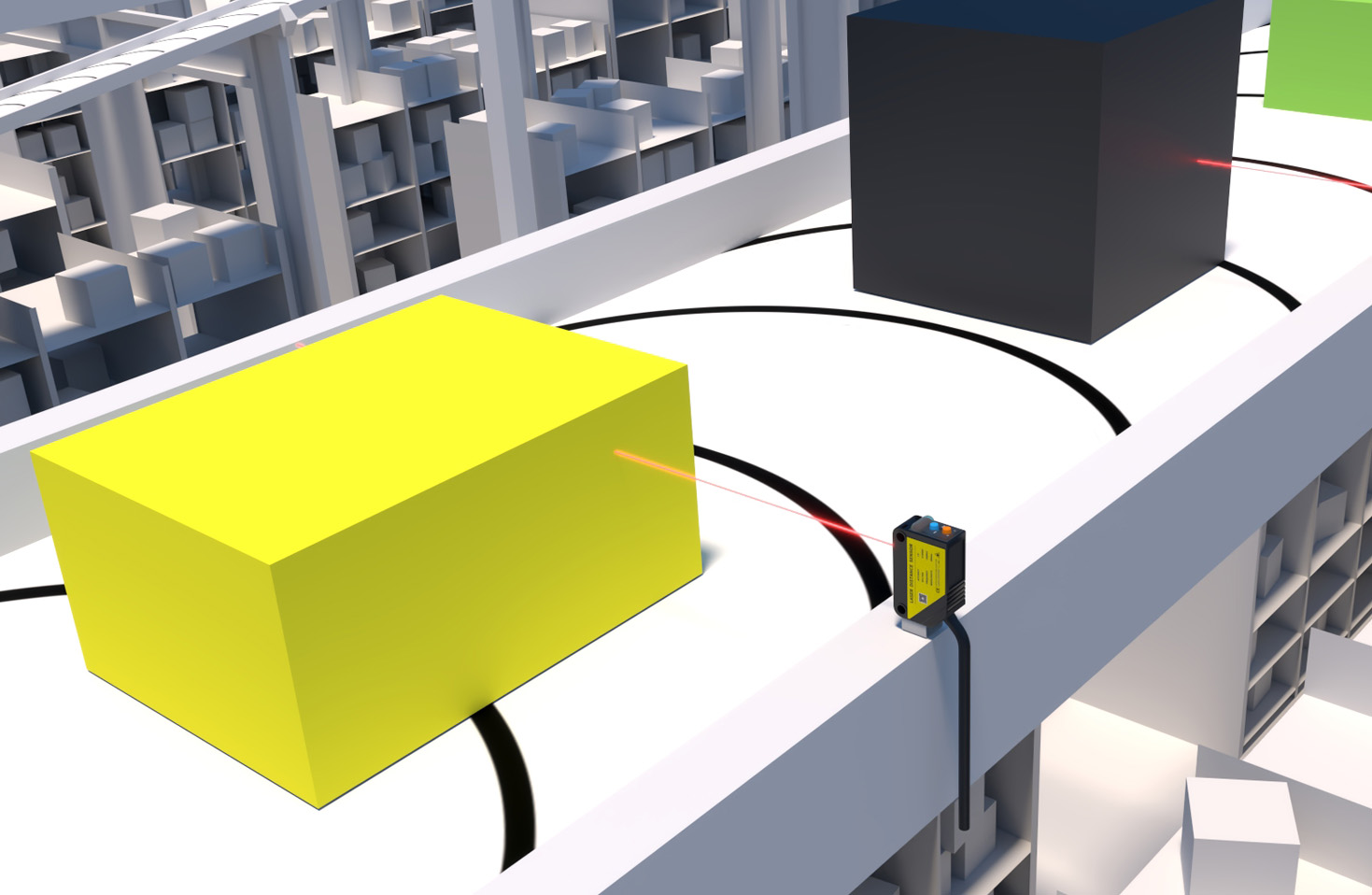
Recent technological advancements are pushing the boundaries of LPFS capabilities. The integration of high-speed scanning mechanisms and advanced digital signal processing (DSP) algorithms has significantly increased measurement speed, enabling in-line inspection for high-volume production. Multi-channel sensor heads allow for simultaneous measurement at multiple points, enhancing throughput for large-area scans. Developments in supercontinuum laser sources provide broader spectral bandwidths, leading to even finer axial resolution and improved performance on transparent multilayer systems. The trend towards miniaturization has also produced compact sensor heads that can be integrated into robotic arms and confined spaces for flexible automation.
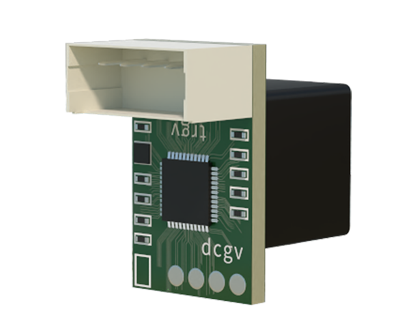
Despite its prowess, implementing LPFS technology requires careful consideration. Vibrational isolation is paramount, as the interferometric principle is sensitive to mechanical noise. The measurement range along the Z-axis is typically limited to a few hundred micrometers, dictated by the working distance and numerical aperture of the objective lens, though this is sufficient for most micro-scale topography applications. For surfaces with very high roughness or large steps, complementary sensors might be needed. System calibration against traceable standards remains essential to maintain long-term accuracy.
Looking forward, the convergence of LPFS with artificial intelligence and machine learning presents a promising frontier. AI can be used to analyze complex surface data patterns for predictive maintenance and anomaly detection, moving beyond simple metrology to intelligent process optimization. As industries continue to demand higher precision and faster feedback for Industry 4.0 and smart manufacturing initiatives, the laser phase focus sensor will undoubtedly remain at the forefront, evolving to meet the ever-tightening specifications of modern engineering and research. Its role in enabling innovation across microelectronics, nanotechnology, and advanced manufacturing is both foundational and expanding.